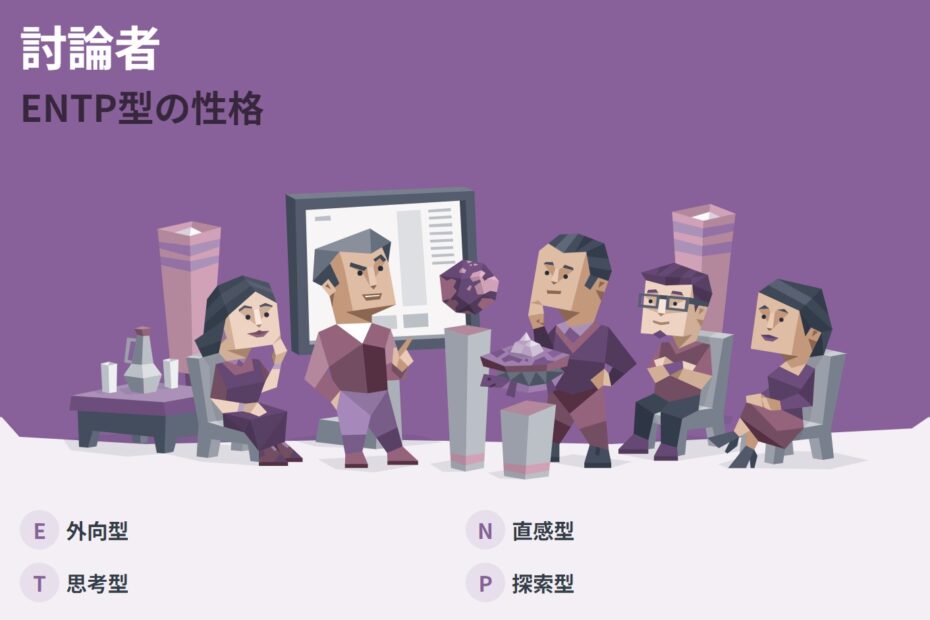
Do you know about the ENTP-T type?
This is one of the indicators that represents personality, and it has a major influence on our behavior and way of thinking.
In this article, we will explain in detail what characteristics ENTP-T people have, including their health, work, and interpersonal relationships.
By getting to know your own personality and that of people around you well, it may lead to better communication and self-understanding.
Please try reading while comparing it with your own and your friends’ personalities.
Once again, personality researcher and author of Villain Encyclopedia, Tokiwa (@etokiwa999), will provide the explanation.
※We have developed the HEXACO-JP Personality Assessment! It has more scientific basis than MBTI. Tap below for details.

目次
- 1 Scientific Background of ENTP-T (Debater – Turbulent Type)
- 2 Scientific Explanation of ENTP-T (Debater – Turbulent Type)
- 2.1 Tend to get along well with people who have both N and T traits
- 2.2 Making new friends
- 2.3 Relatively high possibility of having high intelligence IQ
- 2.4 Psychotherapy may reduce neuroticism tendency
- 2.5 Many friends on social media
- 2.6 Posts frequently on social media about updates and photos, especially emotional posts
- 2.7 May actively gather information on social media
- 2.8 High learning goal orientation (setting goals and learning at work)
- 2.9 In children, there may be giftedness
- 2.10 Common in ADHD
- 2.11 Common in HSP
- 2.12 Prone to Job Turnover and Resignation
- 2.13 Preference for Salty, Sour, and Fatty Foods Due to Stress
- 2.14 Preference for Fast Food, Ice Cream, Chocolate, Cocoa, Meat, Biscuits, Cake, and Cookies
- 2.15 Relatively Poor Sleep Quality
- 2.16 Prone to Drinking Alcohol
- 2.17 Prone to smoking
- 2.18 Prone to gambling
- 2.19 Prone to alcohol addiction and gambling addiction
- 2.20 Prone to internet addiction
- 2.21 Prone to Divorce
- 2.22 Prone to Cheating
- 2.23 In the case of women, they tend to become wives who are cheated on.
- 2.24 In the case of men, they tend to become husbands who are cheated on.
- 2.25 Common Among Criminals
- 2.26 Prone to early death
- 2.27 Prone to hoarding
- 2.28 Prone to having Social Dominance Orientation (SDO) ideology
- 2.29 Susceptible to workplace bullying
- 2.30 Common among cyberbullying perpetrators
- 2.31 Potential for narcissism
- 2.32 Common among monster employees
- 2.33 Mindfulness practice reduces neuroticism
- 2.34 Engaging in Emotion-Focused Coping
- 2.35 Taking High Risks, Having Bias Toward Risk Due to High Neuroticism
- 2.36 Common in Japan’s Tohoku, Hokuriku, and Metropolitan Areas
- 2.37 Schwartz’s Values: Power, Achievement, Hedonism, Stimulation, Self-Direction
- 2.38 Particular about clothing
- 2.39 Investment behavior: Herd behavior
- 3 Finally
Scientific Background of ENTP-T (Debater – Turbulent Type)
Overview of MBTI
MBTI is a psychological theory that classifies personality into 16 types.
MBTI is an abbreviation for Myers-Briggs Type Indicator.
MBTI classifies personality into 16 types by combining the following 4 indicators.
In other words, MBTI expresses your personality tendencies with 4 letters such as “ISTJ” or “ENFP”. The very famous 16personalities is similar but different from MBTI.
Overview of Big Five
One of the most influential trait theories in personality psychology is the “Big Five”.
Big Five measures five traits: Openness, Conscientiousness, Extraversion, Agreeableness, and Neuroticism.
Also, while 16personalities and MBTI use type classification (e.g., either extraverted or introverted), Big Five evaluates traits with continuous numerical values (e.g., extraversion 3.5), which is a major difference.
Furthermore, it has been studied for a long time, has many research papers, and extensive research has been conducted in other fields such as academic performance, income, brain, and genetics. It can be said that Big Five has relatively stronger scientific backing.
Correlation Between MBTI, Big Five, and HEXACO
There are correlations between MBTI’s 4 indicators and Big Five’s 5 factors.
A representative study showing this correlation is the paper “The relationship between the revised NEO-Personality Inventory and the Myers-Briggs Type Indicator“.
According to this paper, the correlations between MBTI and Big Five are as follows:
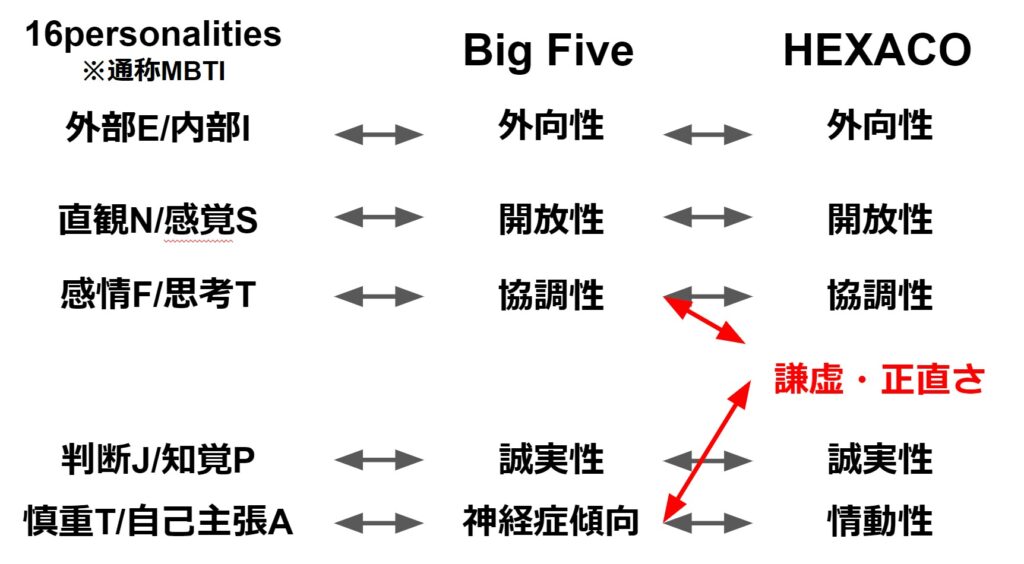
Also, in 16personalities, which was created with reference to MBTI and Big Five, Big Five’s neuroticism is called “Identity” and is classified as either Assertive or Turbulent.
On the far right is the relatively new personality assessment called “HEXACO“. It has been improved by adding one indicator “Honesty-Humility” to Big Five.
This article will provide detailed explanations of 16personalities personality types based on these correlations.
Since the original research is on Big Five and HEXACO, if you want to know your personality more scientifically than MBTI or 16personalities, please try this HEXACO personality assessment.
What is ENTP-T (Debater – Turbulent Type)?
ENTP-T is a type with high Extraversion (E), high Openness (N), low Agreeableness (T), low Conscientiousness (P), and high Neuroticism (T) in Big Five. Characteristics:
- High creativity and intellectual curiosity
- Self-doubt and perfectionism
- Enjoys logical analysis and debate
- Sensitivity to social evaluation
- Enthusiasm for new ideas
They excel at generating innovative ideas, but may lose confidence when it comes to implementing them. They enjoy intellectual discussions but sometimes feel anxious about whether their opinions will be accepted.
In interpersonal relationships, they prefer active communication but are sensitive to others’ reactions. They have a fear of failure, but this also becomes a driving force for finding new perspectives and solutions.
Scientific Explanation of ENTP-T (Debater – Turbulent Type)
Tend to get along well with people who have both N and T traits
ENTP-T type people tend to have high affinity with people who also possess N and T characteristics. This is because they share openness (N) and low agreeableness (T) in Big Five terms. ENTP-T individuals prefer to explore new ideas and concepts and value logical thinking.
They can enjoy deep conversations with people who have similar thought patterns and easily build relationships where they can mutually stimulate each other’s intellectual curiosity. However, this doesn’t mean they cannot build good relationships with people of other types.
Please see this article for more details.
Making new friends
ENTP-T type people are good at making new friends because of their high extraversion (E). High extraversion in Big Five terms indicates a sociable and active personality.
ENTP-T people tend to be open to new environments and people, and actively communicate. Being curious and having good conversational skills, they are likely to build new friendships in various situations.
However, due to their high neuroticism (-T), they may also feel anxious about new relationships. Nevertheless, they have the ability to expand their relationships while overcoming such anxieties.
Please see this article for more details.
Relatively high possibility of having high intelligence IQ
ENTP-T type people, due to their high openness (N), tend to have strong intellectual curiosity and actively seek new experiences and information. This aligns with the characteristics of openness in the Big Five.
This trait can lead to high learning motivation and problem-solving abilities, which may result in relatively high intelligence IQ. ENTP-T people are often good at understanding abstract concepts and analyzing complex problems.
However, IQ varies greatly among individuals and cannot be judged based solely on MBTI type. It’s also important to note that intelligence has various aspects, and IQ is not the only indicator.
Please see this article for more details.
Psychotherapy may reduce neuroticism tendency
The “-T” in ENTP-T type indicates high neuroticism in Big Five terms. This means a tendency to easily feel stress and anxiety.
By receiving psychotherapy, ENTP-T people may be able to deepen self-understanding and improve stress management skills. In particular, their logical thinking (T) and openness to new ideas (N) can be effectively utilized in the therapeutic process.
Through psychotherapy, they may learn healthy ways to deal with anxiety and concerns, potentially reducing their neuroticism tendency. However, effectiveness varies among individuals, and choosing appropriate therapy is important.
Please see this article for more details.
ENTP-T type people, due to their high extraversion (E), tend to actively communicate on social media as well. High sociability is cited as a characteristic of extraversion in the Big Five.
ENTP-T people seek connections with new people and prefer to build broad networks through social media. Their intellectual curiosity (N) and logical thinking (T) promote interesting discussions and information exchange online, which leads to increasing friends on social media.
However, due to their high neuroticism (-T), they may also feel anxious about online relationships. Nevertheless, they tend to actively interact while overcoming such anxieties.
Please see this article for more details.
People with the ENTP-T type have high extroversion (E) and high neuroticism (-T), so they tend to be very active in posting on social media. High extroversion in the Big Five relates to a strong desire for self-expression.
ENTP-T individuals prefer to share their experiences and thoughts with others, and tend to frequently post updates and photos. In particular, due to their high neuroticism (-T), they may make many emotional posts. This may be an expression of their desire to express inner emotions and seek empathy.
However, due to their logical thinking (T) characteristics, even emotional posts often include some analysis or reflection. They show a tendency to seek self-expression and connection with others through social media.
Please see this article for more details.
People with the ENTP-T type have high openness (N), so they have strong curiosity about new information and knowledge. A characteristic of openness in the Big Five is the active pursuit of new experiences and information.
ENTP-T individuals tend to use social media not just as a communication tool, but also as a place for information gathering. They have interests in various topics and actively explore the latest news, trends, and specialized information on social media.
Due to their logical thinking (T) characteristics, they also like to critically analyze the information they collect and form their own interpretations and opinions. This process of information gathering and analysis satisfies their intellectual curiosity and provides opportunities to gain new insights.
Please see this article for more details.
High learning goal orientation (setting goals and learning at work)
People with the ENTP-T type tend to have high learning goal orientation due to their openness (N) and thinking (T) characteristics. High openness in the Big Five indicates a positive attitude toward new experiences and knowledge.
ENTP-T individuals prefer to set clear goals in work and personal growth and progress in learning toward those goals. Their logical thinking (T) helps in establishing effective learning strategies.
They are motivated to acquire new skills and knowledge and are constantly seeking opportunities for self-improvement. They tend to enjoy the goal achievement process and welcome new challenges. However, due to their high neuroticism (-T), they may sometimes feel stress in goal setting and the learning process.
Please see this article for more details.
In children, there may be giftedness
Children with the ENTP-T type may be gifted (intellectually talented children) due to their high openness (N). Openness in the Big Five is related to intellectual curiosity and creativity.
ENTP-T children have high ability to understand abstract concepts and may take creative approaches to complex problems. Their logical thinking (T) may lead to high analytical and problem-solving abilities.
Also, due to their extroversion (E) characteristics, they tend to actively express their thoughts and enjoy intellectual exchanges with others. However, determining giftedness requires comprehensive evaluation by specialists. Also, due to high neuroticism (-T), emotional support may be important in some cases.
Please see this article for more details.
Common in ADHD
The ENTP-T type has a relatively high tendency to be diagnosed with ADHD (Attention Deficit Hyperactivity Disorder) due to their characteristics. In particular, perceiving (P) and high neuroticism (-T) are thought to be related to this tendency.
The P characteristic indicates flexibility and spontaneity, but may also lead to low planning ability and scattered attention. Also, logical thinking (T) may be related to “hyperfocus” (a state of extreme concentration on specific areas of interest), which is a characteristic of ADHD.
High neuroticism (-T) indicates characteristics of being prone to stress and anxiety, which may worsen ADHD symptoms. However, ADHD cannot be determined by MBTI type alone, and diagnosis by a specialist is necessary.
Please see this article for more details.
Common in HSP
The ENTP-T type can be said to have a relatively high possibility of being HSP (Highly Sensitive Person) due to their openness (N) and high neuroticism (-T). High openness in the Big Five is related to sensitivity to environment and sensations.
ENTP-T individuals tend to have sharp sensitivity to environmental stimuli and are prone to detecting subtle changes and nuances. While this trait leads to high creativity and insight, it also makes them more susceptible to stress from excessive stimulation.
High neuroticism (-T) means large emotional fluctuations and sensitive reactions to environmental changes, which also aligns with HSP characteristics. However, professional evaluation is necessary for HSP assessment.
For more details, please see this article.
Prone to Job Turnover and Resignation
ENTP-T type individuals may have a relatively higher tendency toward job turnover and resignation due to the combination of extroversion (E), intuition (N), and thinking (T). High openness (N) in Big Five terms indicates a nature that seeks new experiences and challenges.
ENTP-T individuals prefer to constantly explore new ideas and possibilities. When they cannot find satisfaction in their current workplace, they may consider changing jobs in search of a more stimulating and challenging environment. Additionally, due to their logical thinking (T) trait, they tend to make strategic career choices and may move without hesitation when better opportunities arise.
High extroversion (E) suggests strong adaptability to new environments, but at the same time, high neuroticism (-T) can cause them to feel workplace stress intensely, which may also become a reason for leaving their job.
For more details, please see this article.
Preference for Salty, Sour, and Fatty Foods Due to Stress
ENTP-T type individuals may have a tendency to prefer specific foods during stressful times due to high neuroticism (-T). High neuroticism in Big Five terms indicates sensitivity to stress and large emotional fluctuations.
ENTP-T individuals may tend to seek salty, sour, and fatty foods when feeling stressed. These foods may be perceived as having effects that temporarily improve mood or alleviate stress responses.
For example, high-sodium foods are said to have effects that suppress stress hormone secretion. Sour foods may have a mood-sharpening effect. Fatty foods can provide temporary satisfaction and pleasure.
However, attention must be paid to the long-term health effects of these eating habits. It’s important to find healthier methods for stress management.
For more details, please see this article.
Preference for Fast Food, Ice Cream, Chocolate, Cocoa, Meat, Biscuits, Cake, and Cookies
ENTP-T type individuals may tend to prefer stimulating and flavorful foods due to their extroversion (E) and intuition (N) traits. High extroversion in Big Five terms is associated with a nature that seeks new experiences and sensations.
ENTP-T individuals tend to prefer foods that provide immediate satisfaction, such as fast food and sweets. These foods can be easily enjoyed in busy lifestyles and satisfy their curiosity for exploring new tastes and combinations.
Additionally, due to high neuroticism (-T), they may seek these foods for stress relief and mood improvement. Cacao contained in chocolate and cocoa is said to have effects that enhance feelings of happiness.
However, excessive consumption of these foods carries health risks, so it’s important to maintain a balanced diet.
For more details, please see this article.
Relatively Poor Sleep Quality
ENTP-T type individuals may tend to have relatively poor sleep quality due to their perceiving (P) trait and high neuroticism (-T). High neuroticism in Big Five terms indicates traits of being prone to anxiety and stress.
ENTP-T individuals often have active thinking and rich imagination, and ideas may continuously emerge in their minds even at bedtime. This can delay sleep onset or cause awakenings during sleep.
Additionally, while the P trait indicates flexibility, it can also make it difficult to maintain regular life rhythms. Irregular sleep patterns become factors that reduce sleep quality.
High neuroticism (-T) increases the possibility of sleep disorders caused by stress and anxiety. These factors may work in combination to affect sleep quality.
For quality sleep, establishing bedtime routines and learning stress management techniques may be effective.
For more details, please see this article.
Prone to Drinking Alcohol
People with ENTP-T type may have a relatively high tendency to drink alcohol due to the combination of extraversion (E), thinking (T), and high neuroticism (-T). High extraversion in the Big Five is associated with sociability and stimulus-seeking traits.
ENTP-T individuals may often enjoy drinking in social situations. Due to their extraversion (E) trait, they tend to prefer activating communication with others through drinking.
The thinking (T) trait suggests the possibility of taking a logical approach to drinking. For example, they may consciously choose to drink as a means of stress relief or mood change.
On the other hand, high neuroticism (-T) indicates traits of being prone to stress and anxiety. They may choose to drink to alleviate these emotions.
However, excessive drinking poses health risks, so it’s important to practice moderate drinking. It’s also crucial to find healthier methods for stress management.
Please see this article for more details.
Prone to smoking
People with ENTP-T type may be prone to smoking due to extraversion (E) and high neuroticism (-T). High extraversion in the Big Five is associated with seeking new experiences and stimulation.
ENTP-T individuals may be more likely to start smoking in social situations. They may feel that smoking serves as a conversation starter with others or enhances their sense of belonging to a group.
Additionally, high neuroticism (-T) indicates traits of being prone to stress and anxiety. They may choose smoking to alleviate these emotions. Nicotine is said to have temporary stress-reducing effects.
However, smoking involves serious health risks, so it’s most desirable not to start. If you already have a smoking habit, we recommend seeking professional support for quitting.
Please see this article for more details.
Prone to gambling
People with ENTP-T type may be prone to being drawn into gambling due to perceiving (P) and high neuroticism (-T). High openness (N) in the Big Five is associated with seeking new experiences and stimulation.
ENTP-T individuals may find the thrill and excitement of gambling attractive. The P trait indicates a tendency to prefer impromptu and flexible responses, which may align with the uncertainty and unpredictability of gambling.
Additionally, high neuroticism (-T) indicates traits of being prone to stress and anxiety. Gambling may be chosen as a means of temporary mood change or stress relief.
However, gambling carries serious addiction risks. It’s important to find healthy leisure activities and effective stress management methods. If gambling-related problems arise, we recommend seeking professional support.
Please see this article for more details.
Prone to alcohol addiction and gambling addiction
People with ENTP-T type may be prone to alcohol addiction and gambling addiction due to the combination of thinking (T), perceiving (P), and high neuroticism (-T). High openness (N) in the Big Five is associated with seeking new experiences and stimulation.
ENTP-T individuals may rationalize drinking and gambling as means of problem-solving or stress relief through logical thinking (T). The P trait indicates a tendency to prefer impromptu and flexible responses, which may make controlling addictive behaviors difficult.
High neuroticism (-T) indicates traits of being prone to stress and anxiety. The likelihood of relying on alcohol or gambling to alleviate these emotions increases.
However, addiction is a serious health problem. It’s important to find healthy stress management methods and receive professional support. If signs of addiction are observed, we recommend seeking specialized treatment early.
Please see this article for more details.
Prone to internet addiction
People with ENTP-T type may be prone to internet addiction due to perceiving (P) and high neuroticism (-T). High openness (N) in the Big Five is associated with seeking new information and experiences.
ENTP-T individuals tend to constantly seek new information and stimulation through the internet. The P trait indicates a tendency to prefer flexibility and spontaneity, which may align with the immediacy and diversity of the internet.
Additionally, high neuroticism (-T) indicates traits of being prone to stress and anxiety. The internet may be chosen as a means of temporary mood change or stress relief.
Due to their extraversion (E) trait, they may also spend a lot of time socializing through social media. These factors combined may increase the risk of internet addiction.
It’s important to develop healthy internet usage habits and maintain a balance with offline activities. If addiction tendencies are strong, we recommend seeking professional support.
For more details, please see this article.
Prone to Divorce
ENTP-T type individuals may have a relatively high risk of divorce due to their combination of extraversion (E), intuition (N), thinking (T), and high neuroticism (-T). High openness (N) in the Big Five is associated with seeking new experiences and change.
ENTP-T individuals prefer to constantly explore new ideas and possibilities. This could become a factor that makes them prone to feeling bored in relationships. Additionally, due to their logical thinking (T) traits, they may face challenges in emotional communication.
High extraversion (E) indicates a tendency to prefer social activities, but this could also make it difficult to secure time with their partner.
High neuroticism (-T) indicates traits that make them prone to strongly feeling stress and anxiety in relationships. These factors may work in combination to make maintaining relationships difficult.
However, this is merely a statistical tendency and can vary greatly depending on individual effort and circumstances. Open communication and mutual understanding are important for building healthy relationships.
For more details, please see this article.
Prone to Cheating
ENTP-T type individuals may have a relatively high possibility of cheating due to their combination of extraversion (E), thinking (T), perceiving (P), and high neuroticism (-T). High openness (N) in the Big Five is associated with seeking new experiences and stimulation.
ENTP-T individuals tend to constantly seek new relationships and experiences. Due to their extraversion (E) traits, they may easily interact with many people and have many opportunities to build new relationships. The P trait indicates a tendency to prefer spontaneous and flexible responses, which could lead to impulsive decisions.
Additionally, due to their logical thinking (T) traits, they may lack emotional consideration and act without sufficiently considering the consequences of cheating. High neuroticism (-T) suggests the possibility of taking escapist behaviors from stress and anxiety in relationships.
However, this is merely a statistical tendency and varies greatly depending on individual values and moral views. Open communication, mutual understanding, and self-control are important for maintaining healthy relationships.
For more details, please see this article.
In the case of women, they tend to become wives who are cheated on.
ENTP-T type women may have a relatively high possibility of being cheated on by their partners due to their extraversion (E), thinking (T) traits, and high neuroticism (-T). High openness (N) in the Big Five is associated with independence and strong self-assertion.
ENTP-T women tend to focus strongly on their careers and personal interests, which may lead to neglecting time and emotional connections with their partners. The logical thinking (T) trait may bring challenges in emotional communication.
Additionally, high neuroticism (-T) indicates traits that make them prone to strongly feeling stress and anxiety in relationships, which could create tension between them and their partners.
However, this is merely a statistical tendency and can vary greatly depending on individual effort and circumstances. To build healthy relationships, it’s important to value open communication with partners, mutual understanding, and emotional connections.
For more details, please see this article.
In the case of men, they tend to become husbands who are cheated on.
ENTP-T type men may have a relatively high possibility of being cheated on by their partners due to their high neuroticism (-T). High neuroticism in the Big Five indicates traits of being prone to feeling anxiety and stress.
ENTP-T men tend to become immersed in work and projects, which may lead to neglecting time and emotional connections with their partners. Additionally, due to high neuroticism (-T), they may strongly feel anxiety and tension in relationships, which could create distance between them and their partners.
The traits of extraversion (E) and intuition (N) indicate a tendency to constantly pursue new ideas and possibilities, which could become a factor making it difficult to maintain stable relationships.
However, this is merely a statistical tendency and can vary greatly depending on individual effort and circumstances. To build healthy relationships, it’s important to have open communication with partners, emotional connections, and deepen mutual understanding.
For more details, please see this article.
Common Among Criminals
ENTP-T types may have a relatively high risk of involvement in criminal activities due to their Perceiving (P) trait and high neuroticism (-T). However, it should be noted that this is merely a statistical tendency, and the vast majority of ENTP-T individuals are law-abiding citizens.
The P trait shows a tendency to prefer improvisational and flexible responses, which can sometimes lead to attitudes that disregard rules and laws. Additionally, high neuroticism (-T) indicates a characteristic of being prone to strong feelings of stress and anxiety, which may lead to impulsive behavior or choosing inappropriate coping methods.
The logical thinking (T) of ENTP-T individuals may sometimes lead to judgments that prioritize personal interests over moral considerations. Furthermore, high openness (N) suggests a tendency toward low resistance to taking risks.
However, these characteristics lead not only to criminal behavior but also to the ability to generate creative and innovative solutions. Through proper education, environment, and personal values, these traits are often expressed in ways that contribute to society.
Please see this article for more details.
Prone to early death
ENTP-T type individuals may have a relatively high risk of early death due to their Perceiving (P) trait and high neuroticism (-T). However, it should be noted that this is merely a statistical tendency and varies greatly depending on individual lifestyle habits and health management.
The P trait shows a tendency to prefer improvisational and flexible responses, which can sometimes lead to irregular lifestyle habits or attitudes that neglect health. Additionally, high neuroticism (-T) indicates a characteristic of being prone to strong feelings of stress and anxiety, which may adversely affect physical health.
The extraversion (E) and openness (N) of ENTP-T individuals suggest a tendency toward low resistance to taking risks, which may lead to dangerous behaviors or unhealthy habits.
However, these risks can be greatly reduced through proper health management and lifestyle improvements. It is important to maintain regular living habits, regular exercise, stress management, and regular health checkups. Additionally, it may be effective to find creative approaches to healthy living by utilizing ENTP-T characteristics.
Please see this article for more details.
Prone to hoarding
ENTP-T type individuals may tend to engage in hoarding behavior due to their openness (N) and high neuroticism (-T). High openness in the Big Five is related to the ability to imagine future possibilities and potential scenarios.
ENTP-T individuals tend to predict possible future situations and try to prepare for them. This may lead to behavior of purchasing more supplies than necessary, especially in uncertain situations.
High neuroticism (-T) indicates a characteristic of being prone to anxiety and stress. This trait may cause excessive worry about future shortages or crises, potentially promoting hoarding behavior.
However, such behavior may cause social problems. It is important to be conscious of rational judgment and social responsibility, and avoid unnecessary hoarding. Instead, we recommend developing long-term preparedness and sustainable consumption habits.
Please see this article for more details.
Prone to having Social Dominance Orientation (SDO) ideology
ENTP-T type individuals may tend to hold Social Dominance Orientation (SDO) ideology due to their Thinking (T) trait. Low agreeableness (T) in the Big Five is related to competitive attitudes and a tendency to accept hierarchical social structures.
ENTP-T individuals tend to value logical thinking and prioritize efficiency and ability. This may lead to viewing social hierarchies and inequalities as natural.
Additionally, the traits of extraversion (E) and openness (N) suggest a tendency to seek social influence and status, which may connect with SDO ideology.
However, high neuroticism (-T) may also cause social anxiety and self-doubt, which could be a mitigating factor for SDO ideology.
The important thing is to recognize such tendencies and understand the values of diversity and equality. It is also possible to utilize ENTP-T creative thinking to devise more fair and inclusive social systems.
Please see this article for more details.
Susceptible to workplace bullying
ENTP-T type individuals may be susceptible to workplace bullying due to the combination of extraversion (E), intuition (N), and thinking (T). High openness (N) in the Big Five is related to a tendency to prefer original ideas and non-traditional approaches.
ENTP-T individuals tend to actively propose new ideas and question existing methods. This may create friction with conservative colleagues or superiors.
Additionally, due to the logical thinking (T) trait, they may lack consideration for emotional aspects and face challenges in building relationships with others.
High neuroticism (-T) suggests a possible sensitivity to stress and criticism, which may be a factor that makes them easy targets for bullying.
However, ENTP-T’s creativity and problem-solving abilities are also traits that are highly valued in many workplaces. By improving communication skills in the workplace and enhancing cooperation with others, it may be possible to mitigate such risks.
If you are being bullied, it is important to take appropriate action, such as consulting with the HR department or your supervisor.
For more details, please see this article.
Common among cyberbullying perpetrators
People with ENTP-T type may have a relatively high possibility of becoming cyberbullying perpetrators due to their Thinking (T) and Perceiving (P) traits. Low agreeableness (T) in Big Five terms is associated with a tendency toward insufficient consideration for others.
ENTP-T individuals tend to prefer logical arguments and intellectual challenges, but this may lead to aggressive communication online. The P trait may promote impulsive and unrestrained remarks.
The traits of Extraversion (E) and Openness (N) promote active online interaction, which can sometimes lead to inappropriate behavior.
High neuroticism (-T) indicates a tendency to feel stress and anxiety easily, and these emotions may be inappropriately expressed online.
However, this is merely a potential risk, and many ENTP-T individuals engage in ethical and positive online behavior. The important thing is to recognize the impact of online communication and act with compassion and respect for others.
For more details, please see this article.
Potential for narcissism
People with ENTP-T type may show tendencies toward narcissism due to the combination of Extraversion (E), Intuition (N), and Thinking (T). High extraversion in Big Five terms is associated with tendencies to seek self-expression and attention.
ENTP-T individuals may have a tendency to display confident attitudes or show off their intellectual abilities. Their creative thinking and problem-solving skills are often highly valued, which may lead to self-centered attitudes.
The traits of Intuition (N) and Thinking (T) suggest a tendency to have strong confidence in one’s own ideas and theories, which may sometimes lead to dismissing others’ opinions.
However, high neuroticism (-T) indicates that they are also prone to self-doubt and anxiety, which may form a complex self-perception that differs from pure narcissism.
What’s important is to recognize one’s strengths while not forgetting empathy and respect for others. By deepening self-awareness and maintaining a balanced perspective, ENTP-T creativity and intelligence can be used constructively.
For more details, please see this article.
Common among monster employees
People with ENTP-T type may have a relatively high possibility of becoming so-called “monster employees” due to their Thinking (T) and Perceiving (P) traits. Low agreeableness (T) in Big Five terms is associated with tendencies toward insufficient consideration for organizational rules and others’ emotions.
ENTP-T individuals tend to pursue original ideas and efficient methods, but this may conflict with existing organizational culture and policies. The P trait shows flexibility but may pose challenges in adhering to deadlines and rules.
The traits of Extraversion (E) and Openness (N) suggest strong self-assertion and a tendency to question conventional methods, which may create friction within the organization.
High neuroticism (-T) indicates a tendency to feel stress and dissatisfaction easily, which may be expressed in inappropriate ways.
However, when properly managed, these traits can also become strengths that bring innovative ideas and efficient problem-solving. The key is to balance organizational goals with one’s creativity and develop effective communication skills.
For more details, please see this article.
Mindfulness practice reduces neuroticism
People with ENTP-T type may find mindfulness practice particularly beneficial due to their high neuroticism (-T). Mindfulness is a practice that cultivates a mental state of focusing attention on the present moment and accepting it without judgment.
ENTP-T individuals tend to constantly explore new ideas and possibilities, but this can sometimes cause stress and anxiety. Mindfulness practice develops the ability to step away from this whirlpool of thoughts and focus on the present moment.
The traits of Extraversion (E) and Openness (N) suggest they are likely to be interested in mindfulness practice and actively engage with it as a new experience.
The Thinking (T) trait indicates a tendency to take an analytical approach to the effects of mindfulness, but through practice, emotional awareness can also be deepened.
Continuous mindfulness practice can improve stress management abilities and help balance emotions, potentially reducing neuroticism as a result.
However, effects vary among individuals, and it is recommended to practice under the guidance of professionals.
Please see this article for more details.
Engaging in Emotion-Focused Coping
ENTP-T type individuals, due to their high neuroticism (-T), may tend to engage in emotion-focused coping (stress management methods that focus on emotions). High neuroticism in the Big Five is associated with a tendency to strongly experience stress and emotional reactions.
ENTP-T individuals value logical thinking (T) while also tending to experience strong emotions easily. Therefore, when facing stressful situations, they may be inclined to adopt coping strategies that focus on regulating emotions.
The extraversion (E) trait suggests a tendency to express emotions through communication with others and seek support. This can also be considered a form of emotion-focused coping.
The openness (N) trait suggests the possibility of expressing emotions through creative methods or trying new stress management techniques.
However, using both problem-solving coping and emotion-focused coping in a balanced way leads to effective stress management. By leveraging ENTP-T creativity and problem-solving abilities while also providing emotional care, more comprehensive stress management becomes possible.
Taking High Risks, Having Bias Toward Risk Due to High Neuroticism
ENTP-T type individuals, due to their combination of openness (N), perceiving (P), and high neuroticism (-T), tend to take high risks while simultaneously being prone to biases regarding risk.
The traits of openness (N) and perceiving (P) show tendencies to be open to new experiences and possibilities, and to respond flexibly. This may lead to an attitude of taking on challenges without fearing risks. ENTP-T individuals excel at identifying potential benefits and opportunities, which may be a factor that promotes high-risk choices.
On the other hand, high neuroticism (-T) indicates a trait of being prone to strongly feeling anxiety and stress. This may lead to biases in risk perception. For example, they might tend to overestimate the risks of certain situations, or conversely underestimate them to counter anxiety.
The thinking (T) trait shows a tendency to try to analyze risks logically, but emotional elements (-T) may influence this analysis.
For ENTP-T individuals, it’s important to emphasize objective information when evaluating risks and to recognize emotional biases. Carefully considering the balance between risk and reward, and seeking others’ opinions when necessary, may also be effective.
Please see this article for more details.
Common in Japan’s Tohoku, Hokuriku, and Metropolitan Areas
The tendency for ENTP-T type individuals to be common in Japan’s Tohoku, Hokuriku, and metropolitan areas is an interesting observation. This distribution may be influenced by geographical, cultural, and socioeconomic factors.
The Tohoku region is known as an area that maintains a balance between tradition and innovation, and ENTP-T creativity (N) and adaptability (P) may be easily fostered in this environment. The Hokuriku region is similarly an area where traditional and emerging industries coexist, which may be an environment where ENTP-T traits can be easily demonstrated.
The metropolitan area is an environment rich in diversity, highly competitive, and constantly demanding new ideas and technologies. ENTP-T extraversion (E), creativity (N), and logical thinking (T) have a high possibility of thriving in such environments.
However, this is merely a general tendency, and individual differences and other factors also have significant influence. Additionally, further research is needed on the relationship between regional characteristics and personality types.
ENTP-T individuals may be able to contribute to regional development by leveraging the characteristics of these regions while demonstrating their creativity and adaptability.
Please see this article for more details.
Schwartz’s Values: Power, Achievement, Hedonism, Stimulation, Self-Direction
ENTP-T type individuals appear to tend to value power, achievement, hedonism, stimulation, and self-direction in Schwartz’s theory of values. These values align well with ENTP-T characteristics.
The emphasis on power and achievement is related to ENTP-T thinking (T) and extraversion (E) traits. They tend to value demonstrating their abilities and having social influence.
The pursuit of hedonism and stimulation is connected to openness (N) and perceiving (P) traits. ENTP-T individuals tend to enjoy new experiences and stimulating challenges.
The value of self-direction aligns with ENTP-T original thinking (N) and logical judgment (T) traits. They value freedom of their thoughts and actions.
High neuroticism (-T) may create anxiety and conflict in pursuing these values, but at the same time, it can be a factor that makes them more acutely aware of these values.
For ENTP-T individuals, it’s important to recognize these values while maintaining balance with cooperation with others and social responsibility. By pursuing their own values while achieving harmony with their surroundings, they can lead more fulfilling lives.
Please see this article for more details.
Particular about clothing
People with the ENTP-T type may tend to be particular about their clothing due to their extroversion (E) and openness (N) traits. High extroversion in terms of the Big Five is associated with interest in self-expression, while high openness suggests sensitivity to new ideas and aesthetic sensibilities.
ENTP-T individuals tend to prefer expressing their personality and creativity through their clothing. They may seek to emphasize their self-identity by pursuing their own unique style without being bound by conventional norms.
The thinking (T) trait suggests a tendency to take a logical approach even when selecting clothing. For example, they might emphasize the balance between functionality and design, or strategically consider the impression their clothing creates.
The perceiving (P) trait suggests a tendency to flexibly change clothing according to situations, potentially enjoying diverse styles.
High neuroticism (-T) may cause anxiety or excessive consciousness about clothing, but at the same time, this can also lead to the pursuit of unique styles.
For ENTP-T people, clothing can be an important means of self-expression. However, making appropriate choices according to time, place, and occasion is also important.
Please see this article for more details.
Investment behavior: Herd behavior
People with the ENTP-T type may show herd behavior (tendency to be easily influenced by other people’s words and actions) in investment behavior due to their extroversion (E) and high neuroticism (-T).
This tendency may seem contradictory to ENTP-T’s independent and logical thinking (T) at first glance, but complex factors are involved.
The extroversion (E) trait suggests a tendency to value interaction with others and social influence. In the investment context, this may lead to sensitive reactions to market trends and other investors’ behaviors.
High neuroticism (-T) indicates traits of being prone to anxiety and stress. In situations with high uncertainty like investing, this trait may strengthen the tendency to seek comfort by following others’ behaviors.
On the other hand, the openness (N) and perceiving (P) traits suggest a tendency to explore new ideas and possibilities, which can also motivate the pursuit of unique investment strategies.
For ENTP-T people, it’s important to recognize this tendency toward herd behavior and utilize their logical thinking (T) to conduct objective analysis. It would be desirable to strike a balance between referring to others’ opinions while ultimately making investment decisions based on their own judgment.
Additionally, by receiving investment education and maintaining a long-term perspective, they may be able to engage in more stable investment behavior.
Please see this article for more details.
Finally
People with the ENTP-T type have creative, curious, and sociable personalities. They are good at generating new ideas and prefer to think logically. However, they also tend to feel stress and anxiety easily.
People with this personality type are not afraid to take risks and try to solve problems in their own unique ways. However, sometimes they may be easily influenced by others’ opinions or have difficulty following rules.
By knowing your personality well, you can make better choices and live a more fulfilling life. Understand the characteristics of ENTP-T and use them to grow in your own way.
The tendencies introduced are originally from Big Five and HEXACO research, so if you want to know your personality more scientifically than MBTI or 16personalities, please try this HEXACO personality test.

Writer & Supervisor: Eisuke Tokiwa
Personality Psychology Researcher / CEO, SUNBLAZE Inc.
As a child he experienced poverty, domestic abuse, bullying, truancy and dropping out of school — first-hand exposure to a range of social problems. He spent 10 years researching these issues and published Encyclopedia of Villains through Jiyukokuminsha. Since then he has independently researched the determinants of social problems and antisocial behavior (work, education, health, personality, genetics, region, etc.) and has published 2 peer-reviewed journal articles (Frontiers in Psychology, IEEE Access). His goal is to predict the occurrence of social problems. Spiky profile (WAIS-IV).
Expertise: Personality Psychology / Big Five / HEXACO / MBTI / Prediction of Social Problems
Researcher profiles: ORCID / Google Scholar / ResearchGate
Social & Books: X (@etokiwa999) / note / Amazon Author Page