
The Japanese personality test reveals fascinating insights into the psychological profile of one of the world’s most culturally distinct societies. Research suggests that Japanese people exhibit unique personality characteristics that differ significantly from global patterns, offering valuable understanding into how culture shapes individual behavior and social dynamics. These findings challenge common assumptions about Japanese society and provide scientific evidence for cultural differences in personality development.
Understanding the Japanese personality test results helps us appreciate the complex relationship between cultural values and individual psychology. Studies indicate that Japanese individuals demonstrate distinct patterns across the five major personality dimensions, creating a psychological profile that reflects centuries of cultural evolution and social adaptation.
Once again, personality researcher and author of Villain Encyclopedia, Tokiwa (@etokiwa999), will provide the explanation.
※We have developed the HEXACO-JP Personality Assessment! It has more scientific basis than MBTI. Tap below for details.

目次
- 1 Japanese Personality Test Results: The Big Five Perspective
- 1.1 What Makes the Japanese Personality Profile Unique?
- 1.2 International Comparison: Japanese Extraversion in Global Context
- 1.3 The Paradox of Japanese Personality Test Agreeableness
- 1.4 High Neuroticism in Japanese Personality Testing
- 1.5 Conscientiousness Scores: Challenging Japanese Personality Stereotypes
- 1.6 Low Openness and Japanese Creativity: The Innovation Paradox
- 2 Japanese Personality Test Insights: Social Implications of Introversion
- 3 Japanese Personality Assessment: The Agreeableness Contradiction
- 4 Japanese Personality Test Analysis: Neuroticism and Mental Health
- 5 Summary: Japanese Personality Test Insights and Cultural Understanding
Japanese Personality Test Results: The Big Five Perspective
What Makes the Japanese Personality Profile Unique?
Research conducted across 56 nations with approximately 18,000 participants reveals that Japan possesses distinctly unique personality characteristics compared to other countries. This comprehensive study analyzed the Big Five personality traits (extraversion, agreeableness, conscientiousness, neuroticism, and openness) and uncovered surprising patterns about Japanese psychological tendencies.
- Pronounced introversion: Japanese individuals tend to favor quiet, reserved behaviors that prioritize privacy and modest social interaction
- Lower agreeableness scores: Despite appearing harmonious on the surface, Japanese people often suppress personal opinions rather than expressing genuine cooperative tendencies
- Elevated neuroticism levels: Higher susceptibility to anxiety and stress, which can contribute to mental health challenges in daily life
- Unexpected conscientiousness patterns: While often perceived as highly disciplined, this trait stems more from social pressure than intrinsic reliability
- Limited openness to experience: Tendency to prefer traditional approaches over novel ideas and experiences
These personality characteristics reflect Japan’s collective cultural history and social structure, where group harmony often takes precedence over individual expression. The interplay between these traits creates a distinctive psychological landscape that influences everything from workplace dynamics to interpersonal relationships. Understanding these patterns helps explain why certain behaviors and social norms persist in Japanese society, even as the country continues to modernize and globalize.
International Comparison: Japanese Extraversion in Global Context
Japanese extraversion scores rank among the lowest when compared to 55 other nations worldwide. This finding contradicts the bustling urban environments and active social scenes that characterize modern Japan, revealing a deeper cultural preference for introspective and reserved social behavior.
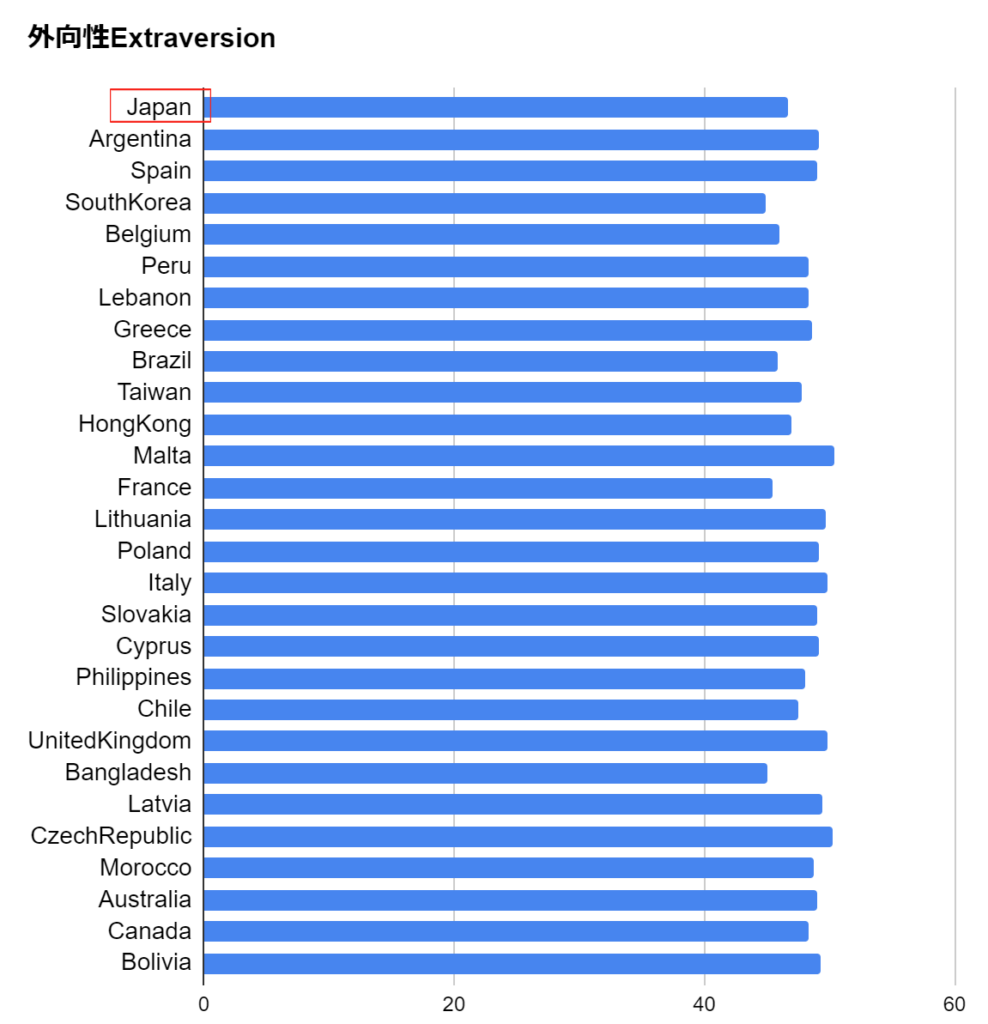
(View the complete research paper for detailed international comparisons.)
- Restrained social expression: Cultural values emphasize modest self-presentation in public settings, leading to more subdued interpersonal interactions
- Preference for quiet activities: Japanese individuals often gravitate toward solitary hobbies and individual pursuits rather than highly social group activities
- Emotional regulation: Society values emotional control and restraint, which naturally reduces outwardly expressive behaviors associated with high extraversion
This low extraversion tendency manifests in various aspects of Japanese daily life, from the quiet atmosphere maintained on public transportation to the preference for smaller, intimate social gatherings over large parties. The cultural emphasis on reading social situations and maintaining group harmony naturally encourages more reserved behavioral patterns. These characteristics have profound implications for international business relationships and cross-cultural communication, where understanding Japanese communication styles becomes crucial for successful interactions.
The Paradox of Japanese Personality Test Agreeableness
Surprisingly, Japanese agreeableness scores fall below international averages, challenging common perceptions of Japanese harmony and cooperation. This counterintuitive finding reveals the complex relationship between cultural behavior expectations and genuine personality expression in Japanese society.
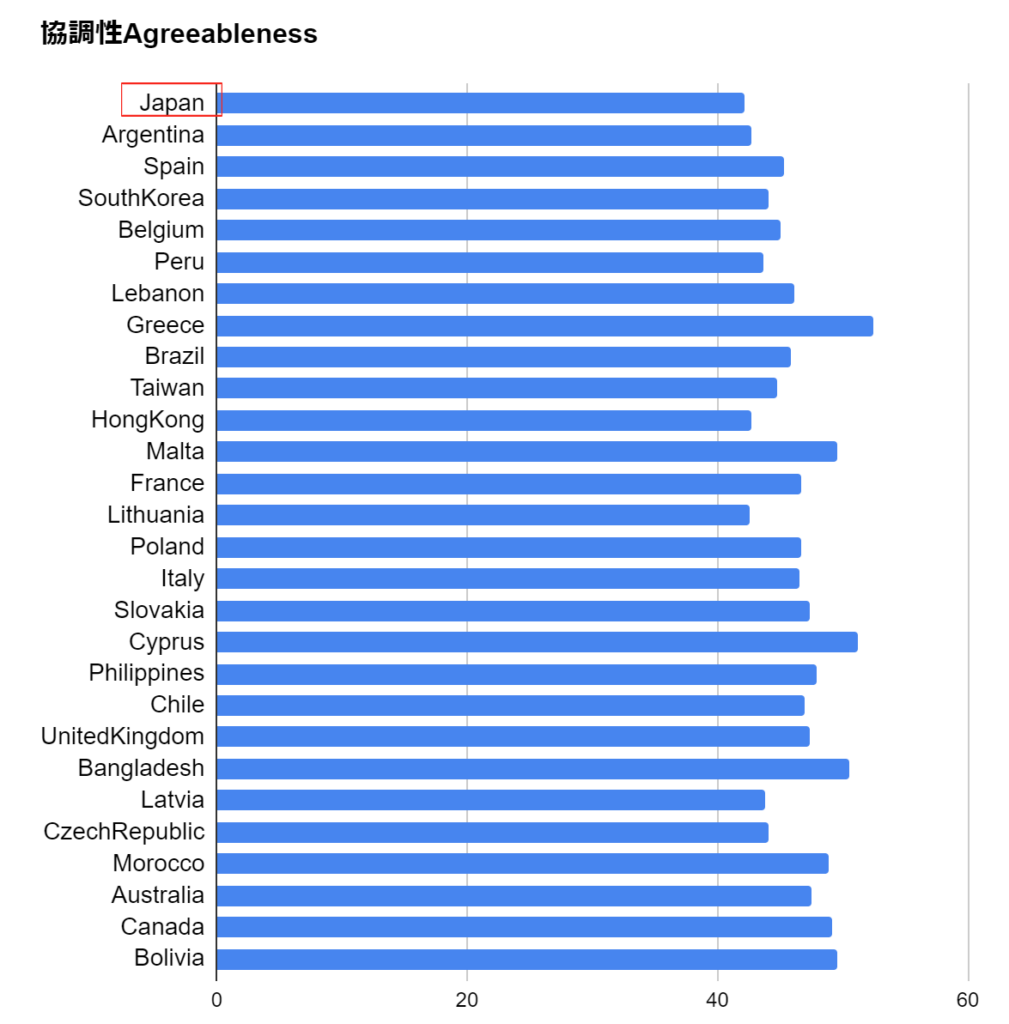
(Access the full research study for comprehensive cross-cultural data.)
- Suppressed self-assertion: Cultural norms emphasizing group harmony often require individuals to suppress personal opinions and desires
- Indirect communication patterns: Preference for avoiding direct confrontation can mask true feelings and reduce genuine cooperative behavior
- Group conformity over individual agreeableness: Focus on maintaining collective unity sometimes prevents authentic interpersonal warmth and flexibility
This phenomenon suggests that what appears as cooperative behavior may actually represent social compliance rather than genuine agreeableness. The cultural emphasis on maintaining social order and avoiding conflict can create an environment where people act cooperatively out of obligation rather than natural inclination. Understanding this distinction becomes particularly important in international business contexts, where authentic relationship-building requires recognizing the difference between surface-level politeness and deeper interpersonal connection. Research indicates that this pattern may contribute to stress and interpersonal challenges in Japanese society, as individuals struggle to balance personal authenticity with social expectations.
High Neuroticism in Japanese Personality Testing
Japan ranks among the highest countries globally for neuroticism scores, indicating elevated levels of anxiety, stress sensitivity, and emotional instability. This finding has significant implications for understanding mental health patterns and social dynamics within Japanese society.
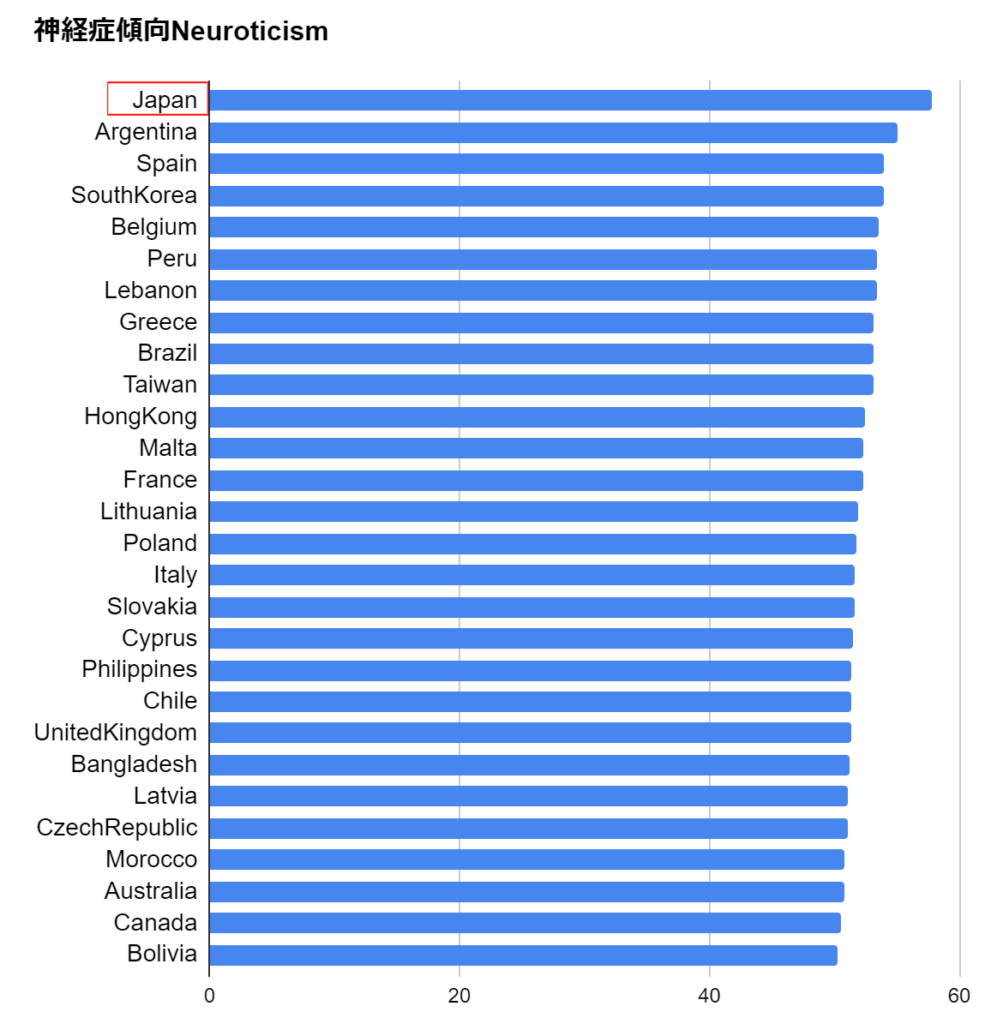
(Review the complete international study for detailed country comparisons.)
- Pervasive anxiety culture: Daily life involves heightened worry and concern, creating chronic stress that affects approximately 70% of the population
- Perfectionist tendencies: Extreme fear of failure leads to overwhelming pressure in academic and professional settings
- Social consideration anxiety: Intense concern about not inconveniencing others generates additional psychological burden
This elevated neuroticism manifests in various aspects of Japanese life, from the meticulous attention to detail in work environments to the constant self-monitoring in social situations. The cultural emphasis on avoiding mistakes and maintaining social harmony can exacerbate natural anxiety tendencies, creating a cycle where stress becomes normalized. Studies suggest that this trait contributes to Japan’s unique approach to quality control, customer service excellence, and social order, but it also correlates with higher rates of stress-related health issues and workplace burnout. Understanding these patterns helps explain both the remarkable achievements of Japanese society and the ongoing challenges related to work-life balance and mental health support.
Conscientiousness Scores: Challenging Japanese Personality Stereotypes
Contrary to popular perception, Japanese conscientiousness scores rank surprisingly low in international comparisons, challenging the stereotype of Japanese reliability and discipline. This unexpected finding reveals the difference between externally imposed behavioral expectations and internally motivated self-discipline.
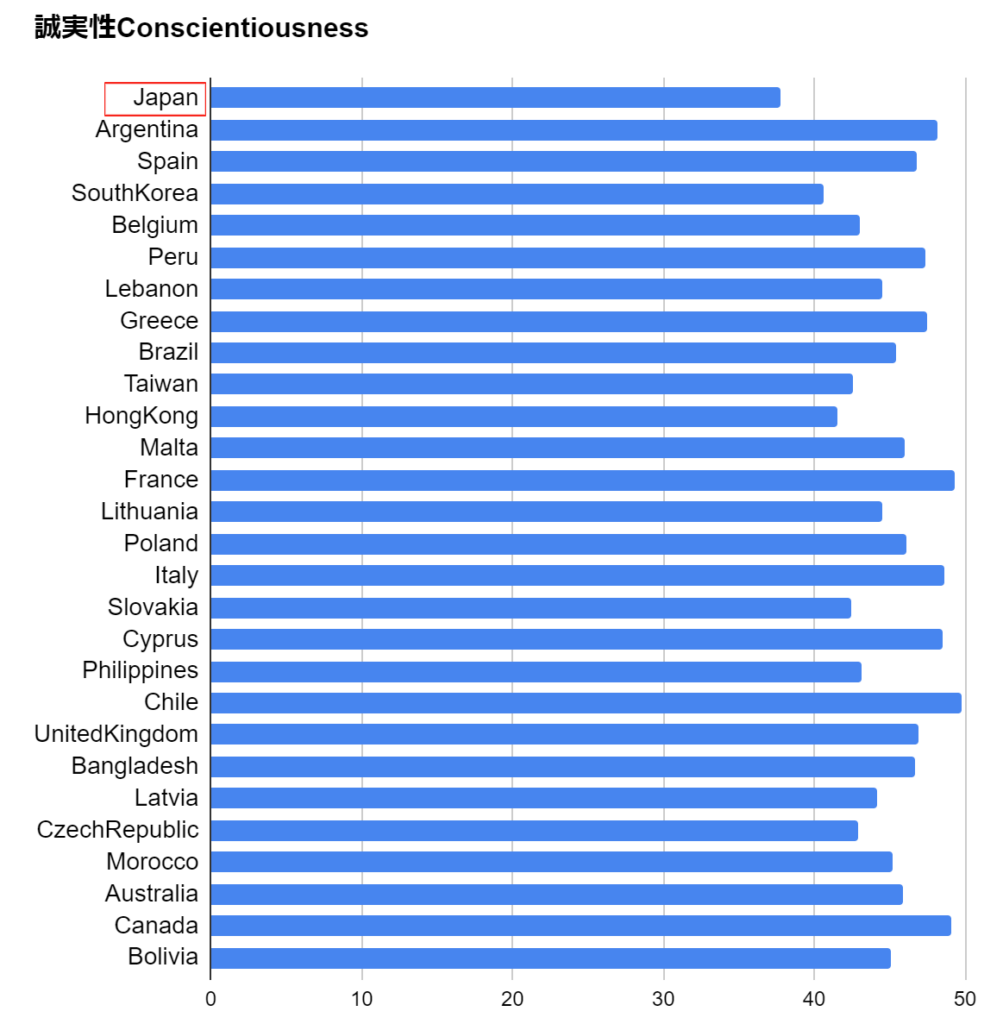
(Explore the full research data for comprehensive analysis.)
- Form over substance: Cultural emphasis on proper procedures and appearances may overshadow genuine personal responsibility and initiative
- External duty compliance: Disciplined behavior often stems from social obligation rather than internal motivation for achievement
- Service mentality pressures: Excessive focus on meeting others’ expectations can reduce authentic self-directed goal pursuit
This pattern suggests that much of what appears as conscientiousness in Japanese behavior actually represents conformity to social expectations rather than intrinsic self-discipline. The rigorous educational system and workplace hierarchies create environments where following prescribed behaviors becomes essential for success, potentially reducing opportunities for developing autonomous conscientious habits. Research indicates that this dynamic may contribute to challenges in creativity and innovation, as individuals become more focused on meeting established standards than pursuing personal goals or developing independent work habits. Understanding this distinction helps explain both the strengths and limitations of traditional Japanese organizational culture.
Low Openness and Japanese Creativity: The Innovation Paradox
Despite scoring low on openness to experience, Japan demonstrates remarkable creativity and innovation, creating an fascinating paradox in personality psychology. This contradiction reveals how cultural factors can channel creative expression in unique ways.
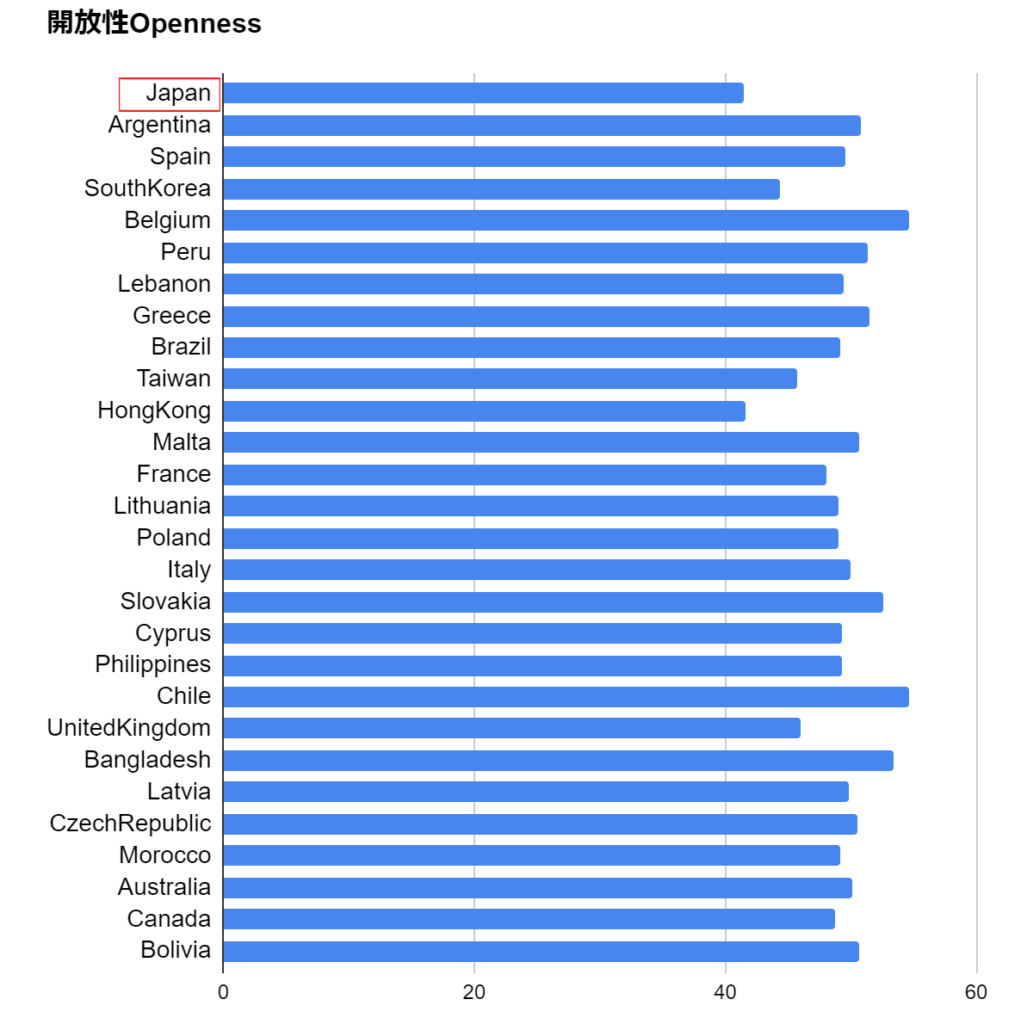
(Access the complete international research for detailed comparisons.)
- Tradition-innovation balance: Japanese culture expertly combines respect for historical practices with selective adoption of beneficial new ideas
- Technology-art fusion: Integration of advanced technology with traditional aesthetic principles creates distinctive creative outputs
- Collective creativity processes: Group-based innovation compensates for individual reluctance to embrace unconventional ideas
This apparent contradiction suggests that openness to experience may manifest differently across cultures. While Japanese individuals may score lower on measures of intellectual curiosity and preference for novelty, their society has developed sophisticated mechanisms for channeling creativity within structured frameworks. Research indicates that Japanese innovation tends to focus on incremental improvements and refinements rather than radical departures from existing paradigms. This approach has proven highly effective in fields like manufacturing, design, and technology, where attention to detail and systematic improvement create superior products. The cultural preference for consensus-building and group harmony may actually enhance certain types of creative collaboration, even while discouraging individual risk-taking and unconventional thinking.
Japanese Personality Test Insights: Social Implications of Introversion
Social Benefits of Introverted Personality Traits
Japanese introverted personality characteristics provide significant social advantages that contribute to societal stability and cohesion. Understanding these benefits reveals how personality traits that might be viewed as limitations in some cultures become strengths within specific social contexts.
- Deep relationship formation: Introverted individuals tend to cultivate fewer but more meaningful relationships, creating strong social bonds built on trust and mutual understanding
- Enhanced concentration and reflection: Higher levels of focus and thoughtful consideration lead to superior quality work and more creative problem-solving approaches
- Conflict avoidance strategies: Natural preference for harmony reduces social friction and promotes peaceful community environments
These characteristics contribute to Japan’s reputation for social order, attention to detail, and harmonious group dynamics. Research suggests that introverted societies often develop more sophisticated systems for non-verbal communication and implicit understanding, reducing the need for explicit verbal negotiation. This can lead to greater efficiency in many social and professional contexts, where shared cultural knowledge allows for smoother interactions. The emphasis on listening and observation over speaking and self-promotion creates environments where thoughtful decision-making and careful consideration are valued over quick responses and bold assertions.
The “Inkyara” Phenomenon in Japanese Personality Studies
Japan’s unique cultural recognition of “inkyara” (introverted individuals) represents a distinct social category that reflects the complex relationship between personality traits and cultural acceptance. This phenomenon provides insight into how Japanese society accommodates and values different personality types.
- Specialized interests and expertise: Inkyara individuals often develop deep knowledge in specific areas, contributing valuable expertise to society through focused dedication
- Online community engagement: Digital platforms provide alternative social spaces where introverted individuals can connect and contribute meaningfully
- Preference for calm environments: Seeking quiet, peaceful settings allows for better concentration and reduced sensory overload
The recognition of inkyara as a legitimate social category demonstrates Japanese society’s nuanced understanding of personality diversity. Rather than viewing introversion as a deficit to be corrected, this cultural framework acknowledges that different personality types contribute unique value to society. Studies indicate that approximately 40% of Japanese young adults identify with some aspects of the inkyara category, suggesting this represents a significant portion of the population. This cultural acceptance may provide protective factors against the social pressures that introverted individuals face in more extroversion-oriented societies, potentially contributing to better mental health outcomes for people with these personality characteristics.
Social Connections Despite Low Extraversion
Japanese society maintains strong social cohesion despite low extraversion scores, demonstrating how cultural mechanisms can compensate for individual personality tendencies. This reveals sophisticated social systems that support connection across different personality types.
- Collectivist cultural framework: Group identity takes precedence over individual expression, creating natural incentives for social engagement regardless of personal extraversion levels
- Formal relationship maintenance: Structured social roles and obligations ensure continued interaction even when spontaneous socializing might not occur
- Public politeness standards: Clear behavioral expectations in public settings facilitate smooth social interaction without requiring high levels of personal extraversion
These cultural adaptations demonstrate how society can successfully function with predominantly introverted populations by developing alternative mechanisms for social connection. Research suggests that Japanese social networks tend to be smaller but more stable than those in highly extroverted cultures, with relationships maintained through consistent, reliable interaction patterns rather than frequent large-group socialization. This approach may actually provide greater social support for individuals during times of stress, as the emphasis on loyalty and long-term commitment creates more dependable relationship structures. The system also reduces the social pressure that introverted individuals might experience in cultures that highly value outgoing, assertive social behavior.
Japanese Personality Assessment: The Agreeableness Contradiction
“Reading the Air” Culture vs. Genuine Agreeableness
Japan’s famous “kuuki wo yomu” (reading the air) culture represents a complex social phenomenon that differs significantly from true agreeableness as measured in personality psychology. This cultural practice reveals how behavioral compliance can mask underlying personality characteristics.
- Non-verbal communication emphasis: High value placed on interpreting unspoken social cues and emotional atmospheres rather than explicit verbal communication
- Harmony over authenticity: Priority given to maintaining group peace even at the expense of personal opinion expression or individual needs
- Implicit social rules: Complex system of unwritten behavioral expectations that govern social interaction and require constant attention to maintain
This cultural framework creates an environment where people appear highly cooperative and considerate while potentially suppressing their genuine feelings and preferences. Research indicates that this system can lead to significant psychological stress, as individuals must constantly monitor social situations and adjust their behavior accordingly. The emphasis on conflict avoidance and group harmony may prevent the development of skills needed for healthy disagreement and authentic relationship building. Studies suggest that approximately 65% of Japanese adults report feeling pressure to suppress their opinions in group settings, indicating the widespread impact of this cultural expectation on individual personality expression.
Sociological Aspects of Japanese Personality Agreeableness
Japanese agreeableness operates within a unique sociological context that prioritizes surface harmony while potentially limiting authentic interpersonal connection. Understanding these dynamics reveals the complex relationship between cultural expectations and genuine personality expression.
- Social pressure and conformity: Behavioral expectations create strong incentives for cooperative appearance, regardless of personal inclination toward helpfulness or empathy
- Educational conditioning: School systems emphasize group harmony and collaborative behavior from early childhood, shaping personality development through institutional practices
- Workplace harmony requirements: Professional environments strongly reward collaborative behavior and penalize assertiveness or individual opinion expression
These sociological factors create an environment where agreeableness becomes a survival skill rather than a genuine personality trait. Research suggests that this system can lead to what psychologists term “emotional labor” – the constant effort required to manage personal feelings to maintain social expectations. While this approach contributes to social stability and reduced conflict, it may also limit personal growth and authentic relationship development. Studies indicate that Japanese individuals often report higher levels of relationship satisfaction in contexts where they feel free to express disagreement or personal preferences, suggesting that enforced agreeableness may actually undermine relationship quality in some circumstances.
Balancing Individualism and Cooperation in Japanese Culture
Japanese society demonstrates a sophisticated balance between individual autonomy and collective cooperation that challenges simple categorizations of personality traits. This balance creates unique dynamics that differ from both highly individualistic and extremely collectivistic societies.
- Individual autonomy within group belonging: People maintain strong personal identity while demonstrating deep loyalty to group affiliations and collective goals
- Creative individuality with harmonious outcomes: Innovation and personal expression are encouraged when they contribute to group benefits and collective success
- Social role fulfillment with personal choice: Individuals navigate prescribed social expectations while maintaining areas of personal freedom and self-determination
This sophisticated balance allows Japanese society to benefit from both individual creativity and collective coordination. Research indicates that this approach may actually optimize certain types of group performance, particularly in complex tasks requiring both innovation and coordination. However, it also creates psychological complexity for individuals who must constantly navigate between personal desires and group expectations. Studies suggest that approximately 55% of Japanese adults report feeling successful in balancing these competing demands, while others experience stress from the ongoing negotiation between individual and collective needs. Understanding this dynamic helps explain both the remarkable achievements of Japanese organizations and the ongoing discussions about work-life balance and personal fulfillment in Japanese society.
Japanese Personality Test Analysis: Neuroticism and Mental Health
The Psychology of Anxiety in Japanese Society
High neuroticism levels in Japanese personality testing reveal a society where anxiety and worry play central roles in daily psychological experience. This characteristic profoundly influences social behavior, decision-making processes, and individual well-being across Japanese society.
- Risk aversion and cautious behavior: Elevated anxiety levels promote careful planning and thorough consideration of potential negative outcomes in decision-making
- Stress management social systems: Society has developed comprehensive support mechanisms, including counseling services and mental health resources, to address widespread anxiety
- Public order through anxiety regulation: Shared concern about social disruption leads to meticulous attention to rules, etiquette, and social harmony
This anxiety-centered psychology contributes to many positive aspects of Japanese society, including exceptional attention to detail, high-quality service standards, and social order. However, research indicates that chronic anxiety also creates significant challenges, with approximately 30% of Japanese adults reporting persistent worry that interferes with daily functioning. The cultural emphasis on not causing trouble for others can amplify personal anxiety, as individuals feel responsible for preventing any potential negative impact on their social groups. Studies suggest that this psychological pattern contributes to both Japan’s remarkable social coordination and the ongoing concerns about mental health support and stress-related illness in the population.
Workplace Impact of High Neuroticism in Japanese Personality
Elevated neuroticism scores among Japanese workers create distinctive workplace dynamics that significantly impact productivity, job satisfaction, and organizational culture. Understanding these effects provides crucial insights into Japanese business practices and employment relationships.
- Excessive stress and performance pressure: High anxiety sensitivity leads to disproportionate stress responses to normal workplace challenges and deadlines
- Perfectionism and overwork tendencies: Fear of making mistakes drives excessive attention to detail and long working hours, potentially leading to burnout
- Interpersonal workplace tension: Anxiety about social harmony can create complicated dynamics where direct communication becomes difficult
These workplace effects contribute to both the strengths and challenges of Japanese organizational culture. The high standards and attention to detail that result from anxiety-driven perfectionism have contributed to Japan’s reputation for quality products and services. However, research indicates that approximately 40% of Japanese workers report stress levels that negatively impact their health and personal relationships. The cultural pressure to maintain workplace harmony while managing high anxiety can lead to communication problems and decision-making delays. Studies suggest that organizations are increasingly recognizing the need for mental health support and stress management programs to address these challenges while maintaining the beneficial aspects of conscientious work practices.
Stress-Neuroticism Correlation in Japanese Psychology
The relationship between neuroticism and stress in Japanese psychology creates complex feedback loops that influence both individual well-being and societal functioning. This correlation has far-reaching implications for mental health policy and social support systems.
- Amplified stress responses: High baseline anxiety makes individuals more sensitive to daily stressors, creating disproportionate emotional reactions to routine challenges
- Reduced stress resilience: Chronic anxiety can diminish coping abilities over time, making it increasingly difficult to manage normal life pressures effectively
- Social stress transmission: High-anxiety individuals can inadvertently increase stress levels in their social groups, creating cascading effects throughout organizations and communities
This stress-neuroticism relationship helps explain many aspects of Japanese social behavior, from the emphasis on preventing inconvenience to others to the development of elaborate courtesy systems that minimize potential stress triggers. Research suggests that approximately 45% of Japanese adults experience chronic stress that affects their physical health, with many reporting sleep problems, digestive issues, and tension-related symptoms. The cultural value placed on enduring hardship without complaint can prevent individuals from seeking help, potentially exacerbating stress-related problems. Understanding these dynamics is crucial for developing effective mental health interventions and workplace policies that address the unique challenges created by the intersection of cultural values and individual psychological characteristics.
Summary: Japanese Personality Test Insights and Cultural Understanding
The comprehensive analysis of Japanese personality testing reveals a fascinating psychological profile that challenges many common assumptions about Japanese society. Through examining the Big Five personality dimensions across international comparisons, we discover that Japanese individuals demonstrate unique characteristics that reflect deep cultural influences and historical development.
- Introversion dominance: Japanese society values quiet, thoughtful behavior that prioritizes group harmony over individual self-expression
- Complex agreeableness patterns: Surface cooperation often masks suppressed personal opinions and authentic relationship challenges
- Elevated anxiety levels: High neuroticism creates both social benefits through careful behavior and significant stress-related challenges
- Conscientiousness misconceptions: Apparent discipline often reflects external pressure rather than intrinsic motivation
- Selective openness to innovation: Low openness scores coexist with remarkable creativity channeled through traditional frameworks
Understanding these Japanese personality test results provides valuable insights for cross-cultural communication, international business relationships, and psychological research. These findings demonstrate how personality traits interact with cultural values to create unique social dynamics that influence everything from workplace behavior to mental health patterns. Recognizing these patterns helps build more effective approaches to intercultural understanding and collaboration in our increasingly connected global society.

Writer & Supervisor: Eisuke Tokiwa
Personality Psychology Researcher / CEO, SUNBLAZE Inc.
As a child he experienced poverty, domestic abuse, bullying, truancy and dropping out of school — first-hand exposure to a range of social problems. He spent 10 years researching these issues and published Encyclopedia of Villains through Jiyukokuminsha. Since then he has independently researched the determinants of social problems and antisocial behavior (work, education, health, personality, genetics, region, etc.) and has published 2 peer-reviewed journal articles (Frontiers in Psychology, IEEE Access). His goal is to predict the occurrence of social problems. Spiky profile (WAIS-IV).
Expertise: Personality Psychology / Big Five / HEXACO / MBTI / Prediction of Social Problems
Researcher profiles: ORCID / Google Scholar / ResearchGate
Social & Books: X (@etokiwa999) / note / Amazon Author Page