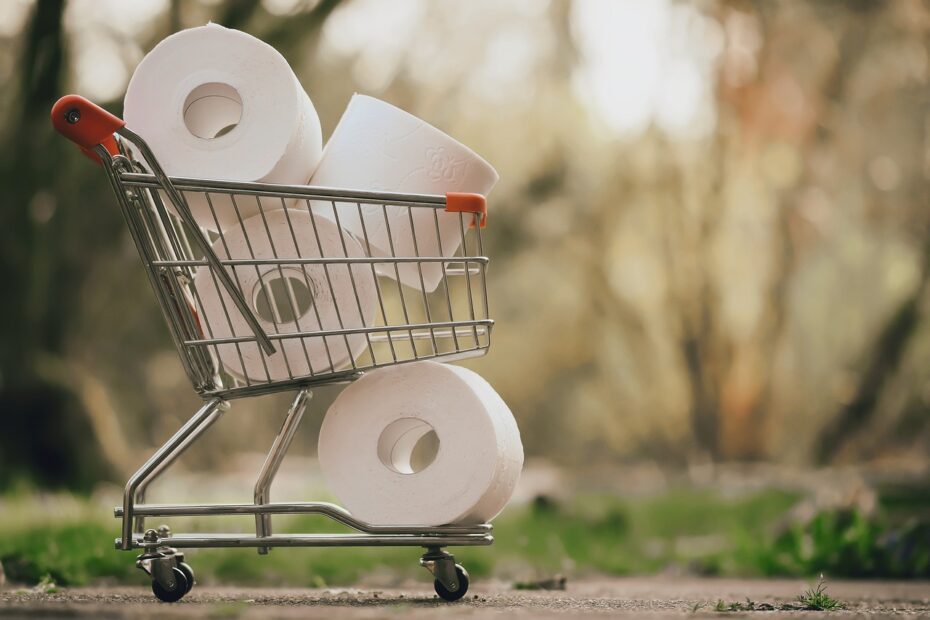
Understanding panic buying personality traits can help explain why some people rush to clear supermarket shelves during a crisis while others remain calm. Research conducted during the COVID-19 pandemic reveals that specific personality characteristics — including extraversion, neuroticism, openness, and a trait called dispositional greed — are meaningfully linked to hoarding behavior psychology. This article breaks down those findings so you can better understand the psychological forces driving emergency buying behavior, and what you can do about them.
When the pandemic hit in 2020, shortages of masks, toilet paper, hand sanitizer, and other daily necessities made headlines worldwide. Japan was no exception. A research team led by Shinya Yoshino surveyed 530 Tokyo residents during the state of emergency declared in May 2020, examining how the Big Five personality traits — extraversion, agreeableness, conscientiousness, neuroticism, and openness — along with dispositional greed, predicted how much people stockpiled 8 categories of essential goods. The findings offer a rare, data-driven window into crisis consumer behavior and what separates hoarders from non-hoarders at a psychological level.
Once again, personality researcher and author of Villain Encyclopedia, Tokiwa (@etokiwa999), will provide the explanation.
※We have developed the HEXACO-JP Personality Assessment! It has more scientific basis than MBTI. Tap below for details.

目次
- 1 The 5 Panic Buying Personality Traits Identified by Research
- 2 Dispositional Greed: The Strongest Predictor of Panic Buying Personality Traits
- 3 Other Factors That Shaped Emergency Buying Behavior
- 4 About the Study: How the Research Was Conducted
- 5 Practical Advice: What to Do If You Recognize These Traits in Yourself
- 6 Frequently Asked Questions
- 6.1 What personality types are most likely to panic buy?
- 6.2 Why does neuroticism lead to hoarding behavior during a crisis?
- 6.3 Is panic buying caused by selfishness or fear?
- 6.4 Does fear of getting sick cause people to stockpile more?
- 6.5 Do people who live with others stockpile more than those who live alone?
- 6.6 Why did product availability increase panic buying rather than reduce it?
- 6.7 Can panic buying behavior be reduced at a social or policy level?
- 7 Summary: What Your Personality Reveals About Your Crisis Buying Habits
The 5 Panic Buying Personality Traits Identified by Research
The study found that 4 of the Big Five personality dimensions showed a statistically significant relationship with panic buying, while the fifth — conscientiousness — produced inconclusive results. Here is a detailed look at each trait and the psychological mechanism behind its connection to hoarding behavior.
1. Extraversion: Social Energy Can Drive Stockpiling
Extraversion showed a positive correlation with panic buying behavior (r = 0.16, p < .001). This may seem counterintuitive at first — extraverts are generally optimistic and tend to hold positive expectations about the future. However, research suggests that extraverts also tend to seek stimulation and are more action-oriented, which may translate into proactive stockpiling during uncertain times. Rather than waiting to see how a crisis unfolds, extraverts are more likely to take immediate, decisive steps — including buying more than they currently need.
It is also worth noting that extraverts are more socially connected. During the early days of the pandemic, word spread quickly through social networks about shortages, and extraverts — being plugged into those networks — may have responded faster to rumors of scarcity. Their tendency toward social comparison could also encourage impulsive buying traits: if people around them were stockpiling, extraverts were more likely to follow suit.
2. Neuroticism and Stress Response: Anxiety-Driven Hoarding
Neuroticism — the tendency to experience negative emotions like anxiety, worry, and fear — showed a positive correlation with panic buying (r = 0.14, p < .001). People who score high on neuroticism are particularly sensitive to perceived threats, making them more likely to react strongly when they sense that essential goods might run out. This is a textbook example of the neuroticism and stress response dynamic playing out in a real-world crisis.
Importantly, the study found that it was not the fear of getting infected that drove hoarding among neurotic individuals — rather, it was the specific fear of product shortages. This is a meaningful distinction. A highly anxious person who worries that supermarket shelves will empty out is more motivated by scarcity mindset psychology than by health concerns per se. The emotional discomfort of imagining “not having enough” becomes a powerful trigger for emergency buying behavior.
3. Openness to Experience: Imagination as a Hoarding Catalyst
Openness to experience showed the strongest correlation among the Big Five traits (r = 0.21, p < .001). People high in openness are curious, imaginative, and highly receptive to new ideas. These qualities are generally considered strengths — but in a crisis, they can backfire. Highly open individuals tend to vividly imagine future scenarios, including worst-case ones. This “mental simulation” ability may lead them to picture a world where essential goods have run out, prompting pre-emptive stockpiling.
Additionally, open individuals may view panic buying itself as a novel, pragmatic response to an unprecedented situation. Rather than seeing stockpiling as socially problematic, they might frame it as intelligent forward planning — “trying something new” to cope with uncertainty. Their flexible thinking, paradoxically, may make them more susceptible to hoarding behavior psychology when circumstances seem to justify it.
4. Agreeableness: Conformity Can Swing Either Way
Agreeableness did not show a direct correlation with panic buying in raw analysis, but became a significant predictor (β = 0.12, 95% CI: 0.03–0.21) once the other personality traits were statistically controlled. This nuanced finding points to an interesting internal tension within the agreeableness trait itself. Agreeableness has 2 distinct components: compassion (genuine concern for others) and accommodation (conforming to the social environment).
These 2 facets pull in opposite directions when it comes to hoarding behavior:
- Compassion side: A compassionate, agreeable person may consciously refrain from buying too much, thinking “I should leave some for others who need it more.”
- Accommodation side: A conformity-driven, agreeable person may stockpile simply because everyone around them is doing it, driven by social pressure and a desire not to be left behind.
Research suggests that in crisis situations, the accommodation facet tends to dominate. When hoarding is visible and widespread in a community, agreeable individuals are more likely to join in. Conversely, if social norms shift to condemning panic buying, agreeable people are among the first to pull back. Their buying behavior is particularly sensitive to the social atmosphere around them.
5. Conscientiousness: The Trait With No Clear Answer
Unlike the other 4 traits, conscientiousness did not show a clear, consistent relationship with panic buying in this study — and this ambiguity is actually theoretically interesting. Conscientiousness contains at least 2 sub-facets that pull in completely opposite directions:
- Planning orientation: Conscientious people are forward-thinking and organized. This could lead them to stock up on supplies before a crisis worsens — a rational, deliberate form of hoarding.
- Impulse control: Conscientious people also tend to exercise strong self-regulation. This could prevent them from making excessive or emotionally driven purchases.
Because these 2 forces may cancel each other out, the overall effect of conscientiousness on stockpiling appears statistically flat. Prior research on this topic has also been inconsistent, suggesting that which aspect of conscientiousness dominates likely depends on the individual and the specific crisis context. In short, knowing someone is highly conscientious tells you relatively little about whether they will panic buy.
Dispositional Greed: The Strongest Predictor of Panic Buying Personality Traits
Among all the variables examined, dispositional greed was the single most powerful predictor of panic buying behavior (β = 0.16, 95% CI: 0.07–0.25). Dispositional greed is defined as a stable personality tendency to always want more and to prioritize one’s own accumulation of resources over the needs of others. It is distinct from situational greed (feeling temporarily greedy in a specific moment) — it is a persistent character trait.
In the context of a pandemic, dispositional greed translates directly into excessive stockpiling. The internal calculus of a highly greedy individual is essentially: “I need to secure as much as I can for myself, regardless of whether others can also access what they need.” This is not simply a strong neuroticism and stress response to fear — it is a self-prioritizing motivation that operates even when the greedy person is not particularly anxious. The desire to have “enough and then some” overrides social concern.
The study also found that dispositional greed was positively correlated with both extraversion and neuroticism. This makes psychological sense:
- Greedy + Extraverted: Stimulus-seeking and resource-acquiring behaviors may both stem from a desire for tangible rewards and social dominance.
- Greedy + Neurotic: Anxiety about future shortages can amplify an already-present desire to accumulate, creating particularly intense hoarding impulses.
Critically, dispositional greed maintained its predictive power even after statistically controlling for these other traits — meaning its influence on impulsive buying traits and stockpiling goes beyond what extraversion and neuroticism alone can explain. It is an independent driver of crisis consumer behavior.
Other Factors That Shaped Emergency Buying Behavior
Personality traits were not the only variables that mattered. The study also identified 3 situational factors that influenced how much people stockpiled, independent of who they were as individuals.
Fear of Infection Did NOT Predict Hoarding
One surprising finding was that perceived vulnerability to infection — how likely someone felt they personally were to catch COVID-19 — did not predict panic buying. This suggests that hoarding behavior psychology is less about protecting one’s own body from disease and more about protecting one’s household supply of goods. In other words, people did not stockpile because they were afraid of getting sick; they stockpiled because they were afraid of running out of necessities. The scarcity mindset psychology, not health anxiety, was the operative fear.
Living With Others Increased Stockpiling Levels
People who lived with others — whether family, roommates, or partners — tended to stockpile significantly more than people who lived alone. The practical explanation is straightforward: buying for a household of 4 naturally requires more volume than buying for 1. However, a social conformity mechanism may also be at work. When household members are all anxious about shortages, the shared emotional climate can amplify individual hoarding tendencies. Seeing a family member or roommate stocking up can normalize and even encourage the same behavior in others within the same home.
Product Availability Paradoxically Encouraged More Buying
The study found that when essential goods were relatively easy to obtain at the time of the survey, people bought more — not less. This may seem counterintuitive. However, it reflects a key insight about scarcity mindset psychology: when people can access goods freely, they take the opportunity to stock up, fearing that availability will soon disappear. Conversely, severe shortage conditions actually constrained how much individuals could buy, regardless of their personality or motivation. Product availability acted as an enabling condition for hoarding rather than a deterrent to it.
About the Study: How the Research Was Conducted
This study was conducted in May 2020, at the height of Japan’s first COVID-19 state of emergency, providing a rare real-world laboratory for examining crisis consumer behavior. Tokyo residents were under strong advisories to stay home, and daily life was significantly disrupted. Shelves had already been cleared of masks and sanitizer in earlier months, and the memory of those shortages was fresh for all participants.
The sample consisted of 530 residents of Tokyo aged 20 to 59, recruited through an online research panel:
- Gender: 256 men, 274 women (approximately equal)
- Age distribution: Roughly one-third each in their 30s, 40s, and 50s
- Average age: 44.26 years (standard deviation: 8.43 years)
Hoarding behavior was measured by asking participants how much more — or less — of each of the following 8 product categories they had purchased in the survey period compared to typical pre-pandemic buying (February to April of that year), rated on a 7-point scale:
- Face masks
- Toilet paper
- Tissue paper
- Alcohol-based hand sanitizer
- Hand soap
- Wet wipes
- Rice
- Instant foods
Personality was assessed using validated scales for the Big Five traits as well as a dedicated measure of dispositional greed. Statistical analyses included both bivariate correlations and multiple regression, allowing the researchers to assess the unique contribution of each personality trait after accounting for the influence of all the others.
Practical Advice: What to Do If You Recognize These Traits in Yourself
Understanding your own panic buying personality traits is the first step toward more balanced crisis decision-making. Here is targeted guidance for each psychological profile identified in the research:
If You Tend Toward High Neuroticism
Why you’re at risk: Your heightened stress response means product shortages feel like genuine emergencies, triggering strong urges to stockpile “just in case.”
- Set a purchase ceiling before you shop. Decide in advance: “I will buy no more than 2 weeks’ worth of any item.” Having a concrete rule reduces in-the-moment anxiety-driven impulses.
- Seek credible information sources. Anxiety tends to worsen in an information vacuum. Following verified public health communications can help ground your fears in reality rather than worst-case imagination.
- Practice the “pause and breathe” technique. If you feel an urgent need to buy extra, wait 10 minutes before adding items to your cart. Often the urgency fades.
If You Score High on Extraversion or Openness
Why you’re at risk: Extraverts act quickly on social cues, and open individuals vividly imagine future problems — both of which can accelerate impulsive buying traits during a crisis.
- Channel action-orientation constructively. Instead of stockpiling, redirect your proactive energy toward community action — checking in on neighbors, sharing information, or volunteering. This satisfies the urge to “do something” without depleting shared resources.
- Use your imagination for others too. If you are prone to imagining shortages for yourself, deliberately extend that same visualization to others: “What happens to an elderly neighbor if I take all the hand sanitizer?” Open individuals respond well to perspective-taking exercises.
If You Recognize Dispositional Greed Tendencies
Why you’re at risk: The desire to secure resources for yourself is the most powerful predictor of excessive hoarding, and it can override normal social concern.
- Make the social cost explicit and visible. Research on behavior change suggests that when abstract social harm becomes concrete and personal, motivation to change increases. Before overstocking, ask: “Who specifically might not be able to buy this because of my choice?”
- Use public pledges or personal commitments. Telling someone — a friend, a partner — “I will only buy what I need this week” creates accountability that counteracts greedy impulses.
- Reframe sufficiency as a strength. Buying only what you need is not weakness or naivety — it is a form of social intelligence and community resilience.
If You Are High in Agreeableness
Why you’re at risk: Your conformity facet may cause you to mirror the hoarding behavior of those around you, even when your compassion facet disapproves.
- Identify your reference group deliberately. Agreeable people are influenced by whom they see as their in-group. Actively follow community voices that model calm, measured purchasing — this shifts the social norm you conform to.
- Trust your empathy. Your compassion is a genuine strength. When you feel pulled toward stockpiling because “everyone is doing it,” remind yourself that your natural concern for others is more aligned with restraint than excess.
Frequently Asked Questions
What personality types are most likely to panic buy?
Research suggests that individuals high in extraversion, neuroticism, openness to experience, and dispositional greed tend to show the strongest panic buying behavior. Of these, dispositional greed — a stable tendency to prioritize personal accumulation over others’ needs — was the single most powerful predictor in a study of 530 Tokyo residents during the COVID-19 pandemic. Agreeableness also predicted hoarding once other traits were controlled for statistically.
Why does neuroticism lead to hoarding behavior during a crisis?
Neuroticism is characterized by a heightened sensitivity to threat and a tendency to experience anxiety more intensely than average. During crises like a pandemic, neurotic individuals tend to catastrophize the possibility of product shortages, which triggers preemptive stockpiling. Importantly, research indicates it is not fear of getting infected that drives this — it is specifically the anxiety about running out of essential goods that fuels emergency buying behavior in neurotic personalities.
Is panic buying caused by selfishness or fear?
Both motivations appear to play independent roles. Fear-based hoarding is primarily driven by neuroticism — anxiety about future scarcity — and tends to be reactive. Selfishness-based hoarding is captured by the dispositional greed construct, which predicts stockpiling even beyond what anxiety alone explains. This means some people hoard primarily out of worry, while others do so because of a stable personality tendency to want more for themselves regardless of the social consequences.
Does fear of getting sick cause people to stockpile more?
Interestingly, no. The study found that perceived vulnerability to infection — how susceptible a person believed they were to catching COVID-19 — showed no significant relationship with panic buying. This suggests that hoarding is more closely tied to scarcity mindset psychology (fear of running out of goods) than to health anxiety per se. People appear to stockpile to protect their supply chain, not primarily to protect their physical health.
Do people who live with others stockpile more than those who live alone?
Yes. The study found that living with other people — whether family members or roommates — was associated with higher levels of stockpiling. The most straightforward reason is practical: households need more supplies for more people. However, social conformity may also play a role. When one household member begins buying extra, others tend to follow, creating an internal social pressure dynamic that amplifies overall hoarding within the home.
Why did product availability increase panic buying rather than reduce it?
Counterintuitively, participants who found it easier to obtain essential goods at the time of the study tended to buy more, not less. This reflects a core principle of scarcity mindset psychology: when products are accessible, people seize the opportunity to stock up out of fear that availability will soon disappear. Severe shortages, by contrast, physically constrained how much people could purchase. Availability acts as an enabler of hoarding behavior, not a signal that stockpiling is unnecessary.
Research suggests that targeted communication and psychological support can help. Because hoarding is driven partly by anxiety about scarcity, clear and credible messaging about supply chain stability tends to reduce unnecessary stockpiling among anxiety-prone individuals. Purchase limits set by retailers address the dispositional greed component directly. For agreeableness-driven conformity hoarding, prominent social norms messaging — showing that most people are buying only what they need — can effectively shift behavior by redefining what is socially acceptable.
Summary: What Your Personality Reveals About Your Crisis Buying Habits
The research is clear: panic buying personality traits are not random — they follow recognizable psychological patterns. Studies indicate that individuals high in extraversion, neuroticism, openness, and agreeableness all show elevated hoarding tendencies through distinct mechanisms — action-orientation, anxiety, future imagination, and social conformity respectively. Conscientiousness, with its competing sub-facets of planning and self-control, shows no consistent pattern. And above all, dispositional greed stands out as the strongest, most independent driver of excessive stockpiling during a crisis. Beyond personality, situational factors — living with others, and ironically, easy product access — also fuel emergency buying behavior, while fear of infection alone does not.
Understanding these dynamics is not about labeling or judging people. It is about building the kind of self-awareness that allows you to pause before clearing a shelf and ask: Am I acting from genuine need, from anxiety, or from a habit of always wanting more? The next time uncertainty looms, use what you’ve learned about your own psychological profile to make choices that protect not just your household — but your community too. If you’re curious about where you personally land on these psychological dimensions, explore your own Big Five personality profile to see which of these crisis-response patterns matches your character.