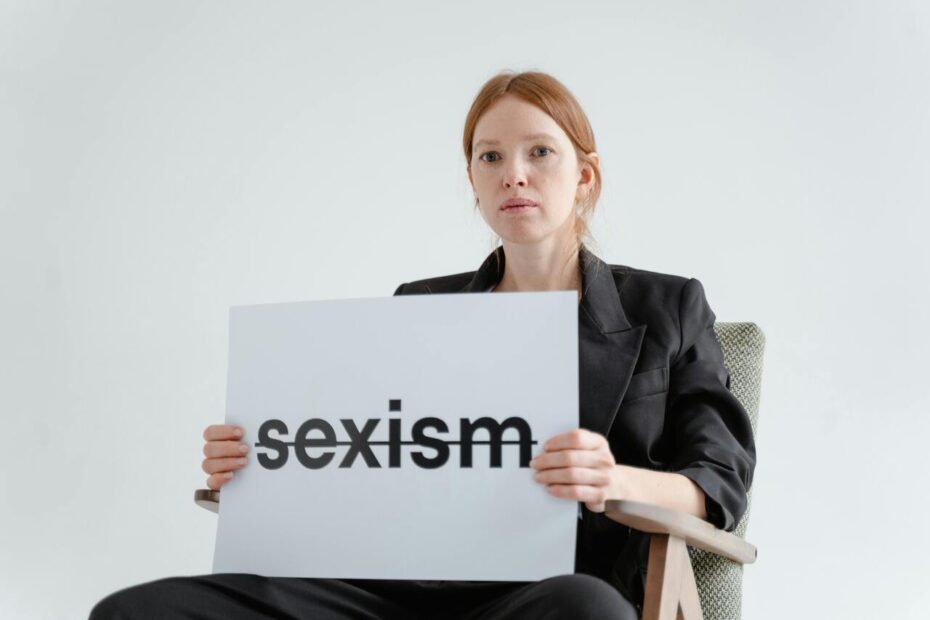
Gender discrimination is a social issue that can still be seen in many situations today.
Around us, there are instances where different treatment occurs between men and women through schools, workplaces, and media.
Such discriminatory attitudes affect individual career and educational opportunities, and can also hinder the development of society as a whole.
Especially for young people, it is important to understand gender discrimination and learn how to deal with it when shaping their own future.
In this article, we will explore the fundamental causes of gender discrimination and ways to confront it, while referring to a paper titled “BELIEF IN AN UNJUST WORLD AND PERSONALITY TRAITS AS PREDICTORS OF SEXIST ATTITUDES“.
Once again, personality researcher and author of Villain Encyclopedia, Tokiwa (@etokiwa999), will provide the explanation.
※We have developed the HEXACO-JP Personality Assessment! It has more scientific basis than MBTI. Tap below for details.

目次
- 1 What is Gender Discrimination? Let’s Learn the Basics
- 2 What are the predictive factors of sexist attitudes?
- 3 Personality Traits That Show Sexist Attitudes
- 4 Analyzing the Sociological Aspects of Sexism
- 5 Steps to Address Gender Discrimination
- 5.1 How to Raise Awareness of Gender Discrimination
- 5.2 Specific Methods for Changing Discriminatory Attitudes
- 5.3 Addressing Gender Discrimination Issues in School Education
- 5.4 How to Combat Gender Discrimination in the Workplace
- 5.5 What We Can Do to Eliminate Gender Discrimination Throughout Society
- 6 In Conclusion
What is Gender Discrimination? Let’s Learn the Basics
What specifically are discriminatory attitudes?
Gender discrimination is treating people unfairly based on their gender.
Gender discrimination occurs in workplaces, schools, and daily life.
For example, people may receive different salaries for the same work based on their gender.
It is also gender discrimination when certain behaviors or roles are required only of people of specific genders.
Main forms include the following:
- Differences in promotion opportunities in the workplace
- Bias in role distribution at school
- Inequality in speaking opportunities in public places
Since gender discrimination can be seen in many situations, it is important to recognize its existence.
In summary, gender discrimination is receiving unequal treatment based on gender, and this takes various forms.
The Difference Between Hostile Sexism and Benevolent Sexism
Hostile sexism is an attitude that includes clear hostility toward women.
On the other hand, benevolent sexism appears favorable on the surface but views women as inferior beings.
Specific examples of hostile sexism are as follows:
- The prejudice that women cannot make rational judgments
- Considering women unsuitable as leaders in the workplace
Benevolent sexism includes the following ways of thinking:
- The idea that women are weak beings who should be protected
- Limiting women to roles in the home
These forms of sexism lead to unequal ways of thinking and behavior toward women.
In summary, hostile sexism shows clear hostility toward women, while benevolent sexism appears favorable on the surface but can place women in subordinate positions.
What are the Social Impacts of Gender Discrimination?
Gender discrimination has various negative impacts on society as a whole.
These impacts range from restrictions on workplace and educational opportunities to mental health problems.
The main social impacts are as follows:
- Inequality of opportunities in the labor market
- Loss of growth opportunities in educational environments
- Stress and decreased self-evaluation
These impacts affect not only individuals but also hinder the development of society as a whole.
In summary, gender discrimination causes social losses across multiple areas, and its elimination is called for.
Why Does Gender Discrimination Exist?
Gender discrimination is rooted in historical and cultural backgrounds.
In many cases, it is because old customs and beliefs continue into modern times.
The main reasons why gender discrimination exists are as follows:
- Adherence to traditional gender roles
- Gender-based hierarchy within power structures
This creates and solidifies inequality based on gender.
In summary, gender discrimination is inherited from old customs and unequal power structures and continues to have an impact to this day.
Common Misconceptions About Gender Discrimination
Gender discrimination is not something that only men do to women.
In fact, women can also engage in gender discrimination against other women or men.
Common misconceptions about gender discrimination are as follows:
- The misconception that gender discrimination only refers to obvious discriminatory behavior
- The view that gender discrimination exists only in specific cultures or countries
Resolving these misconceptions is the first step to deepening understanding of gender discrimination.
In summary, gender discrimination exists in various forms and can be perpetrated by anyone, so broad understanding is necessary.
What are the predictive factors of sexist attitudes?
Belief in an Unjust World and Sexism
Belief in an unjust world is strongly associated with sexist attitudes.
This belief is strengthened when people feel they are often treated unfairly.
How this belief influences sexism is as follows:
- Using sexism to justify unfairness
- Viewing social inequality as natural
This can lead to the justification and reinforcement of sexist attitudes.
In summary, belief in an unjust world is one factor that promotes sexism, and it is important to change this belief.
How Personality Traits Influence Sexism
Personality traits greatly influence an individual’s sexist attitudes.
In particular, openness, conscientiousness, and emotionality are related.
How personality traits affect sexism is as follows:
- Low openness makes one prone to adhering to traditional gender roles
- High emotionality makes one easily influenced by emotions, making prejudice more likely to form
Understanding personality traits makes it easier to predict sexist attitudes.
In summary, since sexist behaviors and thoughts are influenced by personality traits, understanding these traits leads to prevention.
Are People with High Emotionality Sexist?
People with high emotionality, while easily empathetic toward others, may sometimes hold prejudices.
This trait involves intense emotional fluctuations that can influence judgment.
The relationship between emotionality and sexism is expressed as follows:
- Making emotion-based judgments and holding prejudices against specific groups
- In stressful situations, sometimes relying on existing stereotypes
High emotionality can make one easily influenced by emotions, potentially leading to the formation of prejudices.
In summary, since people with high emotionality are easily swayed by emotions, it is important to consciously strive not to hold prejudices.
The Impact of Conscientiousness on Sexism
People with high conscientiousness generally tend to take fair and equal attitudes.
This trait includes a sense of responsibility and respect for norms that should be followed.
The impact of conscientiousness on sexism is as follows:
- Valuing fairness and unlikely to adopt sexist attitudes
- Respecting rules and ethics, avoiding prejudice-based actions
People with high conscientiousness suppress sexist behaviors and strive for equal treatment.
In summary, conscientiousness plays a protective role against sexism and promotes fair attitudes.
How Openness Acts on Sexist Attitudes
People with high openness are receptive to new experiences and different perspectives and are unlikely to hold sexist attitudes.
This trait includes creativity, curiosity, and flexible thinking.
The impact of openness on sexism is as follows:
- Receptive to different cultures and new ideas
- Often challenges fixed roles and stereotypes
High openness deepens understanding of diverse people and ways of thinking.
In summary, openness helps reduce sexist attitudes and contributes to the realization of a more equitable society.
Personality Traits That Show Sexist Attitudes
The Relationship Between Personality and Sexist Attitudes
Personality traits have a significant impact on sexist behaviors and ways of thinking.
In particular, conscientiousness, openness, and emotionality are closely related to attitudes toward sexism.
Looking at the impact of personality traits on sexism, the following points can be identified:
- People with high conscientiousness tend to respect equality
- People with high emotionality tend to make emotion-based judgments and may form prejudices
Differences in personality can be factors that shape people’s sexist attitudes.
In summary, since sexist attitudes are influenced by personality traits, understanding individual personalities can lead to prevention.
Personality Traits That Cause Benevolent Sexism
Benevolent sexism appears superficially as protection of women, but there are also personality traits that support this.
In particular, people with high emotionality and those who find value in traditional roles often have this tendency.
The personality traits that cause benevolent sexism are as follows:
- High emotionality: From empathy toward others, they may feel that women need to be protected
- Low openness: They tend to cling to traditional roles, which can lead to sexist attitudes
These personality traits become the driving forces behind benevolent sexism.
In summary, since specific personality traits can be factors that cause benevolent sexism, it is important to deepen understanding of sexism.
Personality Associated with Hostile Sexism
Hostile sexism is an attitude that shows direct hostility or contempt toward women, but specific personality traits can strengthen this.
Particularly, people with low conscientiousness or openness tend toward this.
The personality traits associated with hostile sexism are as follows:
- Low conscientiousness: Due to lack of respect for rules and ethics, respect for others decreases
- Low openness: There is insufficient understanding of new perspectives and different cultures, and behavior based on stereotypes is observed
These personality traits are often behind hostile sexism.
In summary, since specific personality traits may strengthen hostile sexism, it is important to understand one’s own personality and deal with it accordingly.
The Role of Personality Traits in Predicting Sexism
It is possible to predict sexist attitudes based on personality traits.
In particular, people with high emotionality or conscientiousness tend to be less likely to take sexist attitudes.
The role of personality traits in predicting sexism is as follows:
- High conscientiousness: They strive for fair treatment and are less likely to engage in sexist behavior
- High emotionality: While easily influenced by emotions, strong empathy toward others suppresses sexist attitudes
These personality traits may play a protective role against sexist attitudes.
In summary, since sexist attitudes are predicted by personality traits, understanding and addressing individual personalities is important.
Variation in Sexist Attitudes by Personality Traits
Sexist attitudes can vary greatly depending on individual personality traits.
In particular, people with high openness are more likely to accept new ideas and different cultures, making them less likely to have sexist attitudes.
The variation in sexist attitudes by personality traits is shown below:
- High openness: Because they accept diverse values, they are less likely to have sexist preconceptions
- Low emotionality: Without being swayed by emotions, they can make objective judgments and easily avoid prejudice
The impact these personality traits have on sexist attitudes varies among individuals, but they may work in the direction of reducing sexism.
In summary, by understanding variation due to personality traits, we can obtain clues for preventing or improving sexist attitudes.
Analyzing the Sociological Aspects of Sexism
Historical Background of Sexism and Its Impact on Modern Times
Deep historical background exists at the root of sexism.
Past social structures and cultural norms have been inherited into modern times, influencing sexist attitudes and behaviors.
The key points for understanding the historical background of sexism and its impact on modern times are as follows:
- Traditional gender roles have been deeply rooted in society for a long time
- Industrialization and legal changes have altered awareness of sexism
By looking back at history, we can understand the deep-rooted challenges that modern sexism holds.
In summary, sexism has existed since ancient times, and its forms have changed with the times, so it is still treated as an important issue in modern society.
The Impact of Sexism on Individual Careers
Sexism can be a major obstacle to individual career development.
Particularly, bias in promotion opportunities and evaluations in the workplace is often observed.
The specific impacts of sexism on careers are as follows:
- Gender-based inequality in promotions and project assignments
- Gender-based salary differences and different treatment in the workplace
These impacts can suppress individual abilities and potential, hindering professional growth.
In summary, sexism has a tremendous impact on individual careers, and equality of opportunity is required.
Problems of Sexism in Education
Sexism is also a deep-rooted problem in educational settings.
In particular, there are gender-based curriculum differences and bias in learning opportunities.
The main problems of sexism in education are as follows:
- Different educational content and activity participation based on gender
- Differences in teacher expectations based on gender
As a result, students may unconsciously accept roles based on their gender.
In summary, gender discrimination in education limits children’s abilities and deprives them of opportunities to fully realize their potential.
Media’s Impact on Gender Discrimination
Media has a powerful influence on public consciousness formation and can reinforce norms of gender discrimination.
Particularly, gender stereotypes are often repeatedly presented in advertisements, TV programs, and movies.
Media’s impact on gender discrimination is as follows:
- Gender-based roles and behaviors are portrayed as normal
- Emphasis on gender stereotypes in reality shows and dramas
As a result, consumers may routinely accept discriminatory messages and perceive them as standard.
In summary, media spreads gender discriminatory stereotypes, which can potentially foster gender discrimination throughout society.
Social Initiatives to Reduce Gender Discrimination
Reducing gender discrimination requires efforts from society as a whole.
Particularly, improvements in education, law, and workplace environments are considered important.
Social initiatives to reduce gender discrimination are as follows:
- Implementation of awareness-raising programs on gender discrimination
- Legal prohibition of gender discrimination and establishment of strict penalties
- Strengthening policies for providing equal opportunities in the workplace
Through these initiatives, we aim to eliminate the root causes of gender discrimination and achieve a more equitable society.
In summary, improving education and legal frameworks is necessary to reduce gender discrimination, and collaboration throughout society is required.
Steps to Address Gender Discrimination
How to Raise Awareness of Gender Discrimination
As the first step in problem-solving, it is important to raise awareness of gender discrimination.
Change begins when individuals become aware of discriminatory behaviors and remarks.
Specific methods for raising awareness are as follows:
- Actively learn information about gender discrimination
- Pay attention to discriminatory situations in daily life
- Have dialogues with others about gender discrimination
This makes the problem of gender discrimination clearer and makes it easier to find solutions.
In summary, by raising awareness, understanding of gender discrimination deepens, making it easier to take action to eliminate it.
Specific Methods for Changing Discriminatory Attitudes
Changing discriminatory attitudes requires self-reflection and education.
Particularly, challenging stereotypes and learning diverse perspectives is effective.
Specific steps for changing attitudes are as follows:
- Interact with people from diverse backgrounds to understand different perspectives
- Avoid discriminatory jokes and language
- Participate in activities that promote gender equality
Through these activities, it is possible to review and improve discriminatory attitudes.
In summary, by changing behavior, discriminatory attitudes also gradually change, enabling more equitable responses.
Addressing Gender Discrimination Issues in School Education
School education is an important place for eliminating gender discrimination issues.
Through education, we can teach children the value of equality.
Initiatives in schools are as follows:
- Introduce educational programs about gender discrimination
- Implement gender equality training for teachers
- Conduct activities that promote equal interaction among students
This raises awareness of gender discrimination issues from a young generation, leading to the realization of a gender-equal society in the future.
In summary, addressing gender discrimination issues in school education becomes the foundation for promoting gender equality throughout society.
How to Combat Gender Discrimination in the Workplace
The “workplace” is where adults spend long hours. It is an important field for eliminating gender discrimination issues.
Specific methods for combating gender discrimination in the workplace are as follows:
- Formulation and implementation of corporate policies on gender discrimination
- Regular gender discrimination prevention training for all employees
- Ensure prompt and fair response to gender discrimination complaints
This can reduce gender discrimination in the workplace and create an environment where all employees can work equally.
In summary, by actively addressing gender discrimination issues in the workplace, we can improve the work environment and increase employee satisfaction.
What We Can Do to Eliminate Gender Discrimination Throughout Society
To eliminate gender discrimination, cooperation from individuals, families, and society as a whole is necessary.
It is required to raise awareness of gender equality at all levels and take concrete action.
What society as a whole can do includes the following:
- Support and implementation of policies aimed at gender equality
- Participation in gender discrimination prevention programs in local communities
- Promote public discussion about gender discrimination
Through these efforts, gender discrimination will decrease and a more equitable society will become achievable.
In summary, to eliminate gender discrimination throughout society, it is effective to actively work on three aspects: policy, education, and public discussion.
In Conclusion
Understanding and addressing gender discrimination issues is essential for achieving equality in our society.
Through this article, we learned how gender discrimination relates to individual personality traits and social environments.
Additionally, we understand that to combat gender discrimination, it is important to pay attention to education, workplace environment improvement, and the role of media.
Each of us raising awareness about gender discrimination and taking proactive action becomes a step toward building a more equitable society.
Young people turning their attention to this issue and raising their voices to demand equal opportunities in daily life will become the power to change the future. Let’s start with what each of us can do from our respective positions.

Writer & Supervisor: Eisuke Tokiwa
Personality Psychology Researcher / CEO, SUNBLAZE Inc.
As a child he experienced poverty, domestic abuse, bullying, truancy and dropping out of school — first-hand exposure to a range of social problems. He spent 10 years researching these issues and published Encyclopedia of Villains through Jiyukokuminsha. Since then he has independently researched the determinants of social problems and antisocial behavior (work, education, health, personality, genetics, region, etc.) and has published 2 peer-reviewed journal articles (Frontiers in Psychology, IEEE Access). His goal is to predict the occurrence of social problems. Spiky profile (WAIS-IV).
Expertise: Personality Psychology / Big Five / HEXACO / MBTI / Prediction of Social Problems
Researcher profiles: ORCID / Google Scholar / ResearchGate
Social & Books: X (@etokiwa999) / note / Amazon Author Page