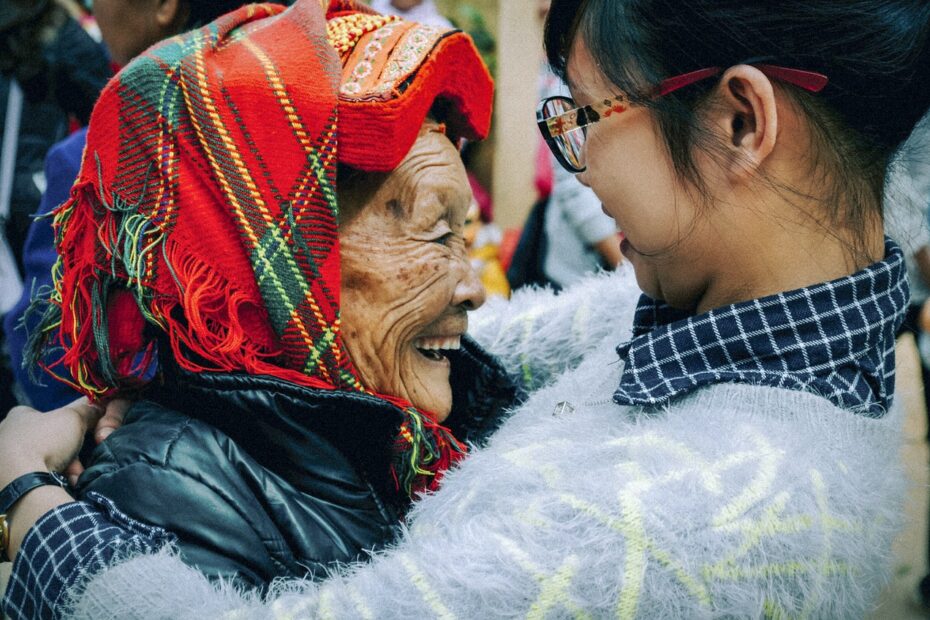
Volunteer personality traits are more predictable than most people realize — and understanding them can completely change how you think about who volunteers and why. Research suggests that certain personality characteristics, particularly high agreeableness and extraversion, are meaningfully linked to whether a person chooses to participate in volunteer activities. If you have ever wondered whether your own personality makes you a natural fit for volunteering, or why some people seem drawn to helping others while others hold back, the answers lie in a fascinating intersection of personality psychology and motivation science.
An American research team published a study titled The interplay of traits and motives on volunteering, which examined how personality traits and personal motivations together predict volunteer participation among university students. The findings reveal that it is not personality alone — nor motivation alone — but the dynamic interplay between the two that most powerfully shapes prosocial behavior. This article breaks down those findings in plain English, explains each key personality dimension, and offers actionable guidance for anyone looking to better understand their own relationship with volunteering.
Once again, personality researcher and author of Villain Encyclopedia, Tokiwa (@etokiwa999), will provide the explanation.
※We have developed the HEXACO-JP Personality Assessment! It has more scientific basis than MBTI. Tap below for details.

目次
- 1 The Big Five Personality Model and Volunteering: An Overview
- 2 Volunteer Personality Traits: Agreeableness as the Strongest Predictor
- 3 Extraversion, Conscientiousness, and Other Volunteer Personality Traits
- 4 Why People Volunteer: The 5 Core Motivations Behind Prosocial Behavior
- 5 How Personality Traits and Motivations Interact to Shape Volunteer Behavior
- 6 Actionable Advice: Leveraging Your Personality Traits for Volunteer Success
- 7 Frequently Asked Questions
- 7.1 What personality traits are most common in people who volunteer regularly?
- 7.2 Can introverts be good volunteers even if extraversion is linked to volunteering?
- 7.3 What is the difference between intrinsic and extrinsic motivation in volunteering?
- 7.4 How can I find out whether my personality is well-suited to volunteering?
- 7.5 Is it wrong to volunteer primarily for career or personal development reasons?
- 7.6 Why do some highly empathetic people still not volunteer?
- 7.7 How do volunteer organizations use personality research to improve recruitment?
- 8 Summary: What Your Personality Says About Your Volunteering Potential
The Big Five Personality Model and Volunteering: An Overview
To understand which personality types tend to volunteer most, it helps to first understand the framework researchers used to measure personality. The Big Five personality model — also known as the Five-Factor Model — is a scientifically validated framework that measures human personality along 5 broad dimensions. It is widely regarded as one of the most reliable tools in personality psychology and has been used in thousands of studies across cultures and age groups.
Each of the 5 traits exists on a spectrum, meaning that everyone possesses all 5 characteristics to varying degrees. The key question the research team investigated was: which of these traits, if any, are most associated with volunteering? Here is a quick summary of what each dimension measures:
- Extraversion — Being sociable, energetic, talkative, and assertive; enjoying social interactions and external stimulation.
- Agreeableness — Being compassionate, cooperative, trusting, and considerate of others’ feelings and needs.
- Conscientiousness — Being organized, disciplined, responsible, and goal-oriented; following through on commitments.
- Neuroticism — Experiencing emotional instability, anxiety, moodiness, or a tendency to worry and feel negative emotions.
- Openness to Experience — Being intellectually curious, imaginative, open to new ideas, and appreciative of art and beauty.
Research indicates that not all 5 of these traits relate equally to volunteer behavior. The study found that 2 traits — agreeableness and extraversion — showed meaningful connections to volunteering, while the remaining 3 (conscientiousness, neuroticism, and openness) showed only weak or indirect links. Understanding why these particular traits matter is key to understanding the psychology of helping behavior.
Volunteer Personality Traits: Agreeableness as the Strongest Predictor
Among all the Big Five personality dimensions, agreeableness shows the strongest and most consistent association with volunteer participation. Agreeableness is a personality trait defined by warmth, empathy, a genuine concern for others’ well-being, and a cooperative, non-confrontational approach to relationships. People who score high in agreeableness tend to be the kind of individuals who naturally want to help — not because they feel pressured to, but because caring for others is simply part of who they are.
The research data showed that highly agreeable individuals were significantly more likely to participate in volunteer activities compared to those who scored lower on this dimension. This makes intuitive sense: volunteering is, at its core, an act of giving time and energy to benefit others without direct personal gain. Those who are naturally oriented toward other people’s needs are, unsurprisingly, more drawn to such activities.
Here is what high agreeableness tends to look like in the context of volunteering:
- Strong empathy: Highly agreeable people tend to feel others’ distress and joy more acutely, which motivates them to take action when someone is struggling.
- Genuine desire to cooperate: Volunteer work often requires teamwork, and agreeable individuals are naturally comfortable working collaboratively toward a shared goal.
- Trustworthiness and reliability: Organizations value volunteers who show up consistently and follow through — qualities that align closely with agreeable personalities.
- Conflict avoidance: Agreeable individuals tend to handle interpersonal friction calmly, which is useful in the diverse environments where volunteering typically takes place.
It is worth noting that agreeableness does not mean a person is a pushover or lacks boundaries. Rather, it reflects a genuine pro-social orientation — a sincere interest in contributing to the welfare of others. For organizations trying to recruit and retain volunteers, understanding this trait can inform more effective outreach and engagement strategies.
Extraversion, Conscientiousness, and Other Volunteer Personality Traits
Extraversion: A Secondary but Meaningful Link to Volunteering
Extraversion also tends to be positively associated with volunteering, though the connection is weaker than that of agreeableness. Extraversion is a personality trait characterized by sociability, enthusiasm, talkativeness, and a preference for environments with high social stimulation. Extraverts gain energy from interacting with others, enjoy meeting new people, and are generally comfortable taking initiative in group settings.
The research found a weak but positive correlation between extraversion scores and the likelihood of volunteering. This connection makes sense for several reasons. Volunteer activities almost always involve social interaction — whether working alongside team members, engaging with the people being served, or networking within a community organization. Extraverts tend to find this kind of social engagement energizing rather than draining.
- Comfort with new social environments: Extraverts are typically at ease meeting strangers and forming new connections, both of which are common in volunteer work.
- Proactive behavior: Extraverted individuals tend to initiate action rather than wait to be asked, making them more likely to seek out and sign up for volunteer opportunities independently.
- Enjoyment of group activities: Many volunteer programs involve collaborative tasks, which extraverts tend to find rewarding and engaging.
Importantly, the research also suggests that extraversion plays a particularly interesting compensatory role for individuals who score low in agreeableness — a point we will explore in more detail in a later section.
Conscientiousness, Neuroticism, and Openness: Weaker Direct Links
The remaining 3 Big Five traits — conscientiousness, neuroticism, and openness to experience — showed only weak or indirect associations with volunteer participation in this research. This is worth understanding, because it challenges some common assumptions.
For instance, one might expect highly conscientious people — those who are disciplined, responsible, and reliable — to be frequent volunteers, since volunteering requires commitment and follow-through. However, the data suggests that conscientiousness alone does not strongly predict whether someone will choose to volunteer in the first place, even if it may predict how reliably they show up once they have committed.
- Conscientiousness may influence the quality and consistency of volunteering once begun, but does not appear to be a primary driver of initial participation.
- Neuroticism (a tendency toward anxiety and emotional instability) shows no strong direct link to volunteering, though individuals with high neuroticism might occasionally seek out volunteering as a way to manage stress or gain perspective — making it an indirect or situational motivator.
- Openness to experience (intellectual curiosity and love of novelty) does not strongly predict volunteering in general, though highly open individuals might be drawn to specific types of volunteer work, such as international programs or creative community projects, where new experiences are front and center.
These findings suggest that personality alone does not tell the whole story. As the research makes clear, motivation plays an equally important — and sometimes more important — role in predicting who actually volunteers.
Understanding who volunteers requires examining not just personality traits but also the motivations that drive people toward helping behavior. Research identifies at least 5 distinct motivational profiles that tend to bring people into volunteer work. Each of these motivations is valid, and most volunteers are driven by a blend of several at once.
1. Altruistic Values and Empathy for Others
The most commonly recognized motivation for volunteering is a genuinely altruistic desire to help others. Altruism psychology refers to the motivation to improve the welfare of others without expecting anything in return. People who volunteer for this reason tend to feel a deep sense of empathy and helping behavior — they find it emotionally meaningful to be of genuine use to someone in need.
This kind of intrinsic motivation volunteering — helping because it aligns with one’s core values, not because of external reward — tends to be the most sustainable over the long term. Research consistently shows that volunteers who are primarily driven by altruistic values report higher levels of satisfaction and are more likely to continue volunteering over time.
- Wanting to support people facing difficult circumstances (poverty, illness, displacement).
- Feeling a personal responsibility to give back to society or one’s community.
- Experiencing emotional reward from seeing a direct positive impact on another person’s life.
This motivation aligns most closely with high agreeableness, which is why the combination of the 2 — the trait and the motive — is such a powerful predictor of volunteer participation.
2. Personal Growth and the Desire to Learn
A second major motivation is the desire for self-improvement — gaining new knowledge, skills, and life perspectives through volunteer experiences. For many people, especially younger adults and students, volunteer work offers learning opportunities that are genuinely difficult to replicate in classrooms or workplaces. This motivation reflects a kind of intrinsic motivation volunteering where personal development and social contribution reinforce each other.
- Learning practical skills in healthcare, education, environmental management, or community organizing.
- Broadening one’s worldview by working with populations or in contexts outside one’s everyday experience.
- Building self-confidence and personal resilience through challenging volunteer assignments.
For example, a student volunteering at a rehabilitation center may develop patience, active listening, and an understanding of disability that no textbook can fully convey. Similarly, participating in an environmental cleanup project might spark a deeper commitment to sustainability. Volunteering for self-growth purposes is not selfish — it creates real social value while simultaneously enriching the volunteer’s own life.
3. Social Connection and the Search for Belonging
The desire to form meaningful social connections is a third significant motivation, and it tends to be especially strong among extraverted individuals. Volunteer work is inherently social — it brings people together around a shared purpose. For those who feel isolated, recently relocated, or simply looking to expand their social circle, joining a volunteer group can provide a sense of community that is both immediately rewarding and personally meaningful.
- Finding like-minded people who share similar values and interests.
- Building a sense of belonging to a community or organization larger than oneself.
- Maintaining social activity and reducing feelings of loneliness or disconnection.
Research on prosocial behavior traits consistently highlights the role of social belonging in sustaining long-term volunteer commitments. When volunteers form genuine friendships and feel genuinely valued by their team, they are far more likely to remain engaged over months and years rather than dropping out after a single event. This is why fostering a welcoming volunteer culture is not just a nice-to-have — it is strategically essential for organizations that rely on consistent volunteer support.
4. Escaping Negative Emotions and Gaining Fresh Perspective
Sometimes, people are drawn to volunteer work partly as a way to step outside their own problems and gain relief from stress, anxiety, or emotional fatigue. While this might sound like a less admirable motivation, research suggests it is a very human and legitimate reason to get involved — and it often leads to genuinely positive outcomes for both the volunteer and those they serve.
- Using volunteer work to take a break from the pressures of school, work, or personal challenges.
- Finding that focusing on others’ needs provides temporary but real relief from rumination and worry.
- Using the structure and routine of volunteer commitments as a healthy anchor during emotionally difficult periods.
That said, relying exclusively on escape-based motivation is unlikely to sustain long-term involvement. Research indicates that volunteers who rely primarily on avoidance-oriented motivations may disengage when their personal situation stabilizes or when the activity itself becomes demanding. However, this starting point can evolve: many people who begin volunteering to escape stress gradually discover deeper altruistic or social motivations, transforming a coping mechanism into a lasting commitment.
5. Career Development and Building Professional Skills
Career-oriented motivation — using volunteer work to build a résumé, develop professional skills, and gain practical experience — is particularly common among students and young adults, and the research treats it as a fully legitimate driver of participation. Volunteering can offer real-world experience in fields ranging from healthcare and education to environmental policy and nonprofit management.
- Practicing professional skills (communication, project management, data collection) in a low-stakes, real-world environment.
- Gaining experience in a specific industry to inform career decisions or demonstrate commitment to an employer.
- Building a professional network through contact with organizational leaders, experienced practitioners, and fellow volunteers.
The key caveat here is balance. Research and practical experience both suggest that volunteers driven purely by career considerations may struggle when the work becomes unglamorous or when the résumé-building value seems minimal. The most resilient and effective volunteers — regardless of their initial motivations — tend to develop a genuine appreciation for the social impact of their work over time. Pairing career motivation with at least some degree of altruistic values tends to produce the most satisfying and sustainable volunteer experience.
How Personality Traits and Motivations Interact to Shape Volunteer Behavior
One of the most valuable insights from this research is that personality traits and motivations do not operate independently — they interact with each other in ways that either amplify or dampen the likelihood of volunteering. Understanding this interaction is critical for anyone who wants to accurately predict, encourage, or sustain volunteer participation.
High Agreeableness + Altruistic Motivation: The Most Powerful Combination
Research suggests that the combination of high agreeableness and strong altruistic motivation represents the most robust predictor of volunteer participation. When a person who is naturally warm and cooperative also holds deeply held values about helping others, the two factors reinforce each other in a powerful feedback loop.
The highly agreeable individual already has the interpersonal skills and empathic orientation that volunteer work demands. When that disposition is paired with an explicit values-based motivation to contribute to society, the result is a person who not only has the capacity to volunteer effectively but also the internal drive to seek out and sustain that engagement. Studies examining agreeableness volunteering consistently find that this combination predicts not just initial participation but long-term commitment as well.
For volunteer organizations, this suggests a clear strategic implication: recruiting messaging that speaks to values and community impact — rather than focusing purely on logistics or incentives — is most likely to attract and retain highly agreeable individuals with strong altruistic motivation.
When Extraversion Compensates for Lower Agreeableness
A particularly intriguing finding from the research concerns individuals who score relatively low in agreeableness. For this group, high extraversion appears to partially compensate, acting as an alternative pathway into volunteer participation.
Here is the logic: people low in agreeableness tend not to be primarily motivated by concern for others’ welfare. They are less naturally drawn to the altruistic motivations that are typically central to volunteering. However, if those same individuals are highly extraverted, they may be motivated by the social opportunities that volunteering provides — meeting new people, being part of an active group, and enjoying the stimulation of a dynamic social environment.
This finding has important implications. It means that volunteering is genuinely accessible to a wide range of personality types — not just the stereotypically warm and caring. A less agreeable but highly extraverted person can still become a valuable volunteer, provided they are connected with roles and activities that align with their social motivation rather than purely compassion-based ones.
The Importance of Looking at Both Traits and Motives Together
A key takeaway from the research is that neither personality alone nor motivation alone tells the complete story. The most accurate picture of volunteer participation emerges when both dimensions are examined together.
Consider 2 hypothetical people who both score high in agreeableness. One of them has strong altruistic motivation — she volunteers regularly and finds the work deeply meaningful. The other has minimal motivation of any kind toward volunteering, perhaps because she has not yet encountered the right opportunity or organization. Her agreeable personality means she has the potential to be a wonderful volunteer, but without the motivational spark, that potential goes unrealized.
Conversely, a highly motivated but less agreeable person might struggle with the interpersonal demands of volunteer work unless they are channeled into roles that suit their particular strengths. Matching people to volunteer roles based on both personality and motivation — rather than just availability — is likely to produce significantly better outcomes for everyone involved.
Actionable Advice: Leveraging Your Personality Traits for Volunteer Success
Knowing your own personality profile is useful — but only if you translate that self-knowledge into smarter choices about how and where you volunteer. Here are practical, psychology-backed suggestions for different personality profiles.
If You Score High in Agreeableness
Lean into roles that require empathy, interpersonal sensitivity, and sustained one-on-one engagement. Your natural warmth is a genuine asset in work involving direct contact with vulnerable populations — elderly care, child support programs, crisis helplines, or mentoring initiatives. Your greatest strength is making people feel genuinely seen and valued.
However, watch out for 1 key vulnerability: high-agreeableness individuals sometimes struggle to set appropriate boundaries, taking on too much and risking compassion fatigue. Practice saying no graciously and recognize that sustainable helping requires protecting your own energy. Building in regular self-care practices — rest, reflection, time with supportive friends — will keep your natural generosity from becoming a source of burnout.
If You Score High in Extraversion
Seek out volunteer roles that involve significant social interaction, public engagement, or team coordination. You are likely to thrive as a community outreach volunteer, event organizer, fundraiser, or spokesperson for an organization. Your energy and enthusiasm tend to be contagious, making you effective at recruiting others and boosting team morale.
Be mindful that highly extraverted volunteers may occasionally dominate group dynamics unintentionally. Practice active listening and create deliberate space for quieter team members to contribute. Volunteer work is most impactful when diverse personalities are all valued — and your natural leadership energy is most appreciated when it lifts others rather than overshadowing them.
If You Score Lower in Agreeableness but High in Extraversion
Look for volunteer opportunities that satisfy your social drive while also allowing you to develop your interpersonal skills. Event-based volunteering, sports coaching, or community building projects can be excellent entry points. Over time, sustained exposure to the people you are helping often gradually deepens empathy in ways that feel authentic rather than forced.
Recognize that your motivations may be more social or career-oriented than altruistic — and that is perfectly fine as a starting point. Give yourself permission to begin volunteering for your reasons, while remaining genuinely open to the possibility that the experience reshapes those reasons over time.
If You Score High in Conscientiousness
Your reliability, discipline, and follow-through make you exceptionally valuable to organizations that need dependable, detail-oriented support. Administrative roles, data management, logistics coordination, and long-term project oversight all benefit enormously from high-conscientiousness volunteers. While this trait may not be the primary driver that gets you through the door, once you commit, you are likely to be one of the most valuable members of any volunteer team.
If You Score High in Openness to Experience
Seek out volunteer opportunities that challenge your thinking, expose you to different cultures, or involve creative problem-solving. International development work, environmental advocacy, or arts-based community programs may resonate particularly strongly. Your natural intellectual curiosity means you are likely to thrive in contexts that are complex, nuanced, and evolving — where there is always more to learn.
Frequently Asked Questions
What personality traits are most common in people who volunteer regularly?
Research suggests that high agreeableness is the personality trait most consistently associated with regular volunteer participation. Agreeable individuals tend to be empathetic, cooperative, and genuinely concerned with others’ well-being — qualities that align naturally with the demands of volunteer work. High extraversion is a secondary predictor, particularly for individuals who are motivated by social connection. The remaining Big Five traits (conscientiousness, neuroticism, and openness) show weaker direct links to volunteering frequency.
Can introverts be good volunteers even if extraversion is linked to volunteering?
Absolutely. The link between extraversion and volunteering is relatively weak, meaning introversion is not a barrier to meaningful volunteer participation. Introverts who score high in agreeableness — especially those with strong altruistic values — can be extraordinarily effective volunteers. They tend to excel in roles that require deep listening, patient one-on-one engagement, or careful behind-the-scenes work. Matching introverted volunteers with appropriately quiet, focused roles is key to a fulfilling experience.
What is the difference between intrinsic and extrinsic motivation in volunteering?
Intrinsic motivation volunteering means participating because the activity itself is personally meaningful — for example, because it aligns with one’s values, brings emotional satisfaction, or facilitates personal growth. Extrinsic motivation, by contrast, refers to external incentives such as career benefits, social recognition, or academic credit. Research on prosocial behavior traits suggests that intrinsically motivated volunteers tend to remain engaged longer and report higher satisfaction, though extrinsic motivations are a perfectly valid starting point that can evolve over time.
How can I find out whether my personality is well-suited to volunteering?
Taking a validated Big Five personality assessment is a practical first step. It measures your levels of agreeableness, extraversion, conscientiousness, neuroticism, and openness, giving you a data-informed picture of your interpersonal tendencies. High scores in agreeableness and extraversion tend to indicate a natural affinity for many volunteer contexts. Beyond testing, honestly reflecting on your motivations — asking yourself why you want to help and what kinds of environments you find energizing — can be equally revealing.
Is it wrong to volunteer primarily for career or personal development reasons?
Research treats career-oriented and self-growth motivations as legitimate and common reasons to volunteer, particularly among students and young adults. The ethical concern arises not from the motivation itself but from how it shapes behavior: a volunteer focused purely on résumé points may cut corners or treat the people they serve as a means to an end. As long as the volunteer remains committed to doing genuinely useful work and respects the dignity of those they help, career motivation is entirely compatible with responsible, meaningful volunteering.
Why do some highly empathetic people still not volunteer?
Empathy and helping behavior are closely related, but empathy alone does not guarantee volunteer participation. A person may be deeply empathetic yet face practical barriers such as time constraints, health limitations, or lack of awareness about opportunities. Motivational factors also matter: someone who is highly empathetic but primarily focused on their own personal development or career may not translate that empathy into organized volunteer action. This is why personality and motivation need to be considered together rather than in isolation.
How do volunteer organizations use personality research to improve recruitment?
Forward-thinking volunteer organizations increasingly apply insights from altruism psychology and prosocial behavior research to craft more targeted recruitment and retention strategies. For example, messaging that emphasizes community impact and shared values tends to resonate with highly agreeable, altruistically motivated individuals. Programs that highlight social events and networking opportunities appeal to extraverted, connection-seeking volunteers. Tailoring onboarding, role assignments, and recognition approaches to different personality profiles can significantly improve both volunteer satisfaction and organizational effectiveness.
Summary: What Your Personality Says About Your Volunteering Potential
The science of volunteer personality traits points to a clear and encouraging conclusion: while high agreeableness and strong altruistic motivation represent the most powerful combination for predicting volunteer participation, virtually every personality type has something genuine to contribute. Extraverts bring energy and social connection. Conscientious individuals bring reliability and precision. Open individuals bring curiosity and adaptability. Even those who begin volunteering for less obviously altruistic reasons — career development, social belonging, or stress relief — often find that their motivations deepen and evolve through the experience itself.
The research reinforces something that experienced volunteers and community organizers have known intuitively for years: the best volunteer programs are those that understand and work with the full range of human personalities and motivations, rather than expecting everyone to fit a single idealized mold. Whether you are an empathic introvert, a socially energetic extrovert, or someone who is simply looking for a meaningful way to spend your time, there is likely a volunteer opportunity that fits who you are.
If this article has made you curious about where your own personality sits on the Big Five dimensions — and what that might mean for your natural strengths as a volunteer — consider exploring your own personality profile to discover which volunteering paths align most naturally with how you are wired.