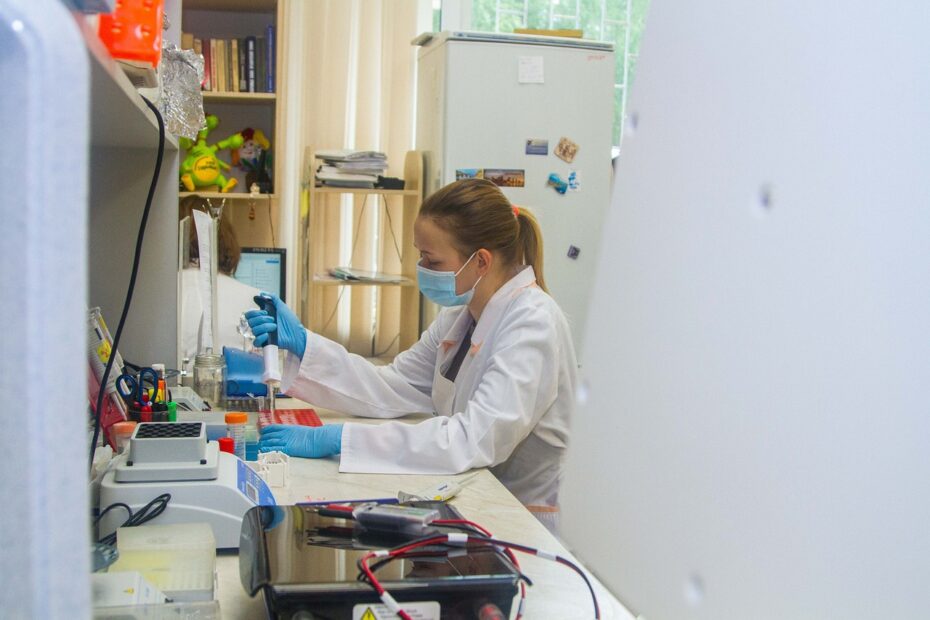
Scientist personality traits are more nuanced and psychologically rich than the stereotypical image of a lab-coated recluse scribbling equations on a chalkboard. Research in developmental, cognitive, and personality psychology reveals that scientists tend to share a distinctive constellation of characteristics — from unusually high openness to experience to a deeply ingrained drive for intellectual complexity. Understanding these traits not only demystifies the scientific mind but can also help students, educators, and career planners recognize the early signs of scientific potential.
This article draws on findings reviewed in The Psychology of Science: Review and Integration of a Nascent Discipline — a landmark paper synthesizing psychological research on how scientists think, develop, and create. We explore four major perspectives: developmental psychology, cognitive psychology, personality psychology, and social psychology. Whether you are a student considering a STEM career, a teacher nurturing young talent, or simply a curious reader, this deep dive into scientific curiosity traits will change the way you see science — and scientists.
Once again, personality researcher and author of Villain Encyclopedia, Tokiwa (@etokiwa999), will provide the explanation.
※We have developed the HEXACO-JP Personality Assessment! It has more scientific basis than MBTI. Tap below for details.

If you are thinking about science as a career path, our article on personality-based career fit is also well worth reading.
目次
- 1 Developmental Psychology: How Scientist Personality Traits Emerge Over a Lifetime
- 2 Cognitive Psychology: How the Scientist Personality Traits Manifest in Thinking
- 2.1 Big Five Personality Science and the Scientific Mind
- 2.2 Hypothesis Testing: The Cognitive Signature of Effective Scientists
- 2.3 Analogical Thinking: The Hidden Engine of Scientific Discovery
- 2.4 Integrative Complexity: The Cognitive Trait That Separates Good Scientists from Great Ones
- 2.5 Age and Openness to New Theories: A Surprising Finding
- 3 Personality Psychology: The Core Scientist Personality Traits in Detail
- 4 Actionable Advice: Leveraging and Managing Scientist Personality Traits
- 5 Frequently Asked Questions
- 5.1 What are the most important personality traits for becoming a scientist?
- 5.2 At what age do scientists tend to be most productive?
- 5.3 Does being introverted make someone better suited to a scientific career?
- 5.4 Are older scientists less open to accepting new scientific theories?
- 5.5 How does a child’s home environment influence the development of scientific interests?
- 5.6 What is integrative complexity, and why does it matter for scientists?
- 5.7 Is there a gender gap in mathematical ability among scientists?
- 6 Summary: What the Psychology of Science Tells Us About Scientist Personality Traits
Developmental Psychology: How Scientist Personality Traits Emerge Over a Lifetime
Early Productivity Predicts Long-Term Scientific Output
Research suggests that scientists who are highly productive early in their careers tend to remain highly productive throughout their working lives. This is not simply a matter of momentum — it reflects the fact that core abilities and personal qualities often manifest early and compound over time. A scientist who publishes strong work in their first few years tends to attract better funding, mentorship, and collaborative opportunities, all of which create a positive feedback loop that amplifies future output.
This finding has important practical implications. It suggests that investing heavily in young researchers pays dividends not just for the individual, but for the scientific enterprise as a whole. Among the most effective strategies for supporting early-career scientists are:
- Access to experienced mentors and supervisors who can guide research design and help navigate the publication process
- Freedom and adequate resources — creative autonomy and well-equipped labs dramatically lower the barriers to output
- Cross-disciplinary networking — exposure to researchers from other fields stimulates fresh thinking and opens unexpected research directions
In short, early scientific productivity is less about raw talent in isolation and more about talent meeting the right environment. Nurturing that environment from the very beginning of a researcher’s career appears to be one of the most powerful levers available.
The Age-Productivity Curve: When Do Scientists Peak?
Studies indicate that scientific productivity tends to peak roughly between the late 30s and early 40s — a period when accumulated expertise, technical skill, and physical energy converge. However, this is an average tendency rather than a universal rule, and the shape of the curve varies considerably by discipline.
Reported field-specific patterns include:
- Mathematics and theoretical physics — productivity peaks tend to arrive relatively earlier, sometimes in the early-to-mid 30s, because these fields rely heavily on raw abstract reasoning that is often strongest in youth
- Biology, geology, and the life sciences — peaks tend to arrive somewhat later, as deep domain knowledge and extensive empirical experience become increasingly important
Crucially, the post-peak decline is gentle rather than steep. Productivity does not fall off a cliff after the peak years; instead, it follows a gradual, curved descent. Many scientists continue to produce meaningful and influential work well into their 50s and 60s, leveraging the deep conceptual knowledge and professional networks they have built. The later stages of a scientific career are therefore far from irrelevant — accumulated wisdom and the ability to synthesize decades of findings can yield insights that younger researchers simply cannot replicate.
How Family Environment and Key Mentors Shape Scientific Interest
A child’s early home environment plays a significant role in determining whether scientific curiosity traits will fully develop. Studies in developmental psychology consistently find that children who grow up in households where science is discussed, valued, or practiced are meaningfully more likely to pursue scientific careers. Having a family member who works in a scientific field, or simply having parents who ask “why?” and encourage hands-on exploration, appears to plant seeds of intellectual curiosity that can bloom into a scientific vocation.
Beyond the family, inspirational teachers and mentors are among the most commonly cited influences in the life stories of scientists. The kinds of influence that research highlights include:
- Communicating genuine enthusiasm for science’s wonder and depth, making abstract concepts feel alive and personally relevant
- Serving as a visible role model — showing that a life in research is achievable and fulfilling
- Providing hands-on scientific experiences such as experiments, field trips, or independent projects that go beyond textbook learning
Scientific interest is not purely intellectual — it is also emotional and experiential. Children who get to touch, observe, and experiment with the natural world develop an embodied sense of curiosity that abstract instruction alone rarely produces. Creating those opportunities early, and pairing them with a knowledgeable and enthusiastic guide, appears to be one of the most reliable pathways to cultivating the next generation of scientists.
Mathematical Ability, Gender, and Development
Research suggests a modest average gender gap in mathematical ability that tends to appear after puberty rather than in childhood. Before adolescence, studies indicate that boys and girls perform at broadly comparable levels on math tasks. The gap that emerges in the teenage years is thought to reflect both biological factors — such as differences in brain development and hormonal influences on spatial cognition — and social factors that can either amplify or suppress that gap.
Biological influences that researchers have explored include:
- Structural and functional differences in brain regions associated with spatial reasoning
- The potential influence of hormone levels on certain cognitive abilities during development
Social and environmental factors that contribute include:
- Cultural stereotypes that frame mathematics as a “male” subject, subtly discouraging girls from identifying with it
- Fewer active encouragements for girls to pursue STEM pathways
- A relative scarcity of prominent female role models in mathematics and the physical sciences
Encouragingly, the gender gap in mathematical performance has been narrowing over recent decades in many countries. This trend suggests that a meaningful proportion of the gap is socially constructed rather than fixed — and that targeted educational interventions, stereotype reduction efforts, and the promotion of female STEM role models can make a real difference.
Cognitive Psychology: How the Scientist Personality Traits Manifest in Thinking
Big Five Personality Science and the Scientific Mind
Big Five personality science offers one of the most useful frameworks for understanding what sets scientists apart from the general population. The Big Five model describes personality along 5 dimensions:
- Openness to Experience — intellectual curiosity, creativity, and flexibility of thought
- Conscientiousness — diligence, orderliness, and self-discipline
- Extraversion — sociability, assertiveness, and outward energy
- Agreeableness — warmth, cooperativeness, and empathy
- Neuroticism — emotional instability and sensitivity to stress
Across multiple studies, scientists tend to score high on openness to experience and conscientiousness, and relatively low on extraversion and neuroticism. This profile is consistent with a personality that thrives on intellectual exploration, approaches work with precision and persistence, prefers independent deep work over constant social stimulation, and maintains emotional stability under the pressures of research.
One nuance worth noting is that scientists — particularly in competitive research environments — can sometimes score lower on agreeableness, which may manifest as bluntness in debate or a willingness to challenge colleagues’ conclusions. While this can occasionally create interpersonal friction, it also reflects an intellectual integrity that is arguably essential for rigorous science.
Among scientists, those rated as most creative tend to show especially high openness to experience — reflecting an eagerness to absorb new ideas across disciplines and to challenge conventional assumptions.
Hypothesis Testing: The Cognitive Signature of Effective Scientists
Outstanding scientists display a characteristic two-phase approach to hypothesis testing that distinguishes them from less effective researchers. In the early stages of a study, they actively seek confirming evidence — this is not confirmation bias in the pejorative sense, but rather a rational strategy for establishing whether a hypothesis is worth pursuing at all. Once a hypothesis has accumulated enough preliminary support, however, effective scientists deliberately shift gears and begin searching for disconfirming evidence.
This ability to deliberately falsify one’s own ideas — to stress-test a cherished hypothesis — is one of the hallmarks of genuine scientific thinking. Additional cognitive traits that research associates with high-performing scientists include:
- Holding multiple competing hypotheses simultaneously rather than prematurely committing to one explanation
- Multi-angle data interpretation — resisting the temptation to accept the first plausible reading of results
- Critical but fair evaluation of others’ work — using existing literature as a scaffold rather than a constraint
The cognitive demands of this process require both flexibility and discipline — the flexibility to revise strongly held views and the discipline to follow the evidence wherever it leads. These qualities are closely linked to the high conscientiousness and high openness to experience profile described above.
Analogical Thinking: The Hidden Engine of Scientific Discovery
Some of the most celebrated breakthroughs in scientific history were sparked not by more data, but by a sudden analogical insight — recognizing that 2 apparently unrelated phenomena share a deep structural similarity. Analogy, defined as the transfer of knowledge from a source domain to a target domain based on perceived structural similarity, appears to be a core cognitive tool in the scientist’s toolkit.
Classic historical examples illustrate the power of this thinking style:
- Benjamin Franklin noticed the structural similarity between lightning and electrical sparks, a cross-domain analogy that led directly to the invention of the lightning rod
- August Kekulé reportedly drew an analogy between the undulating movement of a snake biting its own tail and the molecular structure of benzene, arriving at the correct ring structure that had eluded chemists for years
Beyond generating breakthroughs, analogical thinking is also a practical problem-solving tool. When a researcher hits a dead end in one field, drawing on concepts from a seemingly unrelated discipline can provide a fresh entry point. This is one reason why scientists who read broadly — across disciplines, and even into the humanities and arts — tend to generate more novel ideas than those who confine their reading to their own specialty. Cultivating wide intellectual interests is therefore not a distraction from serious science; it may be one of its most productive inputs.
Integrative Complexity: The Cognitive Trait That Separates Good Scientists from Great Ones
Among cognitive ability research findings, one of the most striking is that integrative complexity — the capacity to see multiple dimensions of a problem and synthesize them into a coherent understanding — is a stronger predictor of scientific eminence than almost any other measurable trait. Integrative complexity is defined as the ability to perceive multiple dimensions in a situation and to recognize the relationships and interconnections between those dimensions.
Evidence for this link is compelling. Studies of past presidents of the American Psychological Association found that those with the highest lifetime achievement scores also showed the highest integrative complexity in their written work. Similarly, Nobel Prize winners and other top-tier scientists tend to produce writing and reasoning that scores unusually high on integrative complexity measures.
Practical indicators of integrative complexity include:
- Consistently considering a problem from more than 2 or 3 distinct angles rather than defaulting to the first plausible framing
- Actively integrating competing viewpoints into a synthesis rather than simply picking a “winner”
- Approaching unsolved problems with multiple methodological strategies in parallel
The good news is that integrative complexity is not a fixed trait — it can be cultivated. Regularly practicing multi-perspective thinking, engaging with arguments you initially disagree with, and seeking out researchers who approach your topic from an entirely different tradition are all evidence-supported ways to expand this cognitive capacity over time.
Age and Openness to New Theories: A Surprising Finding
Contrary to popular belief, research indicates that a scientist’s age does not reliably predict whether they will accept or reject a new theory. The intuitive assumption — that younger scientists are inherently more open-minded while older ones cling to established paradigms — turns out not to be well supported by historical evidence.
2 particularly instructive case studies illustrate this point:
- When plate tectonics theory was formally proposed in the 1970s, historical analyses found that older, more established scientists were actually among the faster adopters — perhaps because their breadth of experience allowed them to quickly recognize the explanatory power of the new framework
- When Darwin published On the Origin of Species in 1859, surveys of the scientific community revealed no statistically meaningful age difference between those who embraced evolutionary theory and those who opposed it
What appears to actually drive theory acceptance is not age but the quality of the evidence — specifically, whether the new theory is empirically supported, offers greater explanatory coverage than its predecessors, and is falsifiable in principle. Scientists who evaluate theories on these merits, rather than on personal loyalty to older frameworks, display one of the most important STEM personality characteristics: evidence-based reasoning uncoupled from ego or career defensiveness. This trait appears to be distributed roughly evenly across the age spectrum.
Personality Psychology: The Core Scientist Personality Traits in Detail
The 5 Personality Characteristics Most Commonly Found in Scientists
Personality psychology research consistently identifies a cluster of approximately 5 core traits that tend to appear across scientific disciplines, career stages, and cultural contexts. While individual scientists vary enormously, these traits form a recognizable personality profile that is more common in scientists than in many other professional groups.
The 5 most commonly reported scientist personality traits are:
- Conscientiousness (thoroughness and diligence) — Scientists tend to be meticulous, detail-oriented, and persistent. In research contexts, this manifests as careful experimental design, rigorous record-keeping, and the willingness to repeat tests until results are reliable. It is arguably the trait most directly linked to research quality.
- High drive and intrinsic motivation — Scientists are typically driven by internal rewards — the satisfaction of understanding something new — rather than purely external ones like salary or status. This intrinsic motivation helps sustain effort through the long stretches of slow progress that characterize serious research.
- Introversion — Studies indicate that scientists, on average, score toward the introverted end of the extraversion spectrum. This does not mean scientists are antisocial, but rather that they tend to recharge through solitary work and deep reflection. The ability to spend long hours alone with a problem is a practical necessity in most research contexts.
- High openness to experience — This is perhaps the single most reliably reported trait in Big Five personality science research on scientists. High scorers are intellectually curious, aesthetically sensitive, and comfortable with ambiguity — all qualities that facilitate the exploration of unknown territory.
- Emotional stability (low neuroticism) — Research tends to find that scientists score below average on neuroticism. The ability to tolerate uncertainty, manage the frustration of repeated failures, and maintain focus under pressure is essential in a profession where most experiments do not yield the hoped-for results.
It is important to emphasize that these are statistical tendencies across populations of scientists, not rigid requirements. Many highly productive researchers do not fit this profile neatly, and personality alone is never a reliable predictor of individual scientific success.
Actionable Advice: Leveraging and Managing Scientist Personality Traits
Understanding the psychological profile of scientists is not just an academic exercise — it has practical implications for anyone pursuing or supporting a scientific career. Here is how to apply these findings in real life.
Strengths to Actively Leverage
- Channel your openness to experience deliberately. If you score high on this trait, deliberately expose yourself to fields adjacent to your specialty. Read widely outside your discipline. Attend talks and conferences that cover ground you do not yet know. Research on analogical thinking suggests this kind of broad exposure is one of the most efficient ways to generate creative breakthroughs. How to practice it: Set aside at least 1 hour per week for reading outside your field — science history, philosophy of science, or even literature can all be productive sources of fresh analogies.
- Use your conscientiousness as a competitive advantage. In a scientific culture that increasingly values rapid publication, your tendency toward thoroughness is a differentiator. Careful methodology, pre-registration, and meticulous documentation all raise the credibility of your work. How to practice it: Develop a personal checklist of quality standards for every experiment or analysis — not just what the journal requires, but what you personally need to feel confident in your results.
- Develop integrative complexity as a deliberate skill. Since research links this trait to scientific eminence, treating it as a trainable habit rather than an innate ability is a productive framing. How to practice it: After forming an initial hypothesis, force yourself to write out at least 3 alternative explanations before collecting any data. Then design your study to distinguish between them.
Weaknesses to Watch Out For
- Low agreeableness can damage collaboration. Scientists who are blunt or dismissive in peer interactions risk undermining the collaborative relationships that fuel interdisciplinary breakthroughs. What to do: Separate intellectual challenge (which is healthy) from personal criticism (which is not). Practice the habit of acknowledging the strengths of a colleague’s argument before identifying its weaknesses.
- Introversion can become isolation. While solitary deep work is essential, science is increasingly a team endeavor. Scientists who never present their work informally, never seek feedback early, or never attend conferences may miss out on the serendipitous conversations that redirect careers. What to do: Schedule at least 1 regular social scientific touchpoint per week — a lab meeting, a journal club, or a one-on-one with a colleague from a different group.
- High conscientiousness can tip into perfectionism. The same trait that produces careful science can, if unchecked, produce paralysis — the inability to submit a paper because it is never “quite ready.” What to do: Set hard deadlines for draft submissions, even if only to trusted colleagues. Remember that feedback from reviewers is part of the process, not evidence of failure.
Frequently Asked Questions
What are the most important personality traits for becoming a scientist?
Research consistently highlights high openness to experience, conscientiousness, and emotional stability (low neuroticism) as the most commonly found traits among scientists. Intellectual curiosity, a tolerance for ambiguity, the capacity for sustained solitary focus, and intrinsic motivation also appear frequently in studies of scientific personality. These traits are not absolute requirements, but they tend to make the day-to-day demands of research more manageable and rewarding.
At what age do scientists tend to be most productive?
Studies indicate that scientific productivity tends to peak between the late 30s and early 40s on average, though this varies meaningfully by field. Mathematics and theoretical physics tend to see earlier peaks, sometimes in the early 30s, while biology and earth sciences peak somewhat later. Importantly, the post-peak decline is gradual — many scientists remain highly productive well into their 50s and 60s, drawing on deep knowledge and broad professional networks.
Does being introverted make someone better suited to a scientific career?
Research suggests that introversion is relatively common among scientists, and it does appear to be a practical advantage in many research contexts — sustained solo work, deep analysis, and the long quiet stretches between experimental milestones all suit a person who draws energy from solitary activity. That said, introversion is not a prerequisite. Extroverted scientists can and do thrive, particularly in collaborative or leadership roles within large research teams.
Are older scientists less open to accepting new scientific theories?
Surprisingly, research does not support the common assumption that younger scientists are more open-minded about new theories than older ones. Historical case studies — including the reception of plate tectonics theory and Darwinian evolution — found no consistent age-based pattern in theory acceptance. What appears to matter more is the quality of the evidence supporting the new theory: its empirical grounding, explanatory power, and falsifiability.
How does a child’s home environment influence the development of scientific interests?
Developmental psychology research suggests that children raised in households where science is discussed, practiced, or valued tend to develop stronger scientific curiosity traits. Having a family member in a scientific field, regular exposure to nature and experimentation, and parents who model questioning and wonder all contribute. Influential teachers and mentors outside the home play an equally important role by providing hands-on scientific experiences and serving as visible role models.
What is integrative complexity, and why does it matter for scientists?
Integrative complexity refers to the capacity to perceive multiple dimensions of a problem simultaneously and to synthesize them into a coherent, nuanced understanding rather than defaulting to simple either/or thinking. Cognitive ability research links high integrative complexity strongly to scientific eminence — including Nobel Prize winners and the most decorated figures in professional psychology. Encouragingly, it can be cultivated through deliberate practice, such as routinely generating and comparing multiple competing explanations before settling on one.
Is there a gender gap in mathematical ability among scientists?
Research does find a modest average gender difference in certain mathematical and spatial tasks, but this gap tends to emerge after puberty rather than in childhood, suggesting it is not entirely biological. Social factors — including stereotypes that frame math as a “male” subject, limited encouragement for girls in STEM, and a shortage of prominent female role models — appear to contribute significantly. The gap has been narrowing in many countries over recent decades, consistent with the view that targeted interventions and reduced social bias can meaningfully close it.
Summary: What the Psychology of Science Tells Us About Scientist Personality Traits
The picture that emerges from developmental, cognitive, and personality psychology is of a scientific personality that is genuinely distinctive — but far more varied and human than popular stereotypes suggest. Scientist personality traits such as high openness to experience, conscientiousness, integrative complexity, intrinsic motivation, and emotional stability are not rigid requirements or genetic destiny. They are tendencies — clusters of characteristics that interact with environment, opportunity, and deliberate practice over the course of a lifetime. Early productivity matters, but it reflects the right environment as much as innate talent. The age-productivity curve is real, but it peaks gradually and declines gently. Scientific interest is kindled by families and mentors, not just textbooks. And the willingness to accept a new theory has less to do with how old you are than with how good the evidence is.
Whether you are a student wondering if science is the right path for you, a teacher hoping to spot and nurture scientific potential, or a working researcher looking to understand your own strengths and blind spots, this psychological portrait of the scientific mind offers genuinely useful guidance. If what you have read resonates with you, explore our personality profile pages to see which of your own traits align with those most commonly found in scientists — and where you might have more in common with the scientific mind than you realized.