
Japanese personality traits research reveals some striking surprises that challenge the most widely held stereotypes about Japanese people. Most outsiders — and even many Japanese themselves — assume that Japanese society is defined by diligence, harmony, and openness to creativity. But what does the scientific data actually say? The findings, drawn from large-scale cross-cultural studies spanning over 50 countries, paint a very different picture — and understanding it can change the way you see yourself and the people around you.
This article breaks down the Big Five personality scores for Japan compared to the rest of the world, explores related measures like self-esteem and happiness, and examines what these patterns mean for daily life. Whether you are Japanese, work with Japanese colleagues, or are simply curious about cross-cultural psychology, this data-driven overview offers genuine insight.
Once again, personality researcher and author of Villain Encyclopedia, Tokiwa (@etokiwa999), will provide the explanation.
※We have developed the HEXACO-JP Personality Assessment! It has more scientific basis than MBTI. Tap below for details.

目次
- 1 What Is the Big Five Personality Model — and Why Does It Matter for Japanese Personality Traits Research?
- 2 What Japanese Personality Traits Research Reveals: The Big Five Scores Across 56 Nations
- 3 Low Self-Esteem, Low Self-Affirmation, and Low Happiness: A Consistent Pattern
- 4 The Dark Triad: Japan’s Scores on Manipulation and Psychopathy
- 5 What These Findings Mean: Practical Implications for Life in Japan
- 6 Frequently Asked Questions
- 6.1 What does cross-cultural research say about Japanese personality traits overall?
- 6.2 Why do Japanese people score so high on neuroticism compared to other countries?
- 6.3 Are Japanese people actually less hardworking than their reputation suggests?
- 6.4 How does Japanese self-esteem compare to other developed countries?
- 6.5 What is the Dark Triad and how does Japan score on it?
- 6.6 Do personality traits differ between regions inside Japan?
- 6.7 Can personality traits change over time, or are they fixed?
- 7 Summary: What the Science Actually Says About Japanese National Character
What Is the Big Five Personality Model — and Why Does It Matter for Japanese Personality Traits Research?
The Big Five (also called the Five-Factor Model) is the most scientifically validated framework for measuring personality across cultures. Unlike popular tools such as MBTI (the 16 Personalities test), which lacks strong academic support, the Big Five is widely used in peer-reviewed psychological research worldwide. It describes personality along 5 independent dimensions, each of which can be scored on a spectrum from low to high.
- Openness to Experience — Intellectual curiosity, aesthetic sensitivity, and imagination. High scorers tend to enjoy new ideas and creative thinking.
- Conscientiousness — Responsibility, self-discipline, and rule-following behavior. Often associated with being “hardworking” or “diligent.”
- Extraversion — Sociability, assertiveness, and positive emotionality. The opposite end of the scale is introversion.
- Agreeableness — Compassion, cooperation, and trust in others. Often linked to “getting along” in social settings.
- Neuroticism — Emotional instability, anxiety, and tendency toward negative emotions like worry or depression.
Understanding these 5 traits gives us a measurable, comparable window into national character. When researchers survey tens of thousands of people across dozens of countries using the same standardized questions, the results can reveal patterns that contradict conventional wisdom — as is very much the case with Japan.
What Japanese Personality Traits Research Reveals: The Big Five Scores Across 56 Nations
A large-scale cross-cultural study surveying approximately 18,000 people across 56 countries found that Japan scores below average on 4 of the 5 Big Five traits — and ranks at or near the very bottom on several of them. This is one of the most thorough datasets available on the geographic distribution of Big Five personality traits, and its findings about Japan are among the most counterintuitive in the entire dataset.
Extraversion: Below Average (Introverted)
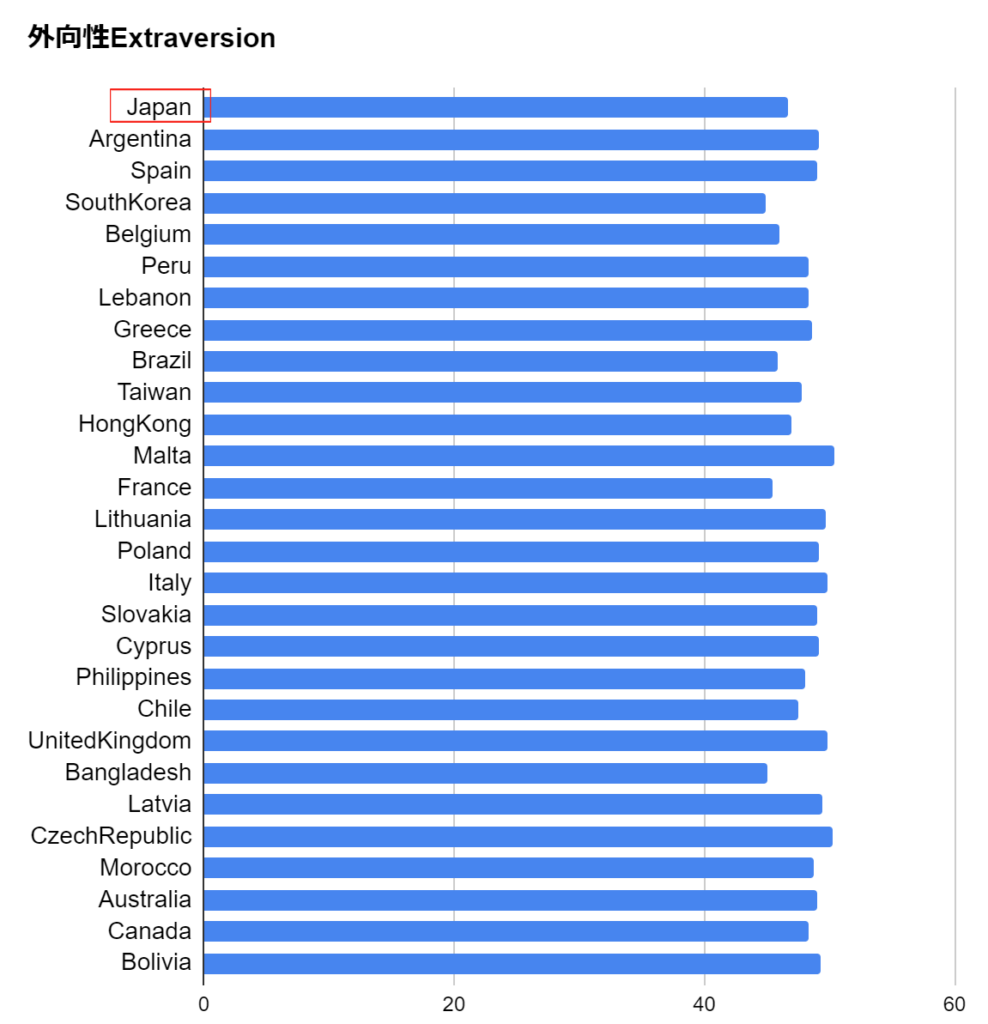
Japan scores below the international average on extraversion, meaning that as a whole, Japanese people tend toward introversion — lower sociability, less assertiveness, and a preference for quieter environments. This is not necessarily a negative trait; research consistently shows that introverts often excel at deep focus and careful observation. However, it does suggest that the outwardly reserved nature of Japanese social behavior has a measurable personality basis.
Agreeableness: Significantly Below Average
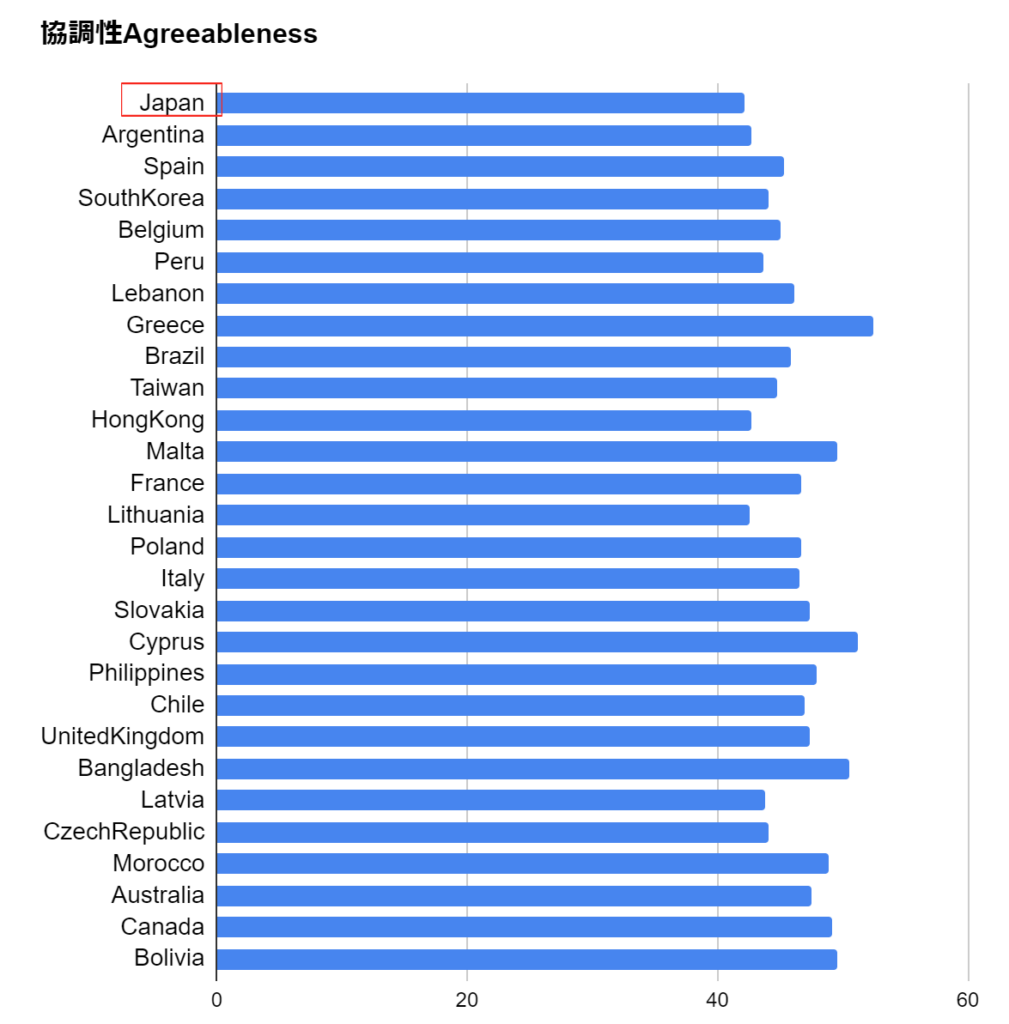
This result tends to surprise people the most. Japan is globally associated with politeness, reading the atmosphere (kuuki wo yomu), and the cultural ideal of “harmony above all.” Yet the data shows that Japan scores notably below the international average on agreeableness — one of the traits most directly tied to warmth, cooperation, and trust. This raises a fascinating question: if Japanese people are not genuinely high in agreeableness, why do they so often conform to group expectations? The answer, as the next trait reveals, may have more to do with anxiety than genuine warmth.
Neuroticism: Ranked #1 in the World
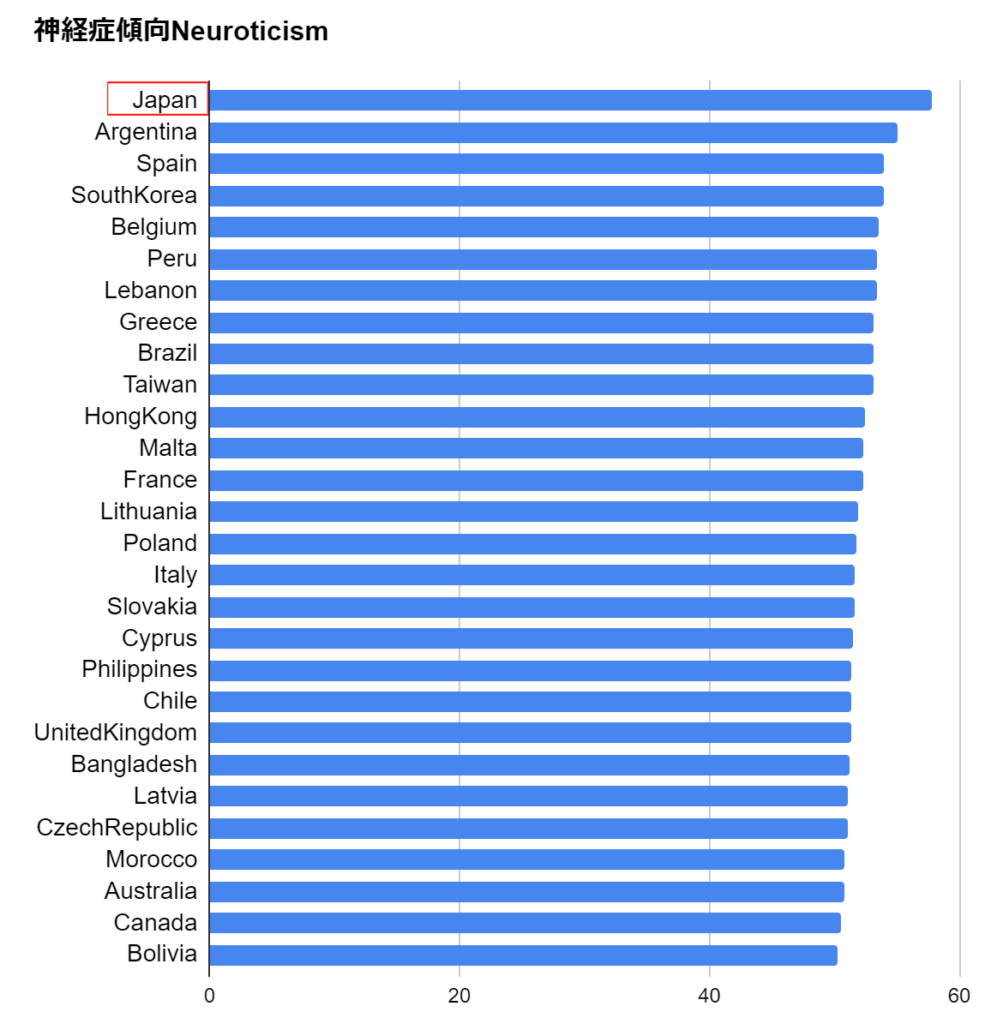
Japan scores higher on neuroticism than any other country in the 56-nation dataset — by a considerable margin. Neuroticism measures a person’s tendency to experience anxiety, worry, emotional instability, and negative affect. In other words, research suggests that the average Japanese person carries a significantly higher burden of anxiety than people in most other parts of the world. This may help explain several social phenomena: the persistent wearing of masks even after the COVID-19 emergency ended, the strong social pressure to avoid standing out, and even the remarkably low crime rate — which may partly reflect a population motivated by fear of social judgment rather than intrinsic ethical values.
Conscientiousness: Ranked Last in the World
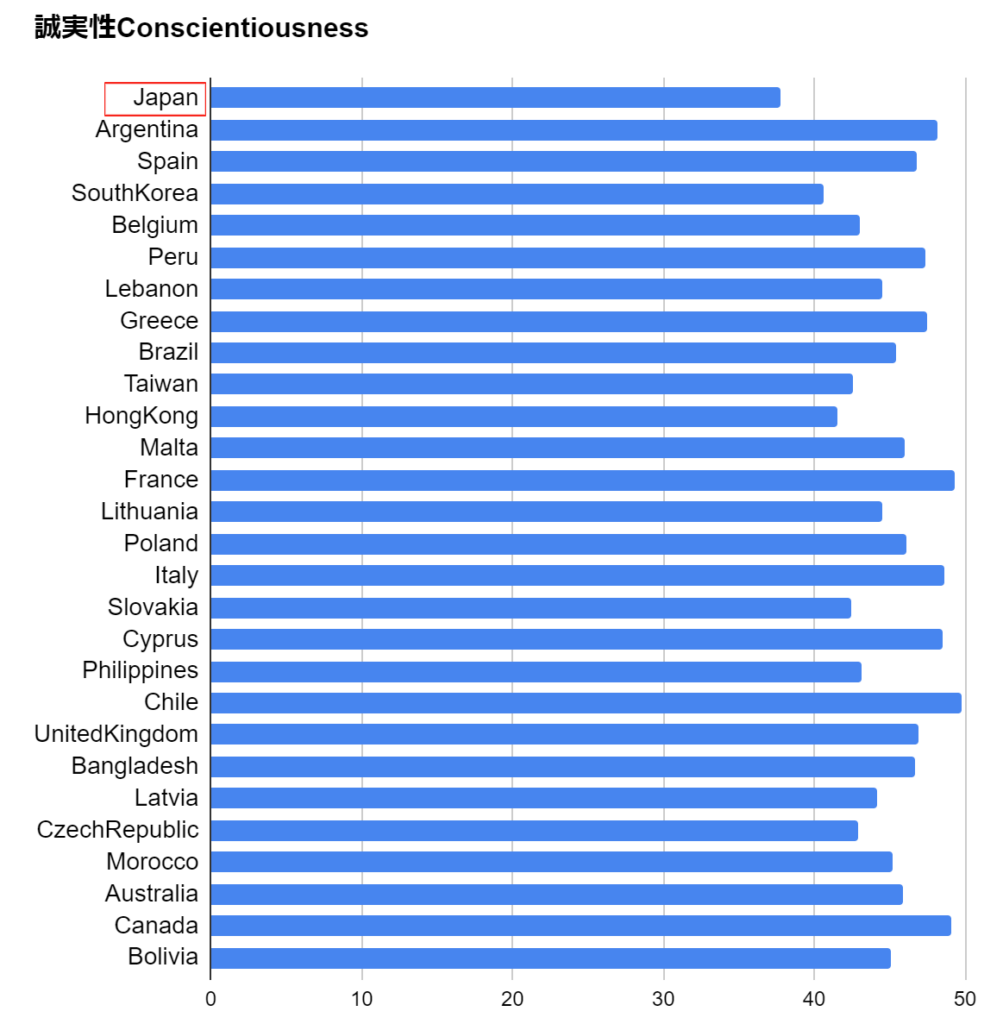
Perhaps the most jarring finding for those familiar with Japan’s reputation for punctuality, craftsmanship, and work ethic: Japan scores at the very bottom of all 56 countries on conscientiousness. Studies indicate that what outside observers often interpret as “Japanese diligence” may actually be anxiety-driven compliance rather than a genuine inner drive toward responsibility and self-discipline. The behavior may look the same from the outside, but the underlying motivation appears to be quite different.
Openness to Experience: Also Near the Bottom
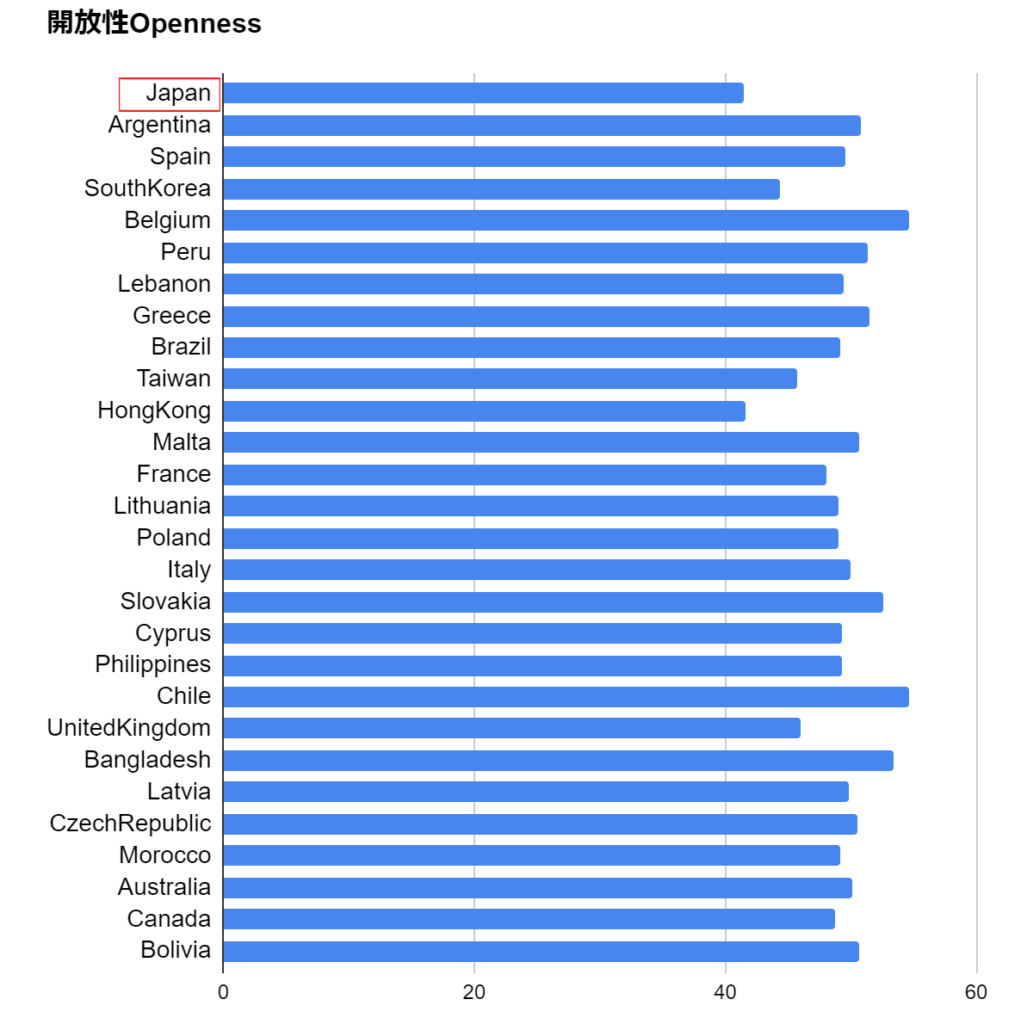
Japan scores near last place on openness to experience, scoring similarly to Hong Kong in the dataset. This is particularly surprising given Japan’s global reputation for creative exports — anime, manga, video games, and avant-garde fashion. Research suggests that these industries may reflect the output of highly creative subcultures rather than a national-level trait. On average, intellectual curiosity and a drive to seek out new ideas and experiences appears to be relatively low across the Japanese population as a whole.
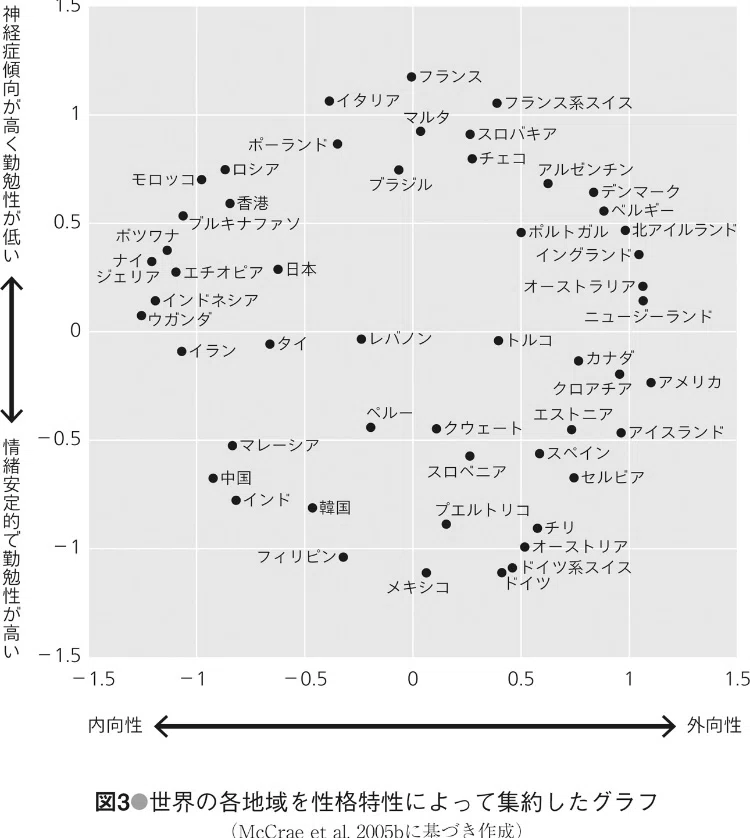
A separate study of over 12,000 people across 51 countries — in which participants rated someone they knew well rather than themselves — produced consistent results: Japan clustered in the “introverted and neurotic, low conscientiousness” quadrant, reinforcing the self-report findings above.
Research also hints at an evolutionary explanation: Japan’s location in a region prone to earthquakes, typhoons, and tsunamis may have gradually selected for higher anxiety as an adaptive survival trait — those who worried more about environmental threats may have been more likely to prepare for them and survive.
Low Self-Esteem, Low Self-Affirmation, and Low Happiness: A Consistent Pattern
The high-neuroticism finding does not stand alone — it is consistently echoed in Japan’s scores on self-esteem, self-affirmation, and national happiness. These 3 separate measures all paint the same picture of a society where many people struggle to feel good about themselves and their lives.
Self-esteem — defined in psychology as the degree to which a person values and accepts themselves — has been declining in Japan over multiple decades according to longitudinal research. This is a separate concept from simple confidence; it reflects a deep-seated sense of self-worth.
A large survey of 18-year-olds conducted by the Nippon Foundation found that Japanese youth reported significantly fewer feelings of personal pride and significantly more feelings of depression and hopelessness compared to their peers in other developed countries. On questions like “I am proud of my individuality,” Japanese respondents gave negative answers at rates that stood out even among the nations surveyed.
At the national level, Japan ranked 47th out of 137 countries in the World Happiness Report 2023 — a relatively low position for one of the world’s wealthiest and most technologically advanced nations. Importantly, personality is shaped by roughly equal contributions from genetics and environment (approximately 50% each, according to behavioral genetics research). This means that the high-anxiety, low-self-esteem pattern seen in Japan is not simply fixed biology — environmental factors such as education, social norms, and cultural expectations play a significant role, which also means change is possible.
The Dark Triad: Japan’s Scores on Manipulation and Psychopathy
Beyond the Big Five, personality research also examines what is known as the “Dark Triad” — 3 socially aversive personality traits that predict harmful interpersonal behavior. Cross-cultural comparisons of these traits reveal yet another dimension of the gap between Japan’s cultural image and measured psychological reality.
The Dark Triad consists of 3 distinct traits:
- Narcissism — An inflated sense of self-importance, lack of empathy, and a need for admiration. In development terms, it involves affection that remains directed inward rather than extending to others.
- Machiavellianism — A tendency toward interpersonal manipulation, exploitation, cynical disregard for ethics, and coldly rational self-interest. Named after the Renaissance political thinker Niccolò Machiavelli.
- Psychopathy — Persistent antisocial behavior, impulsivity, selfishness, and a lack of remorse for harmful actions.
In a cross-national comparison involving the United States, Australia, Brazil, Hungary, Russia, and Japan, research found that Japan scored highest among the 6 countries on both Machiavellianism and Psychopathy. This finding adds important nuance to the Big Five picture: the low agreeableness score may not simply reflect emotional restraint — it may also reflect a genuine tendency toward manipulation and lack of remorse that is measurably higher in Japan than in many comparable nations.
What These Findings Mean: Practical Implications for Life in Japan
Understanding the psychological profile of Japanese national character is not just an academic exercise — it has real implications for how people navigate relationships, workplaces, and their own mental health. Here are several evidence-informed takeaways for people living in or interacting with Japan.
- Don’t mistake anxiety for conscientiousness. If you or someone around you follows rules primarily out of fear of judgment — not genuine personal values — the motivation matters for long-term wellbeing. Building intrinsic motivation tends to produce more sustainable and fulfilling outcomes than anxiety-driven compliance.
- Conformity does not equal agreement. Low agreeableness combined with high neuroticism suggests that many people “go along” not because they genuinely agree, but because they fear the consequences of standing out. Recognizing this dynamic can make workplace and social interactions clearer and less confusing.
- Introversion is a trait, not a flaw. Japanese people tend to be introverted at the population level — but this is associated with real strengths, including careful listening, attention to detail, and deep focus. Reframing introversion positively can support better self-esteem.
- Environment shapes personality — and can change it. Since roughly half of personality variance is environmental, efforts to change social norms around self-expression, emotional education, and psychological safety in schools and workplaces can have measurable effects over time.
- Regional variation exists within Japan. Research at the prefecture level shows that urban areas tend to score higher on extraversion, curiosity, and conscientiousness, while rural regions tend to show stronger anxiety tendencies. Individual experience varies widely — national averages do not define any individual person.
If you recognize any of these patterns in yourself — particularly chronic anxiety or low self-worth — it is worth knowing that these are not fixed traits. Both psychological counseling and deliberate environmental changes (new communities, new routines, new relationships) have been shown to shift Big Five scores over time, particularly neuroticism.
Frequently Asked Questions
What does cross-cultural research say about Japanese personality traits overall?
Research based on the Big Five model, surveying approximately 18,000 people across 56 countries, suggests that Japanese people tend to score below average on extraversion, agreeableness, conscientiousness, and openness to experience — and rank highest in the world on neuroticism (anxiety and emotional instability). These findings challenge many common stereotypes about Japanese national character, particularly assumptions about diligence and harmony.
Why do Japanese people score so high on neuroticism compared to other countries?
Studies indicate several possible explanations. Japan’s geographic vulnerability to natural disasters such as earthquakes and typhoons may have evolutionarily selected for anxiety-prone temperaments. Cultural and social factors — including strong pressure to conform, fear of social judgment, and education systems that emphasize avoiding mistakes — likely reinforce this tendency. Since personality is approximately 50% environmental, these societal pressures play a meaningful role in maintaining high neuroticism at the population level.
Are Japanese people actually less hardworking than their reputation suggests?
According to Big Five research, Japan ranks at or near the bottom of all surveyed countries on conscientiousness — the trait most directly associated with diligence, self-discipline, and rule-following. Research suggests that behaviors often interpreted as “Japanese work ethic” may be anxiety-driven compliance (fear of judgment or social exclusion) rather than genuine intrinsic motivation. The observable behavior may appear similar, but the underlying psychological mechanism appears to differ significantly from true conscientiousness.
How does Japanese self-esteem compare to other developed countries?
Self-esteem in Japan has been declining over several decades according to longitudinal research. A major survey by the Nippon Foundation found that Japanese 18-year-olds reported significantly lower feelings of personal pride and higher levels of depressive feelings compared to peers in other developed nations. Japan also ranked 47th in the World Happiness Report 2023 — notably low for one of the world’s wealthiest economies — reflecting a consistent pattern of low self-regard across multiple measures.
What is the Dark Triad and how does Japan score on it?
The Dark Triad refers to 3 personality traits associated with harmful interpersonal behavior: narcissism (self-centered grandiosity), Machiavellianism (strategic manipulation and cynicism), and psychopathy (antisocial behavior and lack of remorse). In a cross-national study comparing Japan, the United States, Australia, Brazil, Hungary, and Russia, Japan scored highest among all 6 countries on both Machiavellianism and psychopathy — a finding that adds a significant dimension to understanding Japanese collectivism and personality traits.
Do personality traits differ between regions inside Japan?
Yes. Prefecture-level research within Japan shows meaningful regional variation. Urban areas such as Tokyo tend to score relatively higher on extraversion, openness to experience, and conscientiousness compared to rural prefectures, which tend to show stronger anxiety tendencies. This suggests that environmental factors — including population density, economic activity, and cultural diversity — influence personality expression even within a single country.
Can personality traits change over time, or are they fixed?
Personality is not fixed. Research in behavioral genetics estimates that personality traits are approximately 50% heritable — meaning roughly half of the variation is explained by genetic factors, and the other half by environmental ones. Studies show that traits like neuroticism can shift meaningfully over a lifetime, particularly in response to therapeutic intervention, significant life changes, and sustained exposure to different social environments. This means that high-anxiety tendencies common in Japan’s population profile are not inevitable or permanent for any individual.
Summary: What the Science Actually Says About Japanese National Character
The picture that emerges from rigorous japanese personality traits research is genuinely surprising. Japan scores below average on agreeableness, conscientiousness, extraversion, and openness — and leads the world in neuroticism. Related measures of self-esteem, self-affirmation, and happiness tell the same story. The country’s reputation for harmony and diligence, it turns out, may be better explained by anxiety and social pressure than by the personality traits most associated with those qualities. At the same time, these are population-level tendencies, not individual destinies — and since roughly half of personality is shaped by environment, awareness itself is a powerful starting point for change.
If this data made you curious about where you personally stand on these traits — whether you recognize the anxiety patterns, the introversion, or perhaps the openness that bucks the national trend — exploring your own Big Five profile is a meaningful next step. Understanding your own personality scientifically is one of the most reliable tools for building a life that genuinely fits who you are.

Writer & Supervisor: Eisuke Tokiwa
Personality Psychology Researcher / CEO, SUNBLAZE Inc.
As a child he experienced poverty, domestic abuse, bullying, truancy and dropping out of school — first-hand exposure to a range of social problems. He spent 10 years researching these issues and published Encyclopedia of Villains through Jiyukokuminsha. Since then he has independently researched the determinants of social problems and antisocial behavior (work, education, health, personality, genetics, region, etc.) and has published 2 peer-reviewed journal articles (Frontiers in Psychology, IEEE Access). His goal is to predict the occurrence of social problems. Spiky profile (WAIS-IV).
Expertise: Personality Psychology / Big Five / HEXACO / MBTI / Prediction of Social Problems
Researcher profiles: ORCID / Google Scholar / ResearchGate
Social & Books: X (@etokiwa999) / note / Amazon Author Page