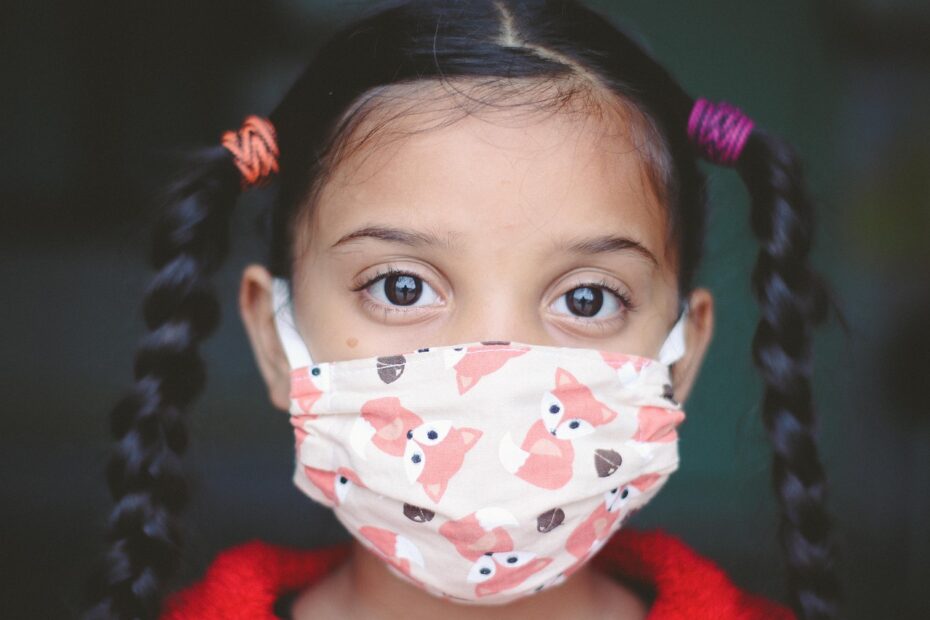
Mask refusal personality traits may reveal more about human behavior than we once thought. While it is easy to assume that people who refuse to wear masks are simply careless or uninformed, research suggests a far more nuanced picture — one rooted in measurable personality characteristics. A study published in the Journal of Individual Differences (University of South Alabama, 2022) examined how the Big Five personality traits and the Dark Triad relate to mask-wearing behavior during the COVID-19 pandemic, and the findings are both surprising and illuminating.
What makes this research particularly compelling is its design: rather than asking people a single question at one point in time, the study tracked the same group of participants across 4 separate data-collection waves. This allowed researchers to map the path from personality → feelings about masks → actual mask-wearing behavior. In other words, the study didn’t just ask “do you wear a mask?” — it asked why, at a psychological level, some people consistently do and others consistently don’t.
Once again, personality researcher and author of Villain Encyclopedia, Tokiwa (@etokiwa999), will provide the explanation.
※We have developed the HEXACO-JP Personality Assessment! It has more scientific basis than MBTI. Tap below for details.

目次
- 1 Why Mask-Wearing Behavior Varies So Dramatically Between People
- 2 The Study Design: How Researchers Untangled Personality from Behavior
- 3 The Big Five, the Dark Triad, and What They Measure
- 4 Key Mask Refusal Personality Traits: What the Research Found
- 5 The 8 Attitude Dimensions: Why People Resist Masks for Very Different Reasons
- 6 What These Findings Mean in Practice: Actionable Insights for Individuals and Communities
- 7 Frequently Asked Questions
- 7.1 Does refusing to wear a mask mean someone has a bad personality?
- 7.2 Does high agreeableness guarantee that someone will always wear a mask?
- 7.3 Why do people with Dark Triad traits tend to resist masks specifically?
- 7.4 Can someone’s feelings about masks change over time?
- 7.5 What factors beyond personality also affect whether someone wears a mask?
- 7.6 Does this research apply equally to all countries and cultures?
- 7.7 Is there a way to tell in advance which personality types will comply with future health measures?
- 8 Summary: What Mask Behavior Tells Us About the Psychology of Compliance
Why Mask-Wearing Behavior Varies So Dramatically Between People
The gap in mask-wearing rates between individuals — and even between cities — is much larger than most people realize. Research conducted during the COVID-19 pandemic found that in some urban areas approximately 50% of people wore masks in public, while in others the figure dropped below 20%. If the environment, the virus, and the public health guidelines were essentially the same, what explains the difference?
For a long time, the dominant explanation was a straightforward one: people who comply with health rules are responsible, and those who don’t are irresponsible or poorly informed. Under this “awareness and rule compliance” model, the solution seemed simple — better education and clearer rules should close the gap. But this explanation runs into a wall almost immediately. Studies consistently show that many people who are fully aware of mask guidelines still choose not to wear one. Knowledge alone, it turns out, is not enough.
The factors driving mask-wearing behavior are better understood as a layered system:
- Regional and cultural norms — Communities with stronger collectivist values tend to show higher compliance rates.
- Gender differences — Research consistently finds that women tend to wear masks more frequently than men across multiple countries.
- Individual psychological factors — How a person feels about masks — uncomfortable, ineffective, embarrassing — powerfully shapes what they actually do.
This third factor is where personality enters the picture. The feelings a person has about mask-wearing don’t appear randomly — they tend to reflect stable, underlying personality characteristics. Understanding this layer is essential for understanding anti-mask psychology at a deeper level.
The Study Design: How Researchers Untangled Personality from Behavior
One of the greatest strengths of this research is its longitudinal, multi-wave design, which makes it possible to draw meaningful conclusions about cause and direction. Many studies on COVID compliance personality simply ask people about their personality and their mask habits at the same moment in time — which makes it impossible to know which came first. This study solved that problem by separating the measurement of personality, attitudes, and behavior across time.
The 4 data-collection waves were structured as follows:
- Wave 1: Demographic information — age, gender, and background.
- Wave 2: Personality measurement using the Big Five and Dark Triad scales.
- Wave 3: Attitudes toward mask-wearing, assessed across 8 distinct dimensions.
- Wave 4: Actual mask-wearing behavior — how often participants wore masks in real situations.
By measuring personality before attitudes and behavior, the researchers could model a logical flow: personality shapes feelings about masks, and those feelings influence behavior. The study began with 567 participants in Wave 1, but retention naturally dropped over time — 317 remained in Wave 2, 251 in Wave 3, and 209 completed all 4 waves. One notable finding was that participants who dropped out were, on average, about 5 years younger (approximately 34.6 years old) than those who completed the full study (approximately 39.7 years old). The researchers flagged this as a limitation worth acknowledging.
Mask behavior was measured using a 7-point frequency scale (1 = never, 7 = always), and participants reported their habits across 3 different time windows: the past 6 months, the past 3 weeks, and the past 1 week. This multi-period approach helped distinguish stable habits from temporary changes driven by current events.
The Big Five, the Dark Triad, and What They Measure
To understand the results, it helps to first understand the 2 personality frameworks the study used — the Big Five and the Dark Triad — because they capture very different aspects of human character.
The Big Five model is the most widely validated personality framework in psychology. It breaks personality down into 5 broad dimensions:
- Openness to Experience — Curiosity, creativity, and a willingness to embrace new ideas and situations.
- Conscientiousness — Being organized, reliable, and goal-directed. People high in this trait tend to follow rules carefully.
- Extraversion — Sociability and a preference for stimulating, social environments.
- Agreeableness — Warmth, empathy, and a genuine concern for others’ well-being. Agreeableness and health behavior are frequently linked in research.
- Neuroticism (Emotionality) — A tendency to experience negative emotions like anxiety, worry, and irritability.
The Dark Triad refers to a cluster of 3 socially aversive personality traits that, while not diagnosable disorders on their own, are associated with self-centered and sometimes manipulative behavior:
- Narcissism — An inflated sense of self-importance and entitlement, often combined with low empathy for others.
- Machiavellianism — A calculating, strategic approach to relationships, often involving manipulation to achieve personal goals.
- Psychopathy — Emotional coldness, impulsivity, and a lack of remorse or concern for others.
Both frameworks were assessed using validated questionnaires with dozens of individual items. The key insight is that they measure different things: the Big Five captures the full range of normal personality variation, while the Dark Triad focuses specifically on traits associated with self-interest over community interest. This distinction matters enormously when it comes to predicting mask-wearing behavior.
Key Mask Refusal Personality Traits: What the Research Found
The study identified a clear pattern: personality traits associated with concern for others predicted higher mask-wearing, while traits associated with self-centeredness predicted lower mask-wearing — largely by shaping how people felt about masks in the first place.
The most important finding concerned agreeableness. People high in agreeableness — who are warm, empathetic, and genuinely care about how their actions affect others — tended to report more positive attitudes toward masks and wore them more consistently. The logic is intuitive: if you deeply care about protecting the people around you, wearing a mask feels like a natural extension of that value. Research suggests agreeableness is one of the strongest Big Five predictors of health-protective behavior in social settings.
On the other side of the spectrum, Dark Triad traits — particularly narcissism and psychopathy — were associated with more negative attitudes toward masks and lower compliance rates. The connection between narcissism and mask refusal is especially telling: individuals high in narcissism tend to resist rules they perceive as limiting their freedom or requiring sacrifice without personal benefit. They are also less motivated by the idea of protecting strangers.
Here is a summary of how key personality traits related to mask attitudes and behavior:
- High Agreeableness → Viewed masks as a reasonable sacrifice for others; wore them more frequently.
- High Conscientiousness → Followed guidelines carefully; tended toward higher mask compliance as a matter of rule-following.
- High Neuroticism → More anxious about COVID-19 in general; tended to wear masks more out of personal fear.
- High Narcissism → Viewed masks as uncomfortable, ineffective, or an infringement on personal freedom; wore them less.
- High Psychopathy → Less concerned about infecting others; showed lower motivation to wear masks for social reasons.
Critically, the research found that personality did not directly cause mask-wearing behavior in most cases. Instead, personality influenced how a person felt about masks (their attitudes), and those attitudes then drove behavior. This “personality → attitude → behavior” chain is an important distinction. It means that two people with the same personality might behave differently if their attitudes are shaped by different experiences — and it also suggests that changing attitudes could be a more effective lever than trying to change personality itself.
The 8 Attitude Dimensions: Why People Resist Masks for Very Different Reasons
One of the most practically useful aspects of this study is that it did not treat “negative feelings about masks” as a single, undivided concept — instead, it broke mask attitudes down into 8 distinct dimensions, each of which can independently predict behavior.
Understanding these 8 dimensions is important because different personality types tend to object to masks for different reasons. A blanket public health message cannot address all of these concerns simultaneously, which is part of why uniform campaigns often fail to move certain groups.
- Physical discomfort — Masks feel hot, suffocating, or irritating on the skin.
- Perceived ineffectiveness — A belief that masks don’t actually stop viral transmission.
- Access barriers — Difficulty obtaining masks, though this was less common in later pandemic phases.
- Substitution belief — The view that other behaviors (hand-washing, distancing) make masks unnecessary.
- Hassle and inconvenience — The daily effort of remembering and maintaining masks.
- Appearance concerns — Worrying about how one looks while wearing a mask.
- Social stigma and judgment — Fear of being seen as overly cautious or different from the social group.
- Freedom restriction — Feeling that mask mandates are an infringement on personal liberty.
Research indicates that people high in Dark Triad traits — particularly those high in narcissism — were especially sensitive to the freedom restriction and ineffectiveness dimensions. People high in agreeableness, by contrast, tended to rate discomfort as a minor concern compared to the perceived benefit of protecting others. This is a striking illustration of how the same physical object (a face mask) can carry completely different psychological meanings depending on a person’s character.
The practical takeaway is meaningful: if you want to encourage someone who resists masks due to a “freedom” objection, a different message is needed than for someone who simply finds masks physically uncomfortable. Personality-aware communication may be significantly more effective than one-size-fits-all approaches.
What These Findings Mean in Practice: Actionable Insights for Individuals and Communities
Understanding the psychology behind mask refusal is not about assigning blame — it is about finding smarter, more effective ways to protect public health and improve interpersonal understanding. Here are several evidence-informed takeaways.
1. Recognize That Attitude Is the Lever, Not Personality
Because personality traits are relatively stable across life, trying to change someone’s personality is not a realistic goal. However, the research shows that attitudes are the true mediator between personality and behavior. This means that well-crafted information, lived experience, or genuine social connection can shift attitudes — and therefore behavior — even in people with traits that would otherwise predispose them toward non-compliance. Focus on addressing the specific objection (discomfort, freedom, effectiveness) rather than the person’s character.
2. People High in Agreeableness Should Leverage Their Natural Inclination
If you score high in agreeableness, your empathy is a genuine public health asset. Research suggests that framing health behavior as an act of care for others — rather than self-protection — is especially motivating for highly agreeable individuals. Leaning into that framing, and helping others see the social benefit of mask-wearing, can be a natural extension of your character strengths.
3. People with Dark Triad Tendencies Should Watch for Rationalization
If you recognize Dark Triad tendencies in yourself — a strong preference for personal freedom, a tendency to distrust authority, or low concern for strangers’ well-being — it is worth pausing to ask whether your objections to protective behaviors are genuinely rational or whether they are rationalizations of deeper discomfort with constraint. This kind of reflective awareness (sometimes called metacognition) can help bridge the gap between personality and pro-social behavior.
4. Public Health Messaging Should Be Segmented by Attitude Type
For communities and policymakers, the 8-dimension attitude model offers a practical framework. Instead of one generic campaign, consider 3 or 4 targeted messages:
- For those who find masks uncomfortable: promote breathable, well-fitting mask options.
- For those who doubt effectiveness: provide clear, accessible scientific evidence in non-technical language.
- For those who feel freedom is restricted: frame mask-wearing as an active personal choice to protect people you love, rather than government compliance.
- For those concerned about appearance: normalize mask-wearing through social proof and visible community leaders wearing masks confidently.
Frequently Asked Questions
Does refusing to wear a mask mean someone has a bad personality?
Not at all. Personality traits exist on a spectrum, and no single trait makes someone “good” or “bad.” Research suggests that certain characteristics — like lower agreeableness or higher Dark Triad traits — are statistically associated with less frequent mask-wearing, but this reflects tendencies across large groups, not judgments about individuals. A person can score low in agreeableness and still be kind, generous, and responsible in many areas of their life.
Does high agreeableness guarantee that someone will always wear a mask?
No — research indicates a tendency, not a certainty. While people high in agreeableness tend to show higher COVID compliance and more consistent mask use, many other factors play a role: physical health conditions, local regulations, the specific setting, and individual history with masks all influence behavior. Personality sets a general direction, but it does not determine any single person’s actions on any given day.
Why do people with Dark Triad traits tend to resist masks specifically?
The Dark Triad and mask wearing are linked through 2 main pathways. First, traits like narcissism and psychopathy are associated with lower empathy and less concern for how one’s behavior affects strangers — removing a key social motivation for mask use. Second, Dark Triad individuals tend to react strongly against perceived threats to personal freedom and autonomy, making mask mandates feel especially aversive. These are attitudinal reactions, not deliberate selfishness, in many cases.
Can someone’s feelings about masks change over time?
Yes. Because the research shows that attitudes — not personality itself — are the direct driver of behavior, and because attitudes are more flexible than personality, change is genuinely possible. Experiencing positive outcomes from mask-wearing, finding a mask that is physically comfortable, or developing a personal connection to someone who is medically vulnerable can all meaningfully shift a person’s attitudes. Gradual exposure and positive reframing tend to be more effective than direct confrontation.
What factors beyond personality also affect whether someone wears a mask?
Many factors contribute to mask-wearing behavior alongside personality. Age, biological sex, local infection rates, government mandates, cultural norms, access to masks, and peer behavior all play meaningful roles. Research consistently shows that women tend to wear masks more frequently than men, and older adults tend to comply more than younger adults. Personality is one important piece of a complex puzzle — not the whole picture.
Does this research apply equally to all countries and cultures?
This study was conducted in the United States, which means cultural context should be considered carefully when applying the findings elsewhere. In more collectivist societies — including Japan — the social motivations for mask-wearing may be considerably stronger, potentially reducing the influence of individual personality traits like agreeableness. Cross-cultural replication of this research would be valuable before drawing universal conclusions.
Is there a way to tell in advance which personality types will comply with future health measures?
Research suggests that agreeableness and conscientiousness are the Big Five traits most reliably linked to health behavior compliance in general — not just mask-wearing. People high in these traits tend to follow medical guidelines, engage in preventive care, and cooperate with community health efforts more readily. However, predicting any individual’s behavior from personality alone would be an oversimplification; situational factors always interact with traits to shape real-world decisions.
Summary: What Mask Behavior Tells Us About the Psychology of Compliance
The science of mask refusal personality traits reveals something important about human behavior more broadly: we rarely make decisions based purely on information or rules. Between our character and our actions sits a layer of feelings, attitudes, and personal meaning-making — and that layer is shaped, in significant part, by who we are as people. The research highlighted here found that agreeableness and health behavior are meaningfully connected, that the link between the dark triad and mask wearing runs through specific emotional objections, and that the most effective path to changing behavior is not lecturing people about rules, but engaging thoughtfully with their specific concerns.
Understanding personality and rule compliance is not about sorting people into heroes and villains. It is about recognizing the full complexity of human motivation — and using that understanding to build more effective, compassionate approaches to public health, community life, and personal relationships. If you found these insights thought-provoking, consider exploring your own personality profile to see which traits might be quietly shaping the health decisions you make every day.