IQ and belief in astrology — the moment you put those two things together, most people assume the answer is obvious: smarter people simply don’t fall for horoscopes. But the psychology behind why humans look to the stars for guidance is far more nuanced than that snap judgment suggests. Research analyzing data from more than 8,500 adults reveals that intelligence is only one piece of a much larger puzzle, and the findings may genuinely surprise you.
Astrology is everywhere. Morning TV segments rank your lucky color by zodiac sign. Social media feeds serve up daily horoscopes between cat videos and news headlines. Dedicated smartphone apps push personalized star-chart readings straight to your lock screen. Despite living in an era of unprecedented scientific literacy, a substantial portion of the adult population still considers astrology at least partially scientific. So what is really going on — and does IQ actually predict whether someone believes in it?
Once again, personality researcher and author of Villain Encyclopedia, Tokiwa (@etokiwa999), will provide the explanation.
※We have developed the HEXACO-JP Personality Assessment! It has more scientific basis than MBTI. Tap below for details.

目次
- 1 What Is Astrology, and Why Do People Still Believe in It?
- 2 What Science Says About Astrology’s Predictive Power
- 3 How Widespread Is Astrology Belief? The Numbers May Surprise You
- 4 IQ and Belief in Astrology: What the Large-Scale Data Actually Shows
- 5 Other Psychological and Demographic Factors That Shape Astrology Belief
- 6 Critical Thinking, Cognitive Bias, and the Psychology Behind Fortune Telling
- 7 Actionable Insights: What This Research Means for You
- 8 Frequently Asked Questions
- 8.1 Does having a higher IQ mean you will never believe in astrology?
- 8.2 What percentage of adults actually believe in astrology?
- 8.3 Why do women tend to believe in astrology more than men?
- 8.4 How does education level relate to belief in astrology and pseudoscience?
- 8.5 What psychological mechanisms explain why intelligent people sometimes still believe in astrology?
- 8.6 Is believing in astrology harmful?
- 8.7 Does this research apply to other paranormal beliefs besides astrology?
- 9 Summary: What the Evidence Really Tells Us About IQ and Belief in Astrology
What Is Astrology, and Why Do People Still Believe in It?
Astrology is a belief system that attempts to explain human personality and predict life events based on the positions of celestial bodies at the time of a person’s birth. It is one of the oldest recorded frameworks for understanding human character, appearing in ancient Babylonian texts, spreading through the Han Dynasty in China, and becoming deeply embedded in European intellectual tradition during the Middle Ages and Renaissance. The core idea is elegantly simple: the arrangement of the sun, moon, and planets at the moment you were born shapes who you are and what your future holds.
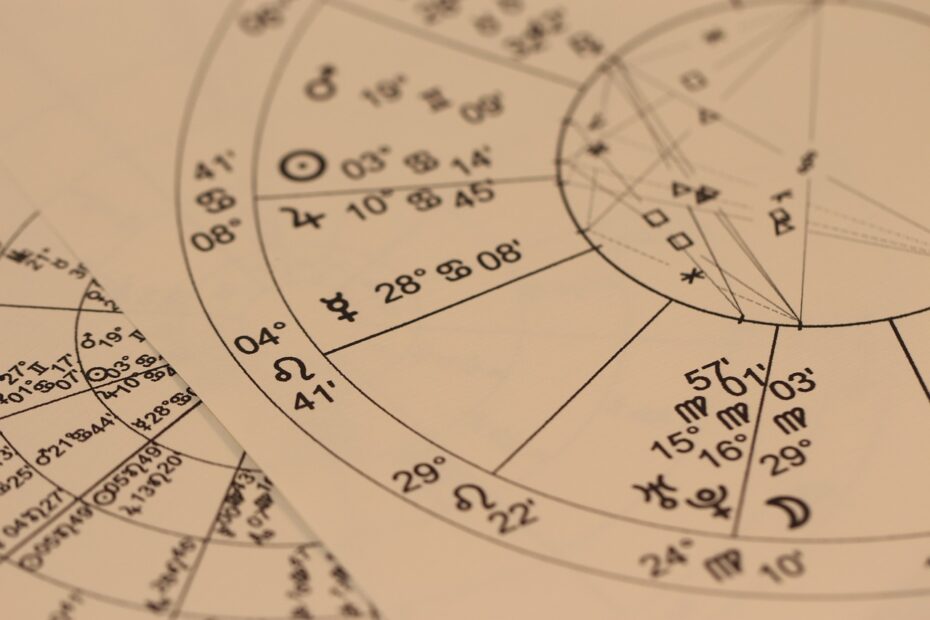
The most familiar tool in Western astrology is the horoscope — a map of the sky, or “horoscope chart,” divided into 12 zodiac signs corresponding to the sun’s apparent path through the year. If you were born between late October and late November, for instance, you are assigned the sign Scorpio, along with a set of personality descriptors that supposedly come with it. These descriptions are typically broad enough to feel personally accurate to almost anyone — a psychological effect known as the Barnum or Forer effect, where vague, flattering statements are accepted as uniquely self-relevant.
Key reasons researchers believe astrology endures despite scientific skepticism include:
- Pattern recognition: The human brain is wired to find meaningful patterns, even in random data — a tendency sometimes called apophenia.
- Emotional comfort: Uncertain times drive people toward frameworks that offer a sense of order and predictability.
- Social bonding: Discussing star signs is a low-stakes, widely understood conversational shortcut for talking about personality.
- Confirmation bias: People naturally remember the horoscope predictions that came true and forget the ones that didn’t.
Understanding these psychological roots is essential before asking whether IQ has anything to do with susceptibility to them.
What Science Says About Astrology’s Predictive Power
Decades of controlled research have consistently failed to confirm that astrological signs can reliably predict personality traits, career success, or any other measurable life outcome. The scientific method requires that a hypothesis be testable, that experiments be replicable, and that results hold up across independent studies. On all three counts, astrology has struggled to deliver.
One of the most-cited historical attempts to validate astrology scientifically involved the so-called “Mars effect” — the claim that elite athletes were disproportionately born when Mars occupied specific positions in the sky. When independent researchers attempted to replicate this finding, they identified serious methodological problems, including selective reporting of data and post-hoc adjustments to the conditions of the claim. Correcting for these issues, the effect disappeared.
Larger, more rigorous studies have since compiled birth dates and detailed personality profiles for thousands of participants and found no statistically meaningful relationship between zodiac sign and personality as measured by validated psychological instruments. This does not mean astrology has zero cultural or emotional value — but it does mean that, by the standards of modern empirical science, it is classified as a pseudoscience rather than a legitimate predictive system.
Common scientific criticisms of astrological claims include:
- Lack of replication: Positive results rarely hold up when independent teams repeat the same experiment.
- Vague predictions: Horoscope language is typically ambiguous enough to seem accurate regardless of what actually happens.
- No plausible mechanism: Physics offers no known force by which distant planets could influence human personality at birth.
- Selective memory: Believers tend to recall hits and discount misses, skewing their personal assessment of accuracy.
Despite this scientific consensus, the belief persists on a large scale — which is precisely what makes studying the psychology of astrology belief so important.
How Widespread Is Astrology Belief? The Numbers May Surprise You
Research suggests that roughly 1 in 3 American adults considers astrology at least partially scientific — a figure large enough to qualify astrology belief as a genuine social phenomenon rather than a fringe curiosity. U.S. polling data consistently finds that approximately 29% of adults say they believe in astrology, and awareness of one’s own zodiac sign sits at around 66% — higher than the 51% of Americans who know their blood type.
The large-scale study referenced here asked participants a direct question: “Is astrology scientific?” Respondents chose from 3 options, producing the following breakdown across 8,553 adults:
- Not scientific at all: 63.5% of respondents
- Sort of scientific: 29.8% of respondents
- Very scientific: 6.7% of respondents
Combined, approximately 36.5% of participants placed astrology somewhere on the scientific spectrum. To put that in everyday terms: in a room of 10 randomly selected American adults, roughly 3 or 4 would consider horoscopes to have at least some scientific basis.
The data also revealed notable demographic patterns. Women tended to score higher on astrology belief than men, though the gap was not dramatic. Younger adults showed a slight tendency toward higher belief compared to older cohorts, which aligns with broader trends showing that astrology has been experiencing a cultural revival among Millennials and Gen Z — partly driven by astrology apps, social media content, and its use as a personality shorthand in dating culture. The rise of daily horoscope notification apps has made engaging with astrological content easier and more habitual than ever before.
IQ and Belief in Astrology: What the Large-Scale Data Actually Shows
The central finding of the research is that higher cognitive ability — as measured by a vocabulary-based intelligence test — is associated with lower belief in astrology, but this relationship is more modest than many people expect, and it does not operate in isolation. Intelligence was one of several significant predictors, alongside education level, gender, age, and religious orientation.
In the study, cognitive ability was measured using a 10-question vocabulary test in which participants selected the correct meaning of a given word from a set of options. This type of assessment correlates meaningfully with scores on full-length standardized IQ tests and is widely used in large social surveys where administering a complete intelligence battery is impractical. The scale used in this study has a maximum of 10 points, and the average score in this sample was approximately 6 out of 10 — reflecting a broad, nationally representative range of ability.
Key findings regarding the relationship between intelligence and astrology belief include:
- Higher vocabulary scores predicted lower astrology belief — the association was statistically significant even after controlling for education, gender, religion, and political views.
- Education level showed an independent effect — participants with higher levels of formal education also tended to rate astrology as less scientific, suggesting that schooling and raw cognitive ability each contribute separately.
- The effect size was real but not enormous — intelligence explained only a portion of the variance in astrology belief, meaning many other factors also matter substantially.
- No single variable fully explained belief — even people with high vocabulary scores were not uniformly skeptical of astrology, and some high-scoring individuals did endorse astrological beliefs.
This is a critical nuance. The research does not support the dismissive conclusion that “only unintelligent people believe in astrology.” Rather, it suggests that analytical thinking capacity tends to reduce — but does not eliminate — the appeal of astrological frameworks. Cognitive biases like the Barnum effect and the human drive to seek patterns in uncertainty appear to operate across the full intelligence spectrum, just with varying strength.
Other Psychological and Demographic Factors That Shape Astrology Belief
Intelligence and education are important predictors of astrology belief, but the psychology of why people consult horoscopes is shaped by a constellation of overlapping factors — including gender, age, religious orientation, and cognitive style. Understanding these additional variables helps paint a far more accurate and compassionate picture of who believes in astrology and why.
Gender and astrology belief psychology: The study found that women tended to rate astrology as more scientific than men. This gender gap in paranormal belief is a consistent finding across multiple independent studies and is thought to reflect a combination of socialization differences, variation in tolerance for ambiguity, and the fact that popular astrology content is disproportionately marketed toward women. Crucially, this is a group-level tendency, not a rule about any individual.
Religious orientation: The relationship between religion and astrology belief is more complex than it might initially appear. Some religious frameworks explicitly discourage belief in astrology, which may reduce endorsement among the devout. In other contexts, however, spiritual openness — a willingness to accept non-material explanations for events — can create overlap between religious belief and astrological belief. The data suggest that religious identity interacts with astrology belief in ways that differ by denomination and the specific form of religious practice.
Political orientation: The research found some association between political views and astrology belief. This relationship is thought to partially reflect differences in analytical thinking style — individuals who score higher on measures of “actively open-minded thinking” or critical inquiry tend to be more skeptical of pseudoscience regardless of their political orientation.
Age effects: Younger adults in the study showed a slight tendency toward higher astrology belief. Researchers note that this may partly reflect a cohort effect driven by the recent cultural resurgence of astrology on social media platforms, where horoscope content is algorithmically amplified and star-sign identity has become a widely used form of self-expression among younger demographics.
Critical Thinking, Cognitive Bias, and the Psychology Behind Fortune Telling
Understanding why intelligent, educated people sometimes still believe in astrology requires looking beyond IQ scores to the cognitive biases that shape human judgment at every level of intelligence. Several well-documented psychological mechanisms help explain astrology’s persistent appeal even among analytical thinkers.
The Barnum Effect (also called the Forer Effect) is perhaps the most directly relevant. When researchers showed participants a supposedly personalized personality assessment — actually a generic description — the vast majority rated it as highly accurate. Horoscope language is specifically crafted to exploit this tendency, using statements broad and positive enough to resonate with almost anyone (“You have a need for other people to like and admire you,” “You have a tendency to be self-critical at times”).
Beyond the Barnum Effect, several other cognitive patterns contribute to sustained astrology belief:
- Confirmation bias: We pay more attention to astrological predictions that match our experience and mentally file away those that don’t. Over time, this creates a skewed personal record that seems to validate astrology.
- Illusory correlation: People perceive relationships between two things — star sign and personality, for instance — even when statistical analysis shows no meaningful connection.
- Need for cognitive closure: When life feels unpredictable or stressful, structured explanatory systems (including astrology) provide psychological comfort and a sense of control.
- Social proof: When friends, celebrities, or online communities engage seriously with astrology, it normalizes belief and reduces the motivation to scrutinize it critically.
Research on analytical thinking and horoscopes consistently shows that individuals who habitually engage in deliberate, evidence-based reasoning — what psychologists call “System 2” thinking — are more likely to catch and correct these biases. However, even highly analytical thinkers are not immune. When cognitive load is high, time is short, or emotional stakes are elevated, intuitive “System 1” thinking dominates, and biases reassert themselves. This explains why someone might ace a logic exam in the morning and still check their horoscope before a stressful job interview in the afternoon.
Actionable Insights: What This Research Means for You
Whether you believe in astrology, are firmly skeptical, or sit somewhere in between, the psychological insights from this research offer practical guidance for thinking more clearly about superstition, pseudoscience, and the role of critical thinking in everyday life.
1. Recognize your own cognitive biases — regardless of your IQ.
The research is clear that cognitive biases operate across the full intelligence range. Simply knowing that you are a smart person does not protect you from the Barnum Effect or confirmation bias. A more reliable strategy is to actively practice noticing when you are pattern-matching without evidence. Ask yourself: “Would this horoscope description feel accurate to someone born under a completely different sign?” If the answer is yes, that is the Barnum Effect in action. Why this works: Awareness of a bias is the first prerequisite for correcting it.
2. Use astrology for entertainment — and be honest with yourself about that.
There is nothing inherently harmful about enjoying horoscopes as a cultural artifact or social lubricant. The problems arise when astrological beliefs begin to influence significant real-world decisions — career choices, relationship choices, financial choices — in ways that override evidence-based reasoning. Keeping astrology in the “fun” column, rather than the “factual guidance” column, lets you enjoy the cultural experience without the epistemic risk. How to practice it: Before acting on astrological advice, ask whether you would make the same decision based on a coin flip. If not, why is the star chart more authoritative?
3. Strengthen analytical thinking as a daily habit, not just a test score.
The study suggests that education and cognitive ability each independently reduce astrology belief — which means that building and exercising analytical skills has real-world effects on how you evaluate claims. Practical ways to do this include reading scientific journalism critically, seeking out the strongest counter-arguments to your existing views, and practicing structured decision-making frameworks. Why this works: Critical thinking is not a fixed trait; it is a skill that improves with deliberate practice.
4. Approach others’ beliefs with curiosity rather than condescension.
The data shows that astrology belief is widespread and crosses multiple demographic lines. Someone who believes in horoscopes is not necessarily less intelligent — they may simply be responding to a different combination of emotional needs, social context, and cognitive habits. Understanding this makes for more productive conversations about evidence and pseudoscience, in which curiosity and respect tend to be more persuasive than ridicule.
Frequently Asked Questions
Does having a higher IQ mean you will never believe in astrology?
Not necessarily. Research suggests that higher cognitive ability is associated with lower astrology belief on average, but the relationship is not absolute. People with high IQ scores can and do believe in astrology, particularly when emotional needs, social environment, or habitual cognitive shortcuts play a stronger role than deliberate analytical reasoning. Intelligence reduces the likelihood of astrology belief — it does not eliminate it entirely.
What percentage of adults actually believe in astrology?
Based on the large-scale U.S. social survey data analyzed in this line of research, approximately 36.5% of adults rated astrology as at least somewhat scientific — with 29.8% calling it “sort of scientific” and 6.7% calling it “very scientific.” Separate U.S. polling data suggests roughly 29% of adults say they believe in astrology. These figures indicate that astrology belief is a mainstream social phenomenon rather than a rare fringe view.
Why do women tend to believe in astrology more than men?
Studies consistently find that women score slightly higher on measures of astrology belief than men, though the gap is not large. Researchers point to a combination of factors, including socialization differences, the way astrology content is culturally marketed, and possible variation in tolerance for ambiguous or intuitive explanatory systems. Importantly, this is a group-level statistical tendency — it does not predict what any individual woman or man believes.
How does education level relate to belief in astrology and pseudoscience?
Research indicates that higher levels of formal education are associated with lower belief in astrology, and this effect appears to be independent of raw cognitive ability. This suggests that the content of education — particularly exposure to scientific methodology, evidence evaluation, and critical thinking frameworks — plays a meaningful role in shaping attitudes toward pseudoscience, above and beyond native intelligence alone.
What psychological mechanisms explain why intelligent people sometimes still believe in astrology?
Several well-documented cognitive biases contribute to astrology belief across all intelligence levels. The Barnum Effect causes people to accept vague personality descriptions as personally accurate. Confirmation bias leads individuals to remember hits and forget misses. Illusory correlation makes people perceive relationships that don’t statistically exist. And the need for cognitive closure drives people toward structured explanatory systems — including astrology — during times of stress or uncertainty.
Is believing in astrology harmful?
Enjoying astrology as entertainment or a social conversation tool is generally considered harmless. Potential concerns arise when astrological beliefs begin influencing significant life decisions — such as financial choices, medical decisions, or relationship commitments — in ways that bypass evidence-based reasoning. Psychologists generally recommend treating astrology as a cultural experience rather than a factual guidance system to get the enjoyment without the epistemic risk.
Does this research apply to other paranormal beliefs besides astrology?
The cognitive patterns identified here — including the role of analytical thinking in reducing paranormal belief — are consistent with broader research on intelligence and paranormal beliefs, which includes topics like belief in ghosts, psychic abilities, and alternative medicine. Studies suggest that the same combination of cognitive ability, education level, and thinking style that predicts lower astrology belief also tends to predict lower endorsement of other pseudoscientific and paranormal claims.
Summary: What the Evidence Really Tells Us About IQ and Belief in Astrology
The relationship between IQ and belief in astrology is real but considerably more nuanced than the simple stereotype suggests. Research analyzing more than 8,500 adults finds that higher cognitive ability and higher educational attainment both tend to reduce astrology belief — but neither eliminates it. Approximately 36.5% of adults still consider astrology at least partially scientific, and the psychological reasons why — from the Barnum Effect to confirmation bias to the human need for pattern and meaning — operate across the full intelligence spectrum. Gender, age, religion, and political orientation all play additional roles, making astrology belief a genuinely complex social and psychological phenomenon.
The most honest takeaway is not “smart people don’t believe in astrology” but rather “deliberate analytical thinking tends to reduce the appeal of astrological frameworks — and that kind of thinking can be practiced and strengthened by anyone.” If this article has made you curious about where your own reasoning habits sit on the analytical-intuitive spectrum, consider exploring how you personally evaluate everyday claims and what role cognitive shortcuts play in your decision-making. Understanding your own thinking style is the first step toward using it more intentionally.