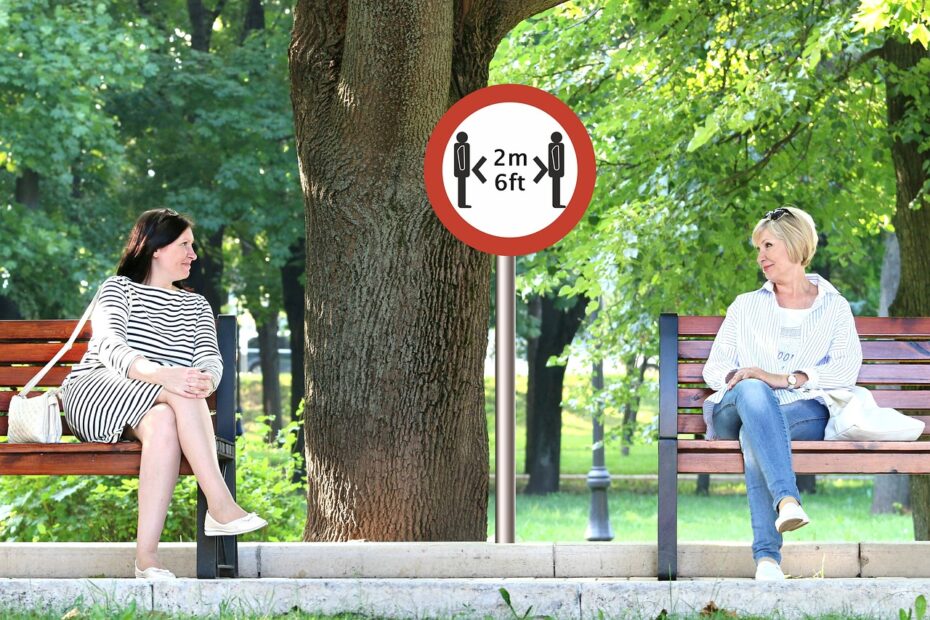
Personality traits infection prevention research reveals a striking finding: who you are as a person may significantly influence how well you follow health guidelines during a pandemic. A Brazilian research team studying over 700 adults found that two core personality dimensions — extraversion and conscientiousness — were meaningfully linked to whether people practiced social distancing and thorough handwashing during the COVID-19 outbreak. Understanding this connection isn’t just academically interesting; it could be the key to designing smarter, more effective public health communication strategies.
Most of us assume that everyone who understands the risks of infection will take equal precautions. But research suggests otherwise. The way we naturally think, feel, and behave — our personality — shapes our health choices in ways we may not even notice. This article breaks down the science behind personality traits and infection prevention, explores what the data says about extraverts, conscientious individuals, and everyone in between, and offers practical, psychology-backed advice for each personality type.
Once again, personality researcher and author of Villain Encyclopedia, Tokiwa (@etokiwa999), will provide the explanation.
※We have developed the HEXACO-JP Personality Assessment! It has more scientific basis than MBTI. Tap below for details.

目次
- 1 Why Individual Behavior Is Central to Infection Control
- 2 The Research: Personality Traits and Infection Prevention Compliance in 715 Adults
- 3 Extraversion and Social Distancing: Why High Extraversion May Predict Lower Compliance
- 4 Conscientiousness Health Behavior: Why Rule-Following Personalities Excel at Hygiene
- 5 Big Five Infection Compliance: Practical Advice Based on Your Personality Profile
- 6 Frequently Asked Questions
- 6.1 Do personality traits infection prevention studies apply to everyone, or just certain populations?
- 6.2 Does being highly extraverted mean a person is irresponsible about health risks?
- 6.3 Can you change your personality traits to become better at infection prevention?
- 6.4 What personality traits are most associated with good hygiene habits?
- 6.5 How does the psychology of preventive health explain why some people ignore pandemic guidelines?
- 6.6 Is there a link between introversion and better compliance with social distancing?
- 6.7 Should public health campaigns be designed differently based on personality types?
- 7 Summary: Understanding Your Personality Can Strengthen Your Health Habits
Why Individual Behavior Is Central to Infection Control
The Scale of the COVID-19 Pandemic
The COVID-19 pandemic, which emerged in late 2019, demonstrated just how dependent infection control is on the daily choices of billions of individuals. The World Health Organization declared a global pandemic in March 2020, and by that point the virus had already spread to dozens of countries. COVID-19 spreads primarily through respiratory droplets and close contact — meaning that personal behavior, not just medical interventions, plays a defining role in slowing transmission.
Symptoms range from mild fever and cough to severe pneumonia and respiratory failure. Older adults and those with underlying health conditions tend to face significantly higher risks of serious illness. Vaccines and antiviral treatments were still being developed during the early phases of the pandemic, so the burden of prevention fell squarely on individual action.
What became clear, fairly quickly, was that not everyone adopted protective behaviors at the same rate or with the same commitment. Some people wore masks consistently, washed their hands frequently, and avoided crowded spaces without much prompting. Others found the same measures burdensome or simply chose not to follow them. The question researchers began asking was: what explains these differences beyond just knowledge or access to information? Increasingly, the answer pointed toward personality.
The 6 Core Preventive Behaviors Studied
Public health agencies around the world converged on a common set of recommended behaviors to reduce transmission. Research on compliance with these behaviors — and who was most and least likely to follow them — became a rapidly growing field. The 6 primary preventive actions that were universally recommended include:
- Wearing a face mask in public or enclosed spaces
- Frequent handwashing with soap and water for at least 30 seconds
- Social distancing — maintaining at least 1–2 meters from others
- Avoiding unnecessary outings, particularly to crowded places
- Ensuring ventilation in indoor spaces
- Monitoring personal health and staying home when symptomatic
Each of these behaviors requires a change in routine. Some, like hand-washing, are relatively low-effort. Others, like avoiding social gatherings entirely, demand significant lifestyle changes — especially for people whose well-being is closely tied to social interaction. Research suggests that personality traits influence how much friction each person experiences when attempting to adopt these behaviors, which helps explain why compliance rates varied so dramatically across populations.
The Research: Personality Traits and Infection Prevention Compliance in 715 Adults
Study Design and Participant Demographics
A Brazilian research team conducted an online survey with 715 adults between March 18 and 19, 2020 — just days after the WHO pandemic declaration — to examine how personality traits relate to infection prevention behaviors. The study was published under the title Personality differences and COVID-19 and represents one of the earliest empirical investigations of this question.
Participants ranged in age from 18 to 78 years, with an average age of approximately 34.6 years. The sample skewed toward women (about 77.3%) compared to men (22.7%). In terms of education, roughly 40% held postgraduate degrees, 28.8% were university graduates, and 7.6% had completed secondary school. Racially, approximately 69.5% identified as white, 22.5% as mixed race, and 6.6% as Black. Regarding marital status, around 52.2% were single, 41.5% were married, and 4.5% were divorced.
While the sample is not fully representative of the Brazilian population — being skewed toward educated, female respondents — it provides a useful early snapshot of the relationship between personality and pandemic behavior. The timing of the survey is particularly notable: it was conducted at the very beginning of public awareness about COVID-19 prevention guidelines, capturing initial behavioral attitudes before social norms had time to fully consolidate.
How Participants Were Divided into 4 Behavioral Groups
Based on their self-reported attitudes toward 2 key protective behaviors — social distancing and handwashing — participants were classified into 4 distinct groups. Each participant answered whether they believed each measure was necessary, allowing researchers to compare personality profiles across compliance levels.
- Group 1 (Neither behavior seen as necessary): 6 participants — believed neither social distancing nor handwashing was important
- Group 2 (Distancing only): 17 participants — valued social distancing but not hand hygiene
- Group 3 (Handwashing only): 23 participants — prioritized handwashing but not social distancing
- Group 4 (Both behaviors seen as necessary): 669 participants — believed both measures were important
The overwhelming majority (approximately 93.6% of the total sample) fell into Group 4, which aligns with the high public concern about COVID-19 at the time of the survey. The smaller groups are statistically limited in size, but their personality profiles still offered meaningful contrasts. Researchers carefully noted that these responses reflect stated beliefs rather than observed behavior, which is an important limitation — people may report intentions that don’t always match their real-world actions. Nevertheless, the pattern of results across groups is consistent and psychologically coherent.
The Big Five Model: The Measurement Framework
To measure personality, the study used the Big Five Inventory-2 Short (BFI-2-S), a widely validated tool based on the Big Five model of personality. The Big Five model — also called the Five-Factor Model — is a framework in psychology that describes human personality using 5 broad dimensions. It is one of the most extensively researched and replicated models in all of behavioral science.
The 5 dimensions are:
- Extraversion: The tendency to be sociable, energetic, talkative, and assertive; drawing energy from social interactions
- Agreeableness: The tendency to be cooperative, trusting, empathetic, and considerate of others
- Conscientiousness: The tendency to be organized, disciplined, careful, and goal-oriented
- Neuroticism: The tendency to experience negative emotions like anxiety, worry, and emotional instability
- Openness to Experience: The tendency to be curious, imaginative, and receptive to new ideas
The BFI-2-S measures each of these 5 dimensions using 6 questions each, for a total of 30 items, rated on a 5-point Likert scale. The scale is designed for brevity without sacrificing reliability, making it suitable for large online surveys. In this study, the key focus was on extraversion and conscientiousness, as these were theoretically most relevant to the 2 infection control behaviors being examined.
Measuring Extreme Personality Traits with IDCP-2
In addition to the Big Five, the study also assessed extreme or clinically relevant personality features using 4 subscales from the Dimensional Clinical Personality Inventory 2 (IDCP-2). The IDCP-2 is a Brazilian psychological instrument designed to measure personality characteristics associated with clinical problems, including personality disorders, and is able to capture traits that go beyond normal personality variation.
The 4 subscales selected for this study were:
- Need for Attention: A strong desire to be noticed, admired, and the center of social activity — an extreme expression of extraversion
- Intimacy Avoidance: Discomfort with close relationships and a preference for social withdrawal — the opposite extreme of extraversion
- Thoroughness: An intense focus on completing tasks correctly and following procedures — an extreme expression of conscientiousness
- Concern with Details: Excessive preoccupation with accuracy, rules, and minute specifics — another extreme dimension of conscientiousness
By combining the BFI-2-S and the IDCP-2 subscales, the researchers were able to examine both typical and extreme versions of the personality traits most relevant to infection prevention. This dual-measurement approach adds depth to the findings and helps distinguish between normal variation in personality and more pronounced behavioral tendencies. It is worth noting, however, that the use of only 4 IDCP-2 subscales means this was a partial, targeted assessment rather than a comprehensive clinical personality evaluation.
Extraversion and Social Distancing: Why High Extraversion May Predict Lower Compliance
Extraverts Were More Likely to Downplay the Need for Social Distancing
One of the clearest findings from the study was that individuals who did not prioritize social distancing tended to score significantly higher on extraversion than those who did prioritize it. Specifically, the groups that did not consider social distancing necessary had notably higher extraversion scores compared to the large group (Group 4) that valued both protective measures (p < .001). This statistical significance indicates the result is unlikely to be due to chance.
This finding makes intuitive sense when you consider what extraversion is. Extraversion is a personality trait characterized by sociability, assertiveness, positive emotionality, and a strong desire for social stimulation. Extraverts tend to gain energy from being around others, seek out exciting and varied social environments, and feel uncomfortable when isolated or under-stimulated. Social distancing, by design, directly conflicts with these tendencies — it requires people to reduce face-to-face contact, avoid gatherings, and spend more time alone or in small household groups.
For a highly extraverted person, maintaining physical distance from others may feel less like a precaution and more like a punishment. Research in personality psychology consistently shows that extraverts report higher levels of subjective well-being when engaged in frequent social interaction. Restricting that interaction — even for a good reason — can lead to increased stress, loneliness, and even resistance to the very measure being recommended.
The Role of Extreme Extraverted Traits: Need for Attention
The IDCP-2 subscale measuring “Need for Attention” — an extreme form of extraversion — was also elevated among participants who did not value social distancing. The Need for Attention trait describes individuals who have a strong drive to be seen, admired, and at the center of social activity. For people who score high on this dimension, social validation and public presence are not just pleasant — they feel psychologically essential.
This extreme orientation toward social visibility may create particularly strong resistance to social distancing guidelines. If your sense of self-worth or emotional regulation depends heavily on being in social settings, staying home or avoiding gatherings represents a significant psychological cost. Research in personality and health behavior suggests that when health recommendations conflict with core motivational drives, people are more likely to rationalize non-compliance rather than change their behavior.
It is important to clarify that not all extraverts resist social distancing. The finding describes a statistical tendency — a higher probability, not a certainty. Many highly extraverted individuals fully understood the stakes and complied with distancing guidelines despite finding them difficult. Personality traits are dispositions, not deterministic scripts. Still, these findings provide valuable information for public health communicators who want to craft messages that resonate with socially oriented individuals.
Conscientiousness Health Behavior: Why Rule-Following Personalities Excel at Hygiene
High Conscientiousness Predicted Greater Commitment to Both Distancing and Handwashing
While extraversion tended to be associated with lower compliance, conscientiousness showed the opposite pattern — individuals who valued both social distancing and handwashing scored higher on conscientiousness than those who dismissed one or both measures. Conscientiousness is defined as the personality trait associated with self-discipline, organization, reliability, and a strong sense of duty. Conscientious people tend to think carefully before acting, follow through on commitments, and pay close attention to rules and procedures.
This connection to infection prevention behaviors is not surprising. Handwashing, in particular, requires behavioral consistency — you must remember to wash your hands after touching surfaces, before eating, and when returning from outside, every single time. This kind of repetitive, detail-oriented self-monitoring is precisely where conscientious individuals tend to excel. They are more likely to develop and maintain hygiene routines, track whether they have completed health-related tasks, and feel a sense of duty to follow official health guidelines.
Social distancing also benefits from conscientiousness, because it requires planning ahead — choosing less crowded routes, scheduling grocery trips during off-peak hours, and resisting impulsive social invitations. Studies across multiple health domains, including diet, exercise, and medication adherence, consistently show that conscientiousness is one of the strongest personality predictors of health-promoting behavior. The COVID-19 context appears to follow the same pattern.
Thoroughness and Concern with Details: When Conscientiousness Goes to the Extreme
Among the IDCP-2 subscales, both “Thoroughness” and “Concern with Details” — extreme versions of conscientiousness — were higher in individuals who considered both infection control measures necessary. Thoroughness describes a strong personal standard for completing tasks correctly and completely, while Concern with Details involves close attention to accuracy and rule-following even in minor matters.
In the context of infection prevention, both of these extreme traits would likely manifest as meticulous hygiene routines — washing hands for the full recommended 30 seconds, ensuring masks are worn correctly and consistently, and keeping a personal log of contacts or exposures. While such thoroughness is clearly beneficial during a pandemic, it can also become a source of anxiety or rigid thinking if taken to excess. People with very high scores on these traits may experience significant distress if they perceive any lapse in their infection control routine, even a minor one.
The broader point, however, is constructive: conscientious individuals and those with meticulous tendencies represent a natural reservoir of pandemic compliance. Public health systems may benefit from recognizing and supporting these individuals as community models, while taking care not to generate excessive fear or perfectionism in populations already prone to anxiety around health behaviors.
Big Five Infection Compliance: Practical Advice Based on Your Personality Profile
For High Extraverts: Reframe Social Connection Without Increasing Risk
If you tend to be highly extraverted, social distancing may feel deeply unnatural — but there are psychologically effective strategies that allow you to maintain connection without compromising infection control. Understanding why you find physical distancing difficult is the first step. Your need for social contact is not a flaw; it is a core part of how you recharge and find meaning. The key is to redirect that need rather than suppress it.
- Use video calls and online social platforms actively. Research on social well-being suggests that the quality of social interaction matters, not just its physical form. Video calls, online games, and virtual gatherings can provide meaningful social stimulation. For extraverts who find isolation particularly stressful, scheduling regular virtual social events can help maintain emotional health.
- Choose lower-risk forms of in-person contact. Outdoor meetings with a small number of people, at an appropriate distance, tend to carry significantly lower transmission risk than indoor gatherings. Extraverts can channel their social energy into outdoor walks, cycling meetups, or open-air activities rather than avoiding all in-person contact.
- Reframe compliance as a social act. Research in social psychology shows that framing a behavior as something that protects others — rather than just oneself — tends to increase motivation in socially oriented individuals. Thinking of social distancing as an act of care for your community rather than personal isolation may make it easier to sustain.
- Be honest with yourself about risk triggers. High extraverts are more likely to underestimate the risk of crowded situations because those situations feel positive and familiar. Making a conscious effort to pause and assess infection risk before entering a social setting can help close the gap between intuition and evidence-based decision-making.
For Lower Conscientious Personalities: Build Systems That Do the Work for You
If you score lower on conscientiousness, the challenge isn’t necessarily motivation — it’s consistency. People lower in conscientiousness tend to be more spontaneous, flexible, and less focused on rule-following. This is not inherently negative, but it does mean that building reliable health habits may require more external structure.
- Use environmental cues as automatic triggers. Place hand sanitizer at every doorway, next to your phone charger, and on your dining table. When handwashing or sanitizing is physically prompted by your environment, it no longer requires conscious effort or self-discipline. Behavior change research consistently shows that environmental design outperforms willpower for people with lower trait self-regulation.
- Set phone reminders for key hygiene moments. For individuals who don’t naturally track hygiene habits, scheduled alerts at high-risk times (returning home, before meals, after shopping) can bridge the gap. Over time, these reminders can help cement genuine habit formation.
- Pair hygiene behaviors with existing routines. Rather than treating handwashing as a separate task, attach it to actions you already do automatically — brushing teeth, making coffee, or sitting down to work. The psychological concept of “habit stacking” makes new behaviors much easier to sustain.
- Focus on the benefits to freedom, not just responsibility. Framing infection prevention as something that keeps your options open — allowing you to continue working, socializing, and traveling — may be more motivating than appeals to duty or rules, which tend to resonate less strongly with lower-conscientiousness individuals.
For High Conscientious Individuals: Maintain Effectiveness Without Tipping Into Anxiety
Highly conscientious people are naturally well-positioned for infection control compliance, but their thoroughness can sometimes become a source of unnecessary distress. Perfectionism about hygiene, excessive checking behaviors, or severe anxiety when routines are disrupted are potential downsides of extreme conscientiousness in health contexts.
- Trust official guidelines as your standard. Rather than inventing increasingly stringent personal rules, anchor your behavior to evidence-based official recommendations. This gives your conscientiousness a productive outlet while preventing escalation into health anxiety.
- Accept that occasional imperfection is normal. Missing one handwashing occasion or briefly forgetting a mask does not negate your overall protective behavior. Research on health behavior shows that all-or-nothing thinking actually undermines long-term adherence, because one perceived failure can lead to abandoning the behavior entirely.
- Channel your strengths into community leadership. Highly conscientious individuals can play a powerful role in modeling protective behaviors for others in their social networks. Sharing accurate information, gently normalizing precautionary measures, and organizing safe community activities are constructive outlets for conscientious health motivation.
Frequently Asked Questions
Do personality traits infection prevention studies apply to everyone, or just certain populations?
The Brazilian study focused on adults in a specific cultural and social context, so its findings cannot be automatically generalized to all populations. However, the Big Five personality model has been validated across dozens of countries and cultures, and the general relationship between conscientiousness and health behavior has been replicated widely. Research suggests the core patterns — conscientious individuals being more compliant, extraverts finding social distancing harder — tend to appear across cultures, though the strength of the effect may vary depending on social norms and local context.
Does being highly extraverted mean a person is irresponsible about health risks?
Not at all. The research describes a statistical tendency, not a character judgment. Extraverted individuals who are well-informed about infection risks and who are motivated by concern for others can and do comply with protective measures. Personality traits are tendencies that interact with many other factors — including values, education, and social context. A highly extraverted person who deeply values their family’s safety, for example, may practice rigorous social distancing despite finding it personally difficult.
Can you change your personality traits to become better at infection prevention?
Personality traits are relatively stable across adulthood and are not easily changed through conscious effort. However, research in behavior change shows that you don’t need to change your personality to change your behavior. By designing your environment, building habit systems, and framing health behaviors in ways that align with your natural tendencies, you can achieve consistent protective behavior regardless of your personality profile. Behavioral strategies, not personality overhauls, are the practical solution.
What personality traits are most associated with good hygiene habits?
Conscientiousness is consistently the strongest personality predictor of hygiene and preventive health behavior across multiple studies. Conscientious individuals tend to be organized, rule-following, and thorough — qualities that directly support habits like regular handwashing, consistent mask use, and adherence to official health guidelines. Agreeableness has also been linked to compliance with social norms around health, likely because agreeable individuals are more motivated by concern for others’ well-being. Neuroticism shows a more complex pattern — high anxiety can increase health vigilance but may also lead to avoidance behaviors.
How does the psychology of preventive health explain why some people ignore pandemic guidelines?
The psychology of preventive health identifies several reasons beyond personality, including risk perception biases, distrust of authorities, social norm influences, and the psychological phenomenon of “optimism bias” — the tendency to believe you personally are less at risk than others. However, personality traits add another layer: people naturally differ in their sensitivity to rules, their need for social contact, and their ability to self-regulate behavior under pressure. Understanding these individual differences helps explain why uniform public health messaging often falls short and why tailored communication strategies tend to be more effective.
Studies indicate that people lower in extraversion — sometimes described as introverts — tend to find social distancing easier to maintain, partly because they already prefer lower levels of social stimulation and are more comfortable spending time alone or in small groups. Introversion is not the same as antisocial behavior; rather, it reflects a lower need for frequent external social contact. For introverted individuals, staying home or limiting gatherings may feel less like deprivation and more like their natural comfort zone — which may indeed support higher compliance with distancing guidelines.
Should public health campaigns be designed differently based on personality types?
Research in health communication increasingly supports the idea of tailoring messages to personality profiles. Studies suggest that campaigns emphasizing community care and social responsibility tend to resonate with agreeable and extraverted individuals, while fact-based, rule-oriented messaging may be more effective for conscientious audiences. Framing preventive behaviors as smart, independent choices can appeal to individuals lower in agreeableness. While mass campaigns cannot fully individualize their approach, digital platforms increasingly allow for personality-informed message targeting that could meaningfully improve public health outcomes.
Summary: Understanding Your Personality Can Strengthen Your Health Habits
The connection between personality traits and infection prevention is not just a theoretical curiosity — it has real implications for how individuals, communities, and public health systems approach behavior change. The Brazilian study of 715 adults found that higher extraversion tends to be associated with less emphasis on social distancing, while higher conscientiousness tends to support both social distancing and handwashing compliance. These findings align with a broader body of research linking the Big Five personality dimensions to health behavior across many domains.
The key takeaway is not that certain personality types are more virtuous than others. Rather, it is that each personality profile comes with its own strengths and its own vulnerabilities when it comes to preventive health behavior. Extraverts may need to work harder on maintaining social distance, but their social nature makes them powerful community advocates when they are on board with a message. Highly conscientious individuals are natural compliance leaders, but may need to guard against anxiety-driven perfectionism. Those lower in conscientiousness can still build strong hygiene habits with the right environmental supports.
Understanding where you naturally sit on these personality dimensions — and designing your environment and habits accordingly — is one of the most psychologically intelligent approaches to staying safe during any infectious disease outbreak. If you’ve found this breakdown illuminating, consider exploring your own Big Five personality profile to discover which health strengths you already have, and where a little extra support might make all the difference.