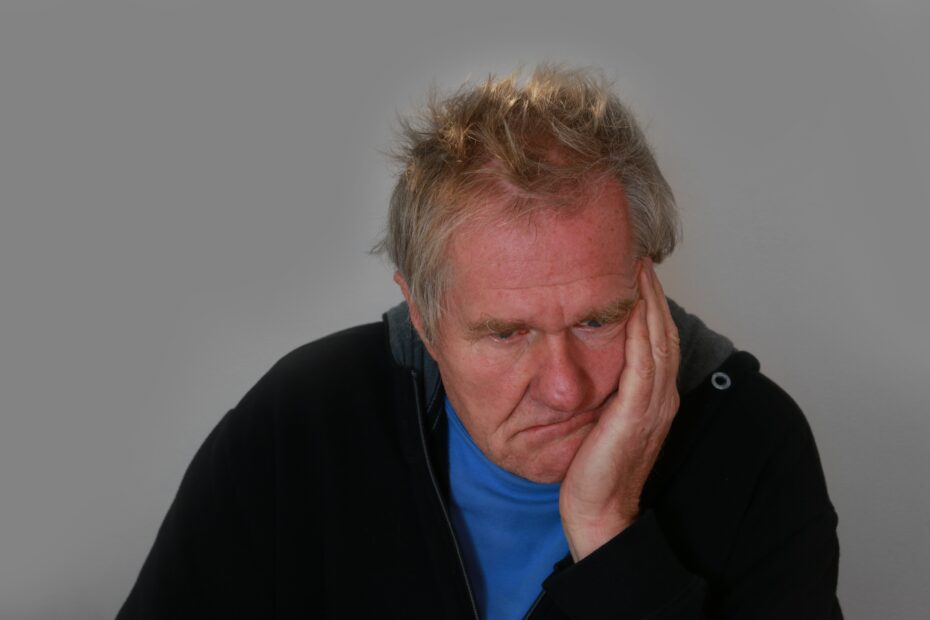
Do you think dementia has nothing to do with you yet?
For example, haven’t you ever seen your grandparents forgetting things more often and thought, “Maybe it’s just their age?”
From such common scenes in daily life, we realize that dementia is a familiar problem.
Traditionally, dementia has been thought to be “caused by age and genetics.”
However, recent research has shown that personality may also be related.
In other words, even at the same age, there may be differences in risk.
In fact, a paper titled “Does personality affect the cognitive decline in aging? A systematic review” examines the relationship between personality and cognitive function in detail.
This research was conducted by researchers from Sapienza University of Rome and the University of Granada, and was published in the academic journal “Ageing Research Reviews” in 2024.
Once again, personality researcher and author of Villain Encyclopedia, Tokiwa (@etokiwa999), will provide the explanation.
※We have developed the HEXACO-JP Personality Assessment! It has more scientific basis than MBTI. Tap below for details.

目次
- 1 Why does dementia occur? Changes that become visible with aging
- 2 What Is the Relationship Between Dementia and Personality? Overall Picture of Research
- 3 What Personality Traits Increase Dementia Risk
- 4 What Personality Traits May Prevent Dementia
- 4.1 People with High Conscientiousness Have Lower Dementia Risk
- 4.2 Self-Management and Lifestyle Habits Have an Impact
- 4.3 People with high openness tend to maintain cognitive function
- 4.4 Having interest in new things has a positive effect on the brain
- 4.5 The effects of extraversion and agreeableness are unclear
- 5 Does personality change as dementia progresses?
- 6 In Conclusion
Why does dementia occur? Changes that become visible with aging
Dementia is a disease that increases with age
Dementia tends to increase with age.
First, aging is progressing worldwide.
As a result, the number of people with dementia is also increasing.
For example, there are about 55 million people worldwide.
Furthermore, by 2030, one in six people will be elderly.
So why is it increasing?
It’s because brain function gradually changes.
- Memory weakens with age
- Judgment may decline
- It affects daily life
Think about this.
What if you were 70 years old?
You might find it harder to recall names than before.
However, not everyone develops dementia.
Individual differences are very large.
In other words, aging is a major factor.
However, that alone cannot explain it.
Finally, let me summarize.
Dementia increases with age, but
not everyone develops it.
It’s important to consider these differences.
What is MCI, considered a precursor to dementia
MCI is a condition one step before dementia.
This refers to mild cognitive decline.
First, daily life is almost independent.
However, there are mild problems with memory and other functions.
For example, the following conditions:
- Easily forgetting appointments
- Repeating the same story
- Decreased attention
Imagine this.
What if you studied for a test but
forgot what you learned yesterday?
If this continues, you would become anxious.
This kind of state is similar to MCI.
What’s important is this.
MCI is not exactly the same as dementia.
Some people progress,
while others return to normal.
Let me summarize.
MCI is a precursor to dementia.
However, it doesn’t necessarily progress.
It’s important to notice it at an early stage.
MCI can not only progress but also recover
MCI doesn’t necessarily worsen.
This is a very important point.
Research shows the following results:
- About 10-15% progress to dementia
- About 27.57% return to normal
In other words, the outcomes vary.
Let’s think about this.
Suppose your grades declined.
However, if you continue studying, they might recover.
MCI is similar to this.
- People who improve
- People who remain unchanged
- People who worsen
It divides into these three categories.
Therefore, early intervention is important.
Lifestyle habits may also have an influence.
Let me summarize.
MCI doesn’t only progress.
It’s a condition with the possibility of recovery.
That’s why early measures are important.
Cognitive decline progresses in gradations
Cognitive decline progresses gradually.
It doesn’t suddenly become worse.
First, there is a normal state.
Next, there is MCI.
After that, it may progress to dementia.
It’s a continuous change like this.
- Normal
- Mild decline (MCI)
- Dementia
Imagine this scenario here.
If your smartphone battery gradually decreases,
it won’t suddenly drop to 0.
Cognitive function is the same.
It changes little by little.
This is why early detection is possible.
Noticing small changes is important.
Let me summarize.
Cognitive decline is gradual.
It progresses continuously rather than suddenly.
This is precisely why early intervention is key.
The Current State of Dementia Continuing to Increase Worldwide
Dementia continues to increase worldwide.
This is a very important social issue.
Currently, approximately 55 million people are affected.
Further increases are predicted.
Why is it increasing?
The main reason is aging.
- Life expectancy is extending
- The proportion of elderly people is increasing
- Medical advances have led to longer lives
Think about this here.
If society as a whole becomes centered on the elderly,
it’s natural that dementia would also increase.
Additionally, the burden of caregiving and healthcare also increases.
This affects society as a whole.
Let me summarize.
Dementia is not an individual problem.
It’s a challenge increasing throughout society.
Understanding this will become important going forward.
What Is the Relationship Between Dementia and Personality? Overall Picture of Research
A New Perspective That Personality Influences Dementia
Dementia may also be related to personality.
Age and genetics have been emphasized until now.
However, recently attention has been focused on personality as well.
Personality refers to tendencies in behavior and thinking.
For example, whether emotions fluctuate easily.
Now think about this.
If you tend to feel stress easily,
you might get tired more easily every day.
That accumulation may affect the brain.
Research shows the following points.
- High emotionality tends to increase risk
- Conscientiousness and openness may be protective
- Helps explain individual differences
In other words, differences appear even at the same age.
Personality might be one reason for this.
Let me summarize.
Dementia is related not only to age but also personality.
This is gaining attention as a new perspective.
What Are the Five Personality Traits Used in Research?
Personality is organized into five characteristics.
This is the approach commonly used in research.
First, let me introduce the five traits.
- Emotionality: Susceptibility to anxiety and stress
- Extraversion: Preference for interacting with people
- Openness: Interest in new things
- Agreeableness: Compassion toward people
- Conscientiousness: Seriousness and self-management
For example, people with high emotionality
become anxious over small things.
On the other hand, people with high conscientiousness
tend to act in a planned manner.
Imagine this here.
If you make plans before a test,
that’s a state of high conscientiousness.
Research measures these five traits.
And then examines their relationship with dementia.
Let me summarize.
Personality can be considered through five traits.
Each may be related to dementia.
Personality May Directly Affect the Brain
Personality affects the brain through bodily responses.
This is an important point.
Emotionality is particularly relevant.
This is susceptibility to stress.
What happens when emotionality is high?
- Prone to feeling anxious
- Tension tends to continue
- Mind and body tire easily
When such a state continues for a long time,
it may burden the brain.
For example, haven’t you experienced
decreased concentration when constantly tense?
Imagine that continuing for a long period.
Research also showed that people with higher emotionality
tend to have higher dementia risk.
Let me summarize.
Personality directly changes bodily responses.
As a result, it also affects the brain.
Sometimes There Are Indirect Effects Through Lifestyle Habits
Personality also influences through lifestyle habits.
This is an indirect route.
First, personality manifests in behavior.
That behavior becomes habits.
For example, here are the differences:
- High conscientiousness → able to manage health
- High openness → challenges new things
- High extroversion → engages with people
These have a positive impact on the brain.
Consider this:
If you live a life doing only the same things every day,
brain stimulation decreases.
Conversely, when there are many new experiences,
the brain works actively.
This is how personality changes lifestyle.
As a result, it affects cognitive function.
To summarize:
Personality changes behavior.
That behavior affects the brain.
This is an indirect relationship.
Characteristics of Reviews that Combine Multiple Studies
This study combines 25 research papers.
This is a major characteristic.
First, it collects a lot of data.
- Initially searched 14,754 cases
- Finally adopted 25 cases
- Total of 47,163 people’s data
Furthermore, the subjects are 50 years and older.
This makes the results closer to reality.
The types of studies are also varied.
- Long-term follow-up studies
- Cross-sectional comparison studies
Imagine this:
Rather than judging from just one person,
looking at over 40,000 people is more reliable.
This review is of that scale.
However, conditions are not completely identical.
Therefore, we cannot make definitive conclusions.
To summarize:
This study integrates many research papers.
Reliability is high, but there are also limitations.
What Personality Traits Increase Dementia Risk
People with High Emotionality Tend to Have Higher Risk
People with high emotionality tend to have higher dementia risk.
Emotionality refers to the tendency to feel anxiety and tension easily.
First, the research showed the following trends:
- People with high emotionality have more dementia
- Also associated with mild cognitive decline
- Same results found in multiple studies
Longitudinal studies are particularly important.
These are long-term follow-up studies.
Consider this:
If you become anxious about even small things every day,
mental burden accumulates.
What if that continued for several years?
It could potentially affect the brain.
In fact, most of the 17 longitudinal studies
confirmed this trend.
However, this doesn’t apply to everyone.
To summarize:
People with high emotionality need to be careful.
A strong association with dementia risk has been shown.
Stress Sensitivity May Have an Impact
Stress sensitivity may impact the brain.
This is an important point.
People with high emotionality are prone to feeling stress.
As a result, changes occur in the body.
For example, reactions like these:
- Heart rate increases
- Tension continues
- Fatigue accumulates easily
What happens when this continues for a long time?
The burden on the brain may increase.
Imagine this:
If pre-test nervousness continued every day,
concentration might decline.
Imagine that state continuing for a long period.
Research shows this accumulation
may potentially affect cognitive function.
To summarize:
Stress sensitivity is important.
It may potentially affect the brain long-term.
Anxiety and Emotional Fluctuations Have Long-term Effects
Anxiety and emotional fluctuations may have long-term effects.
The key point is the accumulation of time.
People with high emotionality have changeable emotions.
They are affected even by small events.
As a result, the following states continue:
- Mood is difficult to stabilize
- Anxiety persists for long periods
- Difficulty finding peace of mind
Think about this for a moment.
If your emotions are unstable every day,
you have less time to rest.
Your brain similarly has difficulty resting.
Research shows that such conditions
may be associated with cognitive decline.
This has been particularly confirmed in long-term studies.
However, it doesn’t necessarily happen in all cases.
To summarize:
Emotional fluctuations have long-term effects.
The accumulation becomes an important factor.
Risk Increases When Combined with Genetic Factors
The impact may be amplified when personality and genetics combine.
This is also an important point.
Research focuses on specific genetic types.
These are genes related to dementia.
The following trends were observed:
- People with high neuroticism
- People with specific genes
When these two overlap,
the risk may increase.
Imagine this scenario:
If you have a constitutionally weak area
and additionally live a burdensome lifestyle, what would happen?
The impact tends to become greater.
Similarly, personality and genetics also overlap.
However, this is also not definitive.
To summarize:
Not only personality but also genetics are involved.
The combination may change the risk.
The Trait Showing the Most Consistent Results Across All Studies
Neuroticism is the personality trait with the most consistent results.
This is a major conclusion of this research.
As a result of analyzing 25 studies,
only neuroticism showed stable associations.
There are differences compared to other personality traits:
- Conscientiousness and openness show variation
- Extraversion and agreeableness have unstable results
- Neuroticism is consistent across many studies
Furthermore, the same applies to cross-sectional studies.
People with dementia or MCI tend to have high neuroticism.
Think about this:
If multiple tests produce the same results,
those results are more reliable.
The same applies to this research.
However, causality cannot be definitively established.
To summarize:
Neuroticism is the most reliable trait.
Its association with dementia is strongly demonstrated.
What Personality Traits May Prevent Dementia
People with High Conscientiousness Have Lower Dementia Risk
People with high conscientiousness tend to have lower dementia risk.
Conscientiousness refers to diligence and self-control abilities.
Research shows the following results:
- Tendency for fewer dementia cases
- Lower MCI risk as well
- Moderate decline is also less likely
This has been confirmed particularly in multiple studies.
Imagine this scenario:
If there’s a person who studies at fixed times every day
versus someone who studies based on mood, what would happen?
The former is more likely to be stable.
Similarly, lifestyle stability
may have positive effects on the brain.
However, not all studies are in agreement.
To summarize:
Conscientiousness is a protective personality trait.
It may reduce dementia risk.
Self-Management and Lifestyle Habits Have an Impact
Conscientiousness influences through lifestyle habits.
This is an important point.
People with high conscientiousness have stable behaviors.
As a result, their habits tend to be well-organized.
Specifically, the differences are as follows:
- More likely to maintain regular lifestyle
- Able to manage health
- Capable of continuous activities
Think about this:
Between someone who exercises at the same time every day
versus someone who doesn’t exercise at all, there will be differences.
This difference continues over long periods.
Research suggests that this accumulation
may affect cognitive function.
In other words, personality influences through behavior.
In summary:
Conscientiousness is the power to organize one’s life.
As a result, it may protect the brain.
People with high openness tend to maintain cognitive function
People with high openness tend to maintain cognitive function better.
Openness refers to interest in new things.
Research has shown the following trends:
- Lower risk of dementia
- Less likely to experience cognitive decline
- Also associated with MCI
Cross-sectional studies also show characteristics:
- People with dementia have low openness
- Similar trend in MCI
Imagine this:
If you only do the same things every day,
stimulation becomes less.
On the other hand, people who challenge new things
keep their brains actively engaged.
This may make the difference.
In summary:
Openness is related to brain activity.
It’s considered one factor in maintaining cognitive function.
Having interest in new things has a positive effect on the brain
New experiences may have positive effects on the brain.
This is the important point about openness.
People with high openness take the following actions:
- Challenge new hobbies
- Continue learning knowledge
- Enjoy change
These provide stimulation to the brain.
Consider this:
What’s the difference between only taking the same route every day
versus exploring new routes?
The latter increases opportunities for thinking.
This accumulation affects the brain.
Research suggests that such activities
may be related to cognitive function.
However, this is not definitive.
In summary:
New experiences activate the brain.
Openness is a personality trait that tends to generate such behavior.
The effects of extraversion and agreeableness are unclear
Results for extraversion and agreeableness are not consistent.
This is an important point to note.
Extraversion refers to preference for social interaction.
Agreeableness is the strength of compassion.
Research shows the following results:
- Extraversion shows mixed results of association and no association
- Agreeableness shows no significant difference in most cases
- Some studies suggest protective potential
In other words, the conclusions are not clear.
Imagine this:
Even if you talk with people frequently,
it doesn’t necessarily mean better health.
It depends on the situation.
Therefore, it’s not a simple relationship.
In summary:
Extraversion and agreeableness are unclear.
There may be effects, but they are limited.
Does personality change as dementia progresses?
Personality also changes as cognitive function declines
Personality may also change as dementia progresses.
This is an important finding.
Research has observed the following changes:
- Personality gradually changes
- Changes begin before cognitive decline
- Changes continue with progression
Imagine this:
If your concentration starts to decline,
your behavior and feelings will also change.
It’s the same principle.
This has been confirmed especially in long-term studies.
In other words, personality is not fixed.
In summary:
Cognitive decline also affects personality.
Changes may occur gradually.
Neuroticism tends to increase
Neuroticism tends to increase when cognitive function declines.
This has been confirmed in multiple studies.
What does increased neuroticism mean?
- Increased anxiety
- Emotional instability
- Tendency to become tense easily
Think about this for a moment.
If forgetfulness increases,
wouldn’t you feel anxious?
This is a state where that anxiety increases.
Research has shown that as cognitive decline progresses,
there tends to be an increase in emotionality.
However, individual differences do exist.
To summarize:
As dementia progresses, emotionality increases.
Increased anxiety is one of its characteristics.
Openness tends to decline
Openness tends to decrease along with cognitive function decline.
This is an important change.
What happens when openness declines?
- Interest in new things decreases
- Behavior becomes fixed
- Tendency to avoid change
Imagine this scenario:
If new things feel difficult,
the number of attempts you make decreases.
Picture that state continuing.
Research has confirmed similar changes.
Particularly in people with MCI or dementia,
there tends to be low openness.
To summarize:
Cognitive function decline reduces openness.
There’s a tendency for decreased motivation for new experiences.
Conscientiousness and extraversion may also gradually decline
Conscientiousness and extraversion may also decline.
This is a change seen with progression.
Specifically, these are the tendencies:
- Conscientiousness declines
- Extraversion decreases
- Behavior becomes passive
Think about this:
If making plans becomes difficult,
your behavior will also change.
Also, opportunities to talk with people might decrease.
Research has shown these declines
from the pre-stage of cognitive impairment.
However, this doesn’t happen to everyone.
To summarize:
Conscientiousness and extraversion also change.
There’s a possibility of gradual decline.
Personality is both cause and consequence
Personality is both a cause and consequence of dementia.
This is the most important conclusion.
Let me organize the content so far:
- Personality affects dementia risk
- Dementia changes personality
- Both are interconnected
Imagine this scenario:
If lifestyle habits change personality,
and that personality changes lifestyle again, what would happen?
A similar cycle occurs.
Research has also shown this mutual relationship.
In other words, it’s not unidirectional.
To summarize:
Personality and dementia have a bidirectional relationship.
Understanding both as cause and consequence is necessary.
In Conclusion
We’ve learned that dementia is not determined by age alone, but may also be related to personality. In particular, people with high emotionality who are prone to anxiety tend to have increased risk, while those with high conscientiousness or openness tend to have lower risk.
However, this doesn’t mean it will definitely happen – these are merely tendencies. What’s more important is that personality may also change as dementia progresses.
In other words, personality and dementia don’t have a one-way relationship, but rather influence each other mutually. Our current personality and lifestyle habits may connect to our future brain condition. That’s why it’s important to pay attention to our lifestyle and way of thinking from a young age.

Writer & Supervisor: Eisuke Tokiwa
Personality Psychology Researcher / CEO, SUNBLAZE Inc.
As a child he experienced poverty, domestic abuse, bullying, truancy and dropping out of school — first-hand exposure to a range of social problems. He spent 10 years researching these issues and published Encyclopedia of Villains through Jiyukokuminsha. Since then he has independently researched the determinants of social problems and antisocial behavior (work, education, health, personality, genetics, region, etc.) and has published 2 peer-reviewed journal articles (Frontiers in Psychology, IEEE Access). His goal is to predict the occurrence of social problems. Spiky profile (WAIS-IV).
Expertise: Personality Psychology / Big Five / HEXACO / MBTI / Prediction of Social Problems
Researcher profiles: ORCID / Google Scholar / ResearchGate
Social & Books: X (@etokiwa999) / note / Amazon Author Page