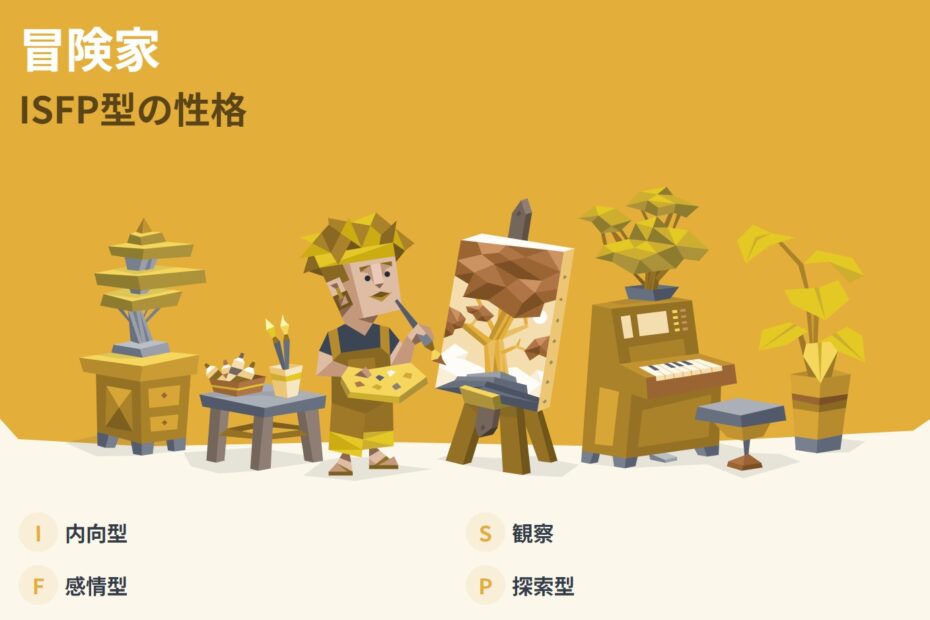
ISFP-T personality traits combine rare artistic sensitivity with a deeply emotional inner world — making this one of the most fascinating yet misunderstood types in the MBTI framework. Estimated to represent only about 4% of the population, the ISFP-T (also known as the Turbulent Adventurer) tends to bring genuine warmth, creative depth, and strong empathy to everything they do — especially in relationships. If you identify with this type, understanding both your strengths and your vulnerabilities can be genuinely life-changing, particularly when it comes to love.
Once again, personality researcher and author of Villain Encyclopedia, Tokiwa (@etokiwa999), will provide the explanation.
※We have developed the HEXACO-JP Personality Assessment! It has more scientific basis than MBTI. Tap below for details.

目次
- 1 What Are ISFP-T Personality Traits? A Clear Definition
- 2 ISFP-T Artistic Traits: Creativity as a Core Identity
- 3 ISFP-T Love Compatibility: How the Turbulent Adventurer Experiences Romance
- 4 3 Romantic Pitfalls ISFP-T Types Should Watch For
- 5 Actionable Advice: Building Healthy Relationships as an ISFP-T
- 6 Frequently Asked Questions
- 6.1 What makes ISFP-T different from ISFP-A?
- 6.2 What are the most common ISFP-T personality traits in daily life?
- 6.3 Is ISFP-T a rare personality type?
- 6.4 Which MBTI types are most compatible with ISFP-T in romantic relationships?
- 6.5 Why do ISFP-T personalities struggle with self-confidence?
- 6.6 Can ISFP-T types develop healthier relationship habits?
- 6.7 Do ISFP-T people experience love addiction more than other types?
- 7 Summary: Embracing Your ISFP-T Nature While Protecting Your Well-Being
What Are ISFP-T Personality Traits? A Clear Definition
The ISFP-T is defined by 4 core cognitive preferences — Introversion, Sensing, Feeling, and Perceiving — combined with the Turbulent identity marker. Each of these dimensions shapes how this personality type thinks, feels, and interacts with the world. The “T” (Turbulent) suffix is what separates ISFP-T from its more self-assured counterpart, ISFP-A (Assertive), and it introduces a meaningful layer of emotional complexity.
Here is how each dimension contributes to the overall ISFP-T personality:
- Introversion (I): ISFP-Ts recharge through solitude. Large social gatherings tend to drain their energy, while quiet, one-on-one settings allow them to thrive.
- Sensing (S): They are grounded in the present moment and concrete reality, noticing textures, colors, sounds, and sensory details that others may overlook.
- Feeling (F): Decisions tend to be guided by personal values and emotional resonance rather than cold logic — harmony matters deeply to them.
- Perceiving (P): They prefer flexibility over rigid structure, often resisting strict schedules in favor of spontaneous, open-ended living.
The Turbulent identity adds an additional set of characteristics that significantly shape the ISFP-T experience:
- A tendency toward self-criticism and perfectionism
- Heightened sensitivity to how others perceive them
- A stronger-than-average susceptibility to stress and anxiety
- Caution when facing change or unpredictable situations
- A pattern of underestimating their own abilities and worth
Despite these challenges, ISFP-T individuals tend to possess exceptional artistic instincts and a profound capacity for empathy. Research suggests they often excel in creative fields — music, visual arts, fashion, and design — where their sensitivity becomes a genuine asset rather than a limitation. They are, at their core, thoughtful and quietly passionate people with a distinctive personal magnetism.
ISFP-T Artistic Traits: Creativity as a Core Identity
One of the most defining aspects of the Adventurer personality type is a deep, almost instinctive connection to creative expression. For the ISFP-T, art is rarely just a hobby — it tends to function as a primary language for processing emotions and communicating inner truths that words alone cannot capture. Studies in personality psychology indicate that individuals who score high in Feeling and Perceiving dimensions are significantly more likely to engage in artistic pursuits as a form of emotional regulation.
The ISFP-T’s artistic traits typically include the following qualities:
- Acute aesthetic awareness: They notice beauty in everyday details — the way light falls on a surface, the emotional weight of a particular musical chord, or the subtle elegance in how colors interact.
- Deeply personal creative style: Their work tends to reflect their inner emotional landscape rather than following trends or chasing external validation.
- Hands-on, experiential learning: ISFP-Ts often prefer learning creative skills by doing rather than by following theoretical frameworks.
- Passion over productivity: They may work in intense creative bursts rather than maintaining consistent output, which can make them seem unpredictable to others.
Compared to the INFP type — another creative and introspective MBTI profile — ISFP-Ts tend to be more focused on concrete sensory experiences rather than abstract ideals. Where an INFP might write poetry about a concept, an ISFP-T is more likely to express the same feeling through a painting, a handmade gift, or a carefully curated playlist. This sensory specificity is one of the most charming and distinctive aspects of the ISFP-T artistic personality.
ISFP-T Love Compatibility: How the Turbulent Adventurer Experiences Romance
In romantic relationships, ISFP-T personality traits tend to manifest as intense devotion, genuine warmth, and an almost selfless desire to make their partner feel cherished. This type takes love seriously — they are not casual daters by nature. They seek deep, meaningful one-on-one connections and often invest enormous emotional energy into making their partner feel seen, understood, and valued.
Typical romantic behaviors and patterns in ISFP-T relationships include:
- Prioritizing their partner’s emotional needs, sometimes before their own
- Remembering anniversaries, small milestones, and meaningful moments with great care
- Expressing love through handmade gifts, thoughtful gestures, and creative surprises rather than grand verbal declarations
- Adapting their own pace and preferences to match their partner’s comfort level
- Hesitating to voice their own needs or opinions to avoid conflict
When it comes to ISFP love compatibility, this type tends to pair well with partners who offer stability, patience, and emotional reciprocity. Personality types that tend to complement the ISFP-T include ESTJ and ESFJ, whose organized and nurturing qualities can help ground the ISFP-T’s more fluid emotional world. However, the Turbulent dimension means that even in a well-matched relationship, ISFP-Ts may frequently seek reassurance — asking (directly or indirectly) whether they are truly loved and valued. Understanding this need is essential for any partner of an ISFP-T.
3 Romantic Pitfalls ISFP-T Types Should Watch For
Research suggests that roughly 70% of ISFP-T individuals report experiencing significant emotional difficulty in romantic relationships at some point in their lives. Their deeply caring nature is a genuine strength, but without strong self-awareness, it can also create patterns that quietly erode their well-being. The MBTI ISFP-T’s turbulent personality makes them particularly vulnerable to 3 specific relationship traps.
1. Excessive Self-Sacrifice
ISFP-Ts may gradually abandon the very things that make them who they are — their hobbies, their friendships, their creative outlets — in service of a relationship. This pattern tends to accelerate quietly, making it hard to notice until significant damage has already been done.
- Giving up personal hobbies and creative practices to spend more time with a partner
- Consistently agreeing with the partner’s opinions even when they disagree internally
- Suppressing genuine emotions to maintain superficial harmony
- Taking on financial burdens to please a partner
- Continuing to prioritize the partner even during personal illness or exhaustion
2. Anxiety-Driven Attachment Behaviors
The Turbulent dimension of the ISFP-T personality type tends to amplify attachment anxiety. This can surface as compulsive checking of a partner’s social media, disproportionate worry when messages go unanswered, or bouts of jealousy around the partner’s friendships. Studies on attachment theory indicate that this type of behavior is closely linked to an anxious attachment style, which can often be traced back to early childhood relationship experiences.
3. Losing a Sense of Personal Identity
Perhaps the most subtle and serious risk is when an ISFP-T adapts so thoroughly to their partner’s world that they lose touch with their own values, preferences, and sense of self. This form of identity erosion can make it very difficult to leave unhealthy relationships, even when the ISFP-T intellectually recognizes the situation is harmful.
Actionable Advice: Building Healthy Relationships as an ISFP-T
The good news is that understanding your ISFP-T personality traits is itself the first and most powerful step toward building more balanced, fulfilling relationships. The same sensitivity that creates vulnerability also enables extraordinary intimacy — the key is learning to direct it wisely. Below are 5 evidence-informed strategies tailored to the ISFP-T’s specific strengths and challenges.
- Protect your alone time (at least 2 sessions per week): As an introvert, solitude is not indulgence — it is maintenance. Schedule regular time for creative activities, journaling, or simply being quiet. This directly replenishes your emotional resources and reduces dependency on a partner for emotional regulation.
- Practice expressing your own needs directly: ISFP-Ts tend to hint rather than state. Begin small — share one genuine opinion or preference per day, even in low-stakes situations. The more you practice this, the more natural it becomes in emotionally charged conversations.
- Learn to say “no” without guilt: Declining a request is not a rejection of a person. Rehearse simple, kind refusals until they feel less threatening. Boundaries protect the relationship as much as they protect you.
- Maintain friendships and interests outside the relationship: Research consistently shows that people who maintain diverse social connections and personal interests report higher relationship satisfaction overall. Your identity should not hinge entirely on your romantic relationship.
- Seek professional support when anxiety feels unmanageable: If intrusive worries, compulsive checking behaviors, or feelings of worthlessness are significantly affecting your daily life, a therapist — particularly one trained in attachment-based approaches — can provide meaningful, targeted help.
Frequently Asked Questions
What makes ISFP-T different from ISFP-A?
The core cognitive functions are identical — both share Introversion, Sensing, Feeling, and Perceiving. The key difference lies in the identity modifier. ISFP-A (Assertive) individuals tend to be more self-confident, less affected by external criticism, and more emotionally stable under pressure. ISFP-T (Turbulent) individuals, by contrast, tend to be more self-critical, more sensitive to others’ opinions, and more prone to anxiety — but this heightened sensitivity can also make them more emotionally attuned and creatively driven.
What are the most common ISFP-T personality traits in daily life?
In everyday situations, ISFP-T individuals tend to be quietly observant, deeply empathetic, and highly attuned to the emotional atmosphere in a room. They often express care through actions rather than words — tidying a friend’s space, bringing a thoughtful small gift, or simply sitting quietly with someone in distress. They may also appear reserved or even shy in new social settings, but reveal surprising warmth and humor in comfortable, familiar environments.
Is ISFP-T a rare personality type?
The broader ISFP category is estimated to represent approximately 8–9% of the general population. When broken down further, the Turbulent variant (ISFP-T) accounts for roughly 4% of people, making it a moderately rare type. While not among the rarest MBTI profiles, ISFP-T individuals often report feeling misunderstood — partly because their rich inner world is rarely fully visible to those around them.
Which MBTI types are most compatible with ISFP-T in romantic relationships?
ISFP love compatibility tends to be strongest with types that offer emotional reliability and a nurturing presence. ESTJ and ESFJ are frequently cited as complementary matches, as their organized, warm, and socially grounded natures can help anchor the ISFP-T’s more fluid emotional style. That said, compatibility ultimately depends on individual maturity, communication skills, and shared values — no MBTI pairing is inherently guaranteed to succeed or fail.
Why do ISFP-T personalities struggle with self-confidence?
The Turbulent identity marker is closely associated with a self-evaluative style that tends toward self-criticism rather than self-acceptance. ISFP-Ts are often acutely aware of the gap between their ideals and their current reality, which can translate into chronic self-doubt. Additionally, because they place significant value on how others perceive them, negative feedback — even mild or implied — can disproportionately affect their sense of self-worth. Awareness of this pattern is the first step toward shifting it.
Can ISFP-T types develop healthier relationship habits?
Absolutely. Personality type is not destiny — it describes tendencies, not fixed behaviors. ISFP-T individuals who develop stronger self-awareness, practice assertive communication, and maintain a clear sense of personal identity tend to experience significantly more fulfilling relationships. Therapy, journaling, and gradually expanding comfort zones in low-stakes social situations are all evidence-supported approaches that can meaningfully shift unhealthy patterns over time.
Do ISFP-T people experience love addiction more than other types?
Research suggests that personality traits associated with high emotional sensitivity, anxious attachment, and low self-esteem — all of which can be present in the ISFP turbulent personality — do correlate with a higher risk of developing love addiction or codependent relationship patterns. This does not mean every ISFP-T will experience these issues, but awareness of the risk is valuable. Understanding the psychological mechanisms behind love dependency can help ISFP-T individuals build more intentional, balanced romantic connections.
Summary: Embracing Your ISFP-T Nature While Protecting Your Well-Being
The ISFP-T is a personality type of remarkable depth — creative, empathetic, quietly passionate, and genuinely devoted to the people they love. These qualities are not flaws to be corrected; they are gifts to be understood and directed wisely. The turbulent dimension of the ISFP-T personality does introduce real challenges, particularly in romantic relationships, where the tendency toward self-sacrifice and anxiety-driven attachment can quietly undermine even the most loving partnerships. However, with self-knowledge, clear boundaries, and consistent investment in personal identity outside of relationships, ISFP-T individuals can build connections that are as emotionally healthy as they are deeply fulfilling. ISFP-T personality traits are ultimately a profound source of strength — the goal is learning to honor them without losing yourself in the process. If what you read here resonated with your own experience, explore your personality profile further to discover which of your traits are driving your relationship patterns.

Writer & Supervisor: Eisuke Tokiwa
Personality Psychology Researcher / CEO, SUNBLAZE Inc.
As a child he experienced poverty, domestic abuse, bullying, truancy and dropping out of school — first-hand exposure to a range of social problems. He spent 10 years researching these issues and published Encyclopedia of Villains through Jiyukokuminsha. Since then he has independently researched the determinants of social problems and antisocial behavior (work, education, health, personality, genetics, region, etc.) and has published 2 peer-reviewed journal articles (Frontiers in Psychology, IEEE Access). His goal is to predict the occurrence of social problems. Spiky profile (WAIS-IV).
Expertise: Personality Psychology / Big Five / HEXACO / MBTI / Prediction of Social Problems
Researcher profiles: ORCID / Google Scholar / ResearchGate
Social & Books: X (@etokiwa999) / note / Amazon Author Page