
The determinants of academic performance are far more complex and interesting than most people assume. If you have ever watched a classmate ace every exam and thought, “They must just be naturally gifted,” research suggests you are only seeing a small piece of the picture. Studies indicate that intelligence is just one of many interlocking factors — and not even the most powerful one — that shape how well students perform in school.
A comprehensive systematic review titled Determinants of Academic Performance: A Systematic Review of Meta-Analyses Over the Past 25 Years analyzed decades of research to map out exactly which factors move the needle on student achievement. The findings cover 4 broad categories: the student’s own characteristics, the home environment, the school setting, and — perhaps most surprisingly — the teacher. This article breaks down every major finding so you can understand what truly drives academic achievement factors, and what you can actually do about it.
Once again, personality researcher and author of Villain Encyclopedia, Tokiwa (@etokiwa999), will provide the explanation.
※We have developed the HEXACO-JP Personality Assessment! It has more scientific basis than MBTI. Tap below for details.

目次
- 1 The 4 Major Determinants of Academic Performance
- 2 Student-Level Determinants of Academic Performance
- 3 Family Influence on Education: What the Research Actually Shows
- 4 School Environment and Grades: Does the Classroom Climate Really Matter?
- 5 The Teacher Effect on Learning: The Most Powerful External Factor
- 6 Actionable Advice: What You Can Do with This Knowledge
- 7 Frequently Asked Questions
- 7.1 What are the main determinants of academic performance according to research?
- 7.2 Is intelligence the most important factor in academic success?
- 7.3 How does family environment affect a student’s grades?
- 7.4 Can a student with poor past grades still improve their academic performance?
- 7.5 What role does emotional intelligence play in academic achievement?
- 7.6 Why do teachers have such a large effect on student learning outcomes?
- 7.7 Does class size significantly affect academic performance?
- 8 Summary: No Single Factor, But Many Levers You Can Pull
The 4 Major Determinants of Academic Performance
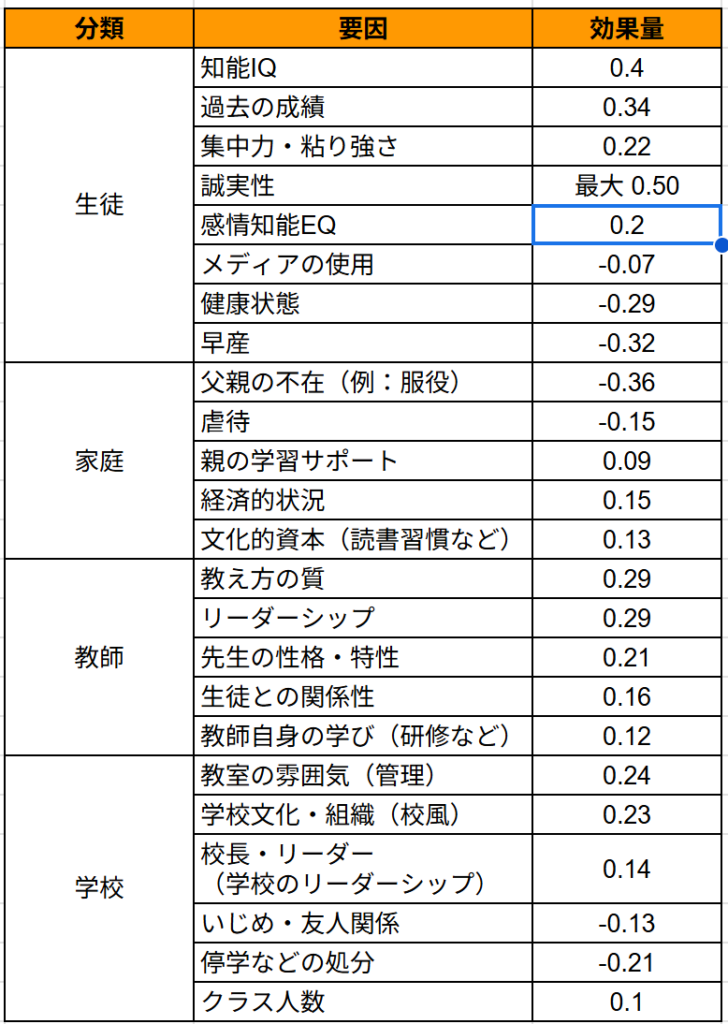
Before diving into each factor, it helps to understand the big picture. Research shows that academic achievement factors fall into 4 distinct categories, each contributing in different ways and at different strengths. Understanding this framework makes it much easier to identify what you — or the students around you — can realistically change.
- Student characteristics — personality traits, intelligence, emotional regulation, and prior learning history
- Family environment — parental involvement, household stability, socioeconomic conditions, and emotional safety at home
- School environment and grades — classroom atmosphere, disciplinary practices, class size, peer relationships, and school culture
- Teacher qualities — instructional skill, teacher-student relationships, professional development, and leadership in the classroom
Each of these categories interacts with the others. A student with strong natural ability can be held back by an unstable home or an ineffective classroom, while a student from a difficult background can thrive with the right teacher. No single factor operates in isolation — the research consistently points to a web of influences rather than one magic bullet.
Student-Level Determinants of Academic Performance
Intelligence: The Foundation, Not the Full Story
Among all individual student characteristics, intelligence shows the strongest statistical link to academic outcomes, with an effect size of approximately r = 0.40. This is considered a medium-to-large effect in psychological research, meaning that students with higher cognitive ability do tend to absorb new material faster, reason through problems more efficiently, and retain information more reliably.
Intelligence, in this context, refers not only to raw problem-solving speed but also to a cluster of related cognitive skills:
- Comprehension ability — how quickly a student grasps new concepts
- Reasoning and logical thinking — the capacity to connect ideas and draw conclusions
- Working memory — the ability to hold and manipulate information in real time
- Cognitive flexibility — adapting thinking strategies when a problem changes
Critically, however, an effect size of 0.40 also means that a large portion of academic outcomes is explained by factors other than intelligence. Students with more modest cognitive scores regularly outperform higher-ability peers when other factors — like effort, emotional stability, and good teaching — are in their favor.
Prior Academic Achievement: Why Your Past Grades Still Matter
A student’s track record of past performance is one of the most reliable predictors of future grades, with a reported effect size of r = 0.34. This makes intuitive sense: learning is cumulative. A student who has a solid grasp of algebra will find calculus far more accessible than someone who never fully understood fractions.
There are at least 3 reasons why previous achievement carries so much weight:
- Knowledge scaffolding — foundational knowledge allows new information to be integrated more quickly
- Self-efficacy — past successes build the belief that future success is achievable
- Established study habits — students who have done well previously tend to have already developed effective learning routines
This does not mean students with poor past grades are locked into failure. Research suggests that targeted remediation — going back to plug gaps in foundational knowledge — can disrupt the negative cycle and put students back on an upward trajectory.
Conscientiousness and Academic Success: The Personality Factor You Can Strengthen
Of all the Big Five personality traits, conscientiousness shows the most consistent positive relationship with academic achievement. Conscientious students tend to be organized, disciplined, and persistent — qualities that translate directly into better study habits and follow-through on assignments.
Conscientious behaviors that research links to higher grades include:
- Studying in small, consistent daily sessions rather than cramming
- Completing homework on time without needing external pressure
- Setting realistic goals and tracking progress toward them
- Respecting deadlines and managing time proactively
What makes conscientiousness particularly important from a practical standpoint is that, unlike raw intelligence, it is a trait that can be cultivated through deliberate habit formation. Starting with small, manageable routines — even just 15 minutes of focused daily revision — tends to gradually strengthen the self-discipline muscle over time.
Emotional Intelligence and Focus: The Hidden Academic Advantage
Emotional intelligence — the ability to recognize, understand, and manage one’s own emotions — shows an effect size of approximately r = 0.20 in relation to academic performance. While smaller than the effect for cognitive intelligence, this is still a meaningful and practically significant relationship.
Emotional intelligence supports learning in several concrete ways:
- Reduced test anxiety — students who can regulate stress tend to underperform less during high-stakes exams
- Better concentration — emotional stability frees up mental bandwidth that would otherwise be consumed by worry
- Greater resilience — bouncing back quickly from a bad grade rather than spiraling into discouragement
- Improved willingness to tackle challenges — self-confident students are more likely to attempt difficult problems instead of giving up
Research also links attentional focus and persistence — closely related to emotional regulation — to an effect size of around r = 0.22 on academic outcomes. Together, these findings suggest that the mind’s ability to stay calm and on-task may matter almost as much as raw intellectual horsepower.
Family Influence on Education: What the Research Actually Shows
The family influence on education is one of the most studied — and most emotionally sensitive — areas in student performance research. The data make clear that what happens at home forms the psychological foundation upon which all learning rests. Students cannot easily concentrate on abstract academic content when their basic emotional needs for safety and stability are not being met.
Parental Absence and Its Measurable Impact on Grades
Studies indicate that paternal absence — for example, due to incarceration — is associated with a notably negative effect on academic performance, with an effect size reported around r = −0.36. This is among the largest negative effects found in the family environment category. The mechanism is not simply about money or logistics; it tends to involve the emotional and psychological destabilization that comes when a core family figure is missing.
- Reduced academic support — fewer adults available to help with homework, review concepts, or provide encouragement
- Heightened anxiety — children in unstable family situations often carry chronic low-grade stress that impairs concentration
- Weakened educational engagement — lower motivation to invest in school when home life feels uncertain
It is worth noting that this finding does not mean single-parent households are inherently disadvantaged — what matters most is the quality and consistency of adult involvement and emotional warmth, regardless of family structure.
Abuse, Instability, and the Learning Brain
Children who experience abuse or chronic household instability show measurably lower academic outcomes, and the research is unambiguous about why: a brain in survival mode cannot learn effectively. When a child’s nervous system is constantly on high alert due to threats at home, cognitive resources that should be directed toward comprehension, memory, and reasoning are instead consumed by stress management.
- Persistent hypervigilance — difficulty relaxing enough to concentrate in class
- Diminished self-worth — abuse erodes the self-confidence needed to attempt challenging tasks
- Impaired working memory — chronic stress physically affects the brain regions responsible for short-term information processing
A safe, emotionally warm home environment is not a “nice to have” — it is a genuine prerequisite for optimal learning. This is one reason why school counselors, welfare support, and trauma-informed education programs can have outsized effects on academic achievement for vulnerable students.
Parental Involvement and Socioeconomic Resources
Active parental engagement with a child’s education — checking homework, discussing school, attending meetings — tends to positively predict academic outcomes. Research also points to socioeconomic status as a background factor: families with more economic resources typically have access to private tutoring, enriching extracurricular activities, quieter study environments, and better nutritional conditions — all of which feed into student performance research findings.
Key family-level factors that show consistent links to achievement include:
- Regular parental monitoring of academic progress
- Household access to books, digital resources, and quiet study space
- Parents’ own attitude toward education and learning
- The overall emotional climate and sense of belonging within the home
School Environment and Grades: Does the Classroom Climate Really Matter?
When most people think about school environment and grades, they picture physical infrastructure — well-equipped labs, modern libraries, spacious classrooms. But the research tells a more nuanced story. It is the social and relational climate of a school — not its physical resources — that most consistently predicts achievement differences.
School-level factors that research identifies as meaningful include:
- Classroom atmosphere — orderly, respectful classrooms where students feel psychologically safe tend to support deeper learning
- Disciplinary practices — punitive approaches such as frequent suspensions tend to backfire, removing students from learning time without addressing root causes
- Class size — smaller classes generally allow teachers to provide more individualized attention, though the effect size is modest
- Peer relationships — positive friendships and a sense of social belonging increase motivation and reduce dropout risk
- School culture and norms — schools that consistently celebrate academic effort — not just talent — foster a growth-oriented student culture
Interestingly, the overall effect size for school-level factors averages around r = 0.06 in the reviewed research — smaller than either teacher or student-level factors. This suggests that while a dysfunctional school environment can certainly harm achievement, the individual relationship between a student and a skilled teacher tends to be a more powerful lever.
The Teacher Effect on Learning: The Most Powerful External Factor
Across all 4 categories reviewed in the research, teacher-related variables produce the largest average effect size: approximately r = 0.23, compared to student-level factors (r = 0.08 average across a broader set), family factors (r = 0.06), and school factors (r = 0.06). The teacher effect on learning is real, robust, and remarkably consistent across different countries, age groups, and subject areas.
What Makes a Teacher Academically Effective?
Research points to several specific teacher characteristics that drive student outcomes:
- Instructional quality — clear explanations, well-paced lessons, and a variety of teaching strategies tailored to different learners
- Warmth and positive regard — students learn more from teachers they perceive as caring and respectful
- Teacher-student relationship quality — a trusting, secure relationship reduces student anxiety and increases willingness to ask questions and take intellectual risks
- Commitment to professional development — teachers who continue to learn and refine their craft bring higher-quality instruction to the classroom
- Classroom leadership — the ability to establish clear expectations, manage behavior constructively, and create a focused learning environment
The practical implication is striking: a student fortunate enough to encounter several highly effective teachers in sequence can experience dramatic acceleration in learning, while a student who consistently encounters ineffective instruction can fall measurably further behind — even with high natural ability. This is one of the strongest arguments in student performance research for investing heavily in teacher training and retention.
Actionable Advice: What You Can Do with This Knowledge
Understanding the research is only useful if it changes behavior. Here is how students, parents, and educators can apply these findings in practical ways.
For Students: Focus on What You Can Control
- Build conscientious habits gradually. You do not need to overhaul your entire study routine overnight. Research on habit formation suggests that anchoring a new behavior — like reviewing class notes for 10 minutes after dinner — to an existing routine makes it stick. Over weeks, these small deposits compound into significant gains.
- Invest in your emotional regulation skills. Practices like diaphragmatic breathing before exams, journaling about study anxieties, or even brief mindfulness exercises have research support for reducing test anxiety and improving focus. The goal is to lower the mental “noise” that competes with learning.
- Address knowledge gaps rather than skipping over them. Because prior achievement predicts future performance, it pays to go back and truly master foundational material rather than pushing forward with shaky foundations. Online platforms, tutoring, and teacher office hours can all help fill these gaps.
- Actively nurture your relationship with teachers. Since teacher-student relationship quality is one of the strongest predictors of learning outcomes, students who ask questions, show genuine curiosity, and engage respectfully with their teachers tend to benefit disproportionately.
For Parents: Create the Conditions for Learning
- Prioritize emotional safety above academic pressure. A child who feels safe, loved, and secure at home is in a far better neurological position to learn than one who is anxious or stressed. Warmth and stability are not “soft” — they are neurologically essential.
- Engage consistently, not just at report card time. Regular, low-pressure conversations about school — what was interesting today, what felt difficult — keep parents informed and signal to children that education is valued.
- Be aware of the effect of your own attitude toward learning. Research suggests children are highly sensitive to their parents’ implicit messages about whether effort and education are worthwhile.
For Educators: Leverage the Most Powerful Variable in the Room
- Invest in relationships before content delivery. Students learn far more from teachers they trust. Early investment in knowing students’ names, interests, and challenges pays dividends across the entire year.
- Use restorative rather than purely punitive discipline. Suspension and exclusion remove students from the classroom — from the very resource that research identifies as their most powerful lever for improvement.
- Make growth visible. Regularly showing students how far they have come from their own starting point (not just how they compare to peers) activates the self-efficacy that drives continued effort.
Frequently Asked Questions
What are the main determinants of academic performance according to research?
Research identifies 4 main categories of academic achievement factors: student characteristics (including intelligence, conscientiousness, emotional regulation, and prior achievement), family environment (parental involvement, stability, and socioeconomic resources), school environment (classroom climate, peer relationships, and disciplinary practices), and teacher qualities (instructional skill, warmth, and teacher-student relationship quality). Studies indicate that teacher-related variables tend to show the largest average effect size of the 4 categories.
Is intelligence the most important factor in academic success?
Intelligence is one of the strongest individual-level predictors of academic performance, with an effect size of approximately r = 0.40. However, it is not the most powerful factor overall. Research suggests that teacher quality, with an average effect size of around r = 0.23 across teacher-related variables, and the cumulative influence of traits like conscientiousness and emotional regulation, mean that students with average cognitive ability can significantly outperform higher-ability peers through effort, good habits, and the right learning environment.
How does family environment affect a student’s grades?
Family influence on education operates through several pathways. Parental involvement, household emotional stability, and access to resources (quiet study spaces, books, tutoring) all tend to positively predict academic outcomes. Conversely, parental absence — particularly due to incarceration — is associated with a notably negative effect size of approximately r = −0.36. Abuse or chronic household instability also significantly impairs academic performance by creating chronic stress that disrupts concentration, memory, and motivation.
Can a student with poor past grades still improve their academic performance?
Yes. While prior achievement is a meaningful predictor of future performance (effect size r = 0.34), it is not destiny. Research on learning suggests that systematically identifying and filling foundational knowledge gaps — rather than pushing forward with weak foundations — can disrupt a downward academic cycle. Pairing this with habit-building strategies that increase conscientiousness and daily study consistency tends to produce measurable improvement, even for students with a history of poor results.
What role does emotional intelligence play in academic achievement?
Emotional intelligence — the capacity to understand and regulate one’s own emotions — shows an effect size of approximately r = 0.20 in relation to student performance research. Students with higher emotional intelligence tend to experience less debilitating test anxiety, maintain better concentration, and recover more quickly from setbacks. Because emotional intelligence is a trainable skill rather than a fixed trait, practices such as mindfulness, structured journaling, and stress-management techniques can meaningfully strengthen this academic advantage over time.
Why do teachers have such a large effect on student learning outcomes?
The teacher effect on learning is the largest external factor identified in the systematic review, averaging around r = 0.23. Teachers influence students through at least 5 channels simultaneously: the clarity and quality of their instruction, the emotional warmth and safety of their classroom, the strength of individual teacher-student relationships, their own ongoing professional development, and their ability to lead and manage the classroom constructively. Because students spend thousands of hours under teacher influence, even small consistent differences in these qualities accumulate into large outcome differences over time.
Does class size significantly affect academic performance?
Class size does tend to show a positive relationship with performance — smaller classes generally allow for more individualized attention — but the effect size reported in research is relatively modest compared to factors like teacher quality or student conscientiousness. This suggests that reducing class size alone, without improving teacher quality or classroom climate, may produce limited gains. School environment and grades are more strongly shaped by the relational and cultural quality of the school than by structural features like class size.
Summary: No Single Factor, But Many Levers You Can Pull
The research is clear: the determinants of academic performance form a layered, interconnected system. Intelligence matters, but it shares the stage with personality traits like conscientiousness, emotional regulation, the stability of a student’s home life, the culture of their school, and — perhaps most powerfully of all — the quality of the teachers they encounter. No student is simply “smart” or “not smart”; every student is embedded in a web of influences, many of which can be changed, strengthened, or compensated for.
Whether you are a student wondering why studying feels harder than it should, a parent trying to support a struggling child, or an educator looking for where your effort will have the greatest impact, the evidence points to the same conclusion: focus on relationships, build consistent habits, create emotional safety, and never underestimate the cumulative power of small, daily improvements. Explore which of these factors resonates most with your own situation — and take your first concrete step toward changing it today.