When it comes to mbti official test accuracy, there is a significant gap between what the certified assessment offers and what free online quizzes can realistically deliver. Millions of people take some form of the MBTI every year, yet very few realize they may never have taken the real thing. Understanding that difference — and knowing what to do about it — can completely change how you interpret your personality type and use it in everyday life.
The official MBTI assessment is a structured, professionally administered instrument grounded in Jungian psychological theory. Free personality tests found online, by contrast, are simplified approximations — useful as a starting point, but limited in both depth and precision. This article breaks down exactly what separates the two, how accurate each version tends to be, and how you can get the most meaningful results for your personal growth.
Once again, personality researcher and author of Villain Encyclopedia, Tokiwa (@etokiwa999), will provide the explanation.
※We have developed the HEXACO-JP Personality Assessment! It has more scientific basis than MBTI. Tap below for details.

目次
- 1 What Makes the Official MBTI Assessment Different?
- 2 The Reality of Free MBTI Tests Online — and Their Accuracy Limits
- 3 MBTI vs 16Personalities — Understanding the Key Differences
- 4 How to Get the Most Accurate MBTI Results Possible
- 5 How to Actually Use Your MBTI Results in Real Life
- 6 Frequently Asked Questions
- 6.1 How accurate is the official MBTI test compared to free online versions?
- 6.2 Where can I take the official MBTI assessment?
- 6.3 Is 16Personalities the same as the official MBTI test?
- 6.4 Can your MBTI type change over time?
- 6.5 What should I do if my free test result and my official MBTI result are different?
- 6.6 What does it mean to be a certified MBTI practitioner?
- 6.7 Is the official MBTI assessment worth the cost?
- 7 Summary: Knowing the Difference Is the First Step Toward Genuine Self-Understanding
What Makes the Official MBTI Assessment Different?
The official MBTI assessment is a scientifically designed personality instrument that can only be administered by a certified MBTI practitioner — and that single requirement changes everything about its accuracy and usefulness. Known formally as the “MBTI Self-Understanding Method,” this assessment was developed using rigorous psychological research and decades of validation studies. It is not something you can simply stumble upon for free online.
Here is what the official MBTI assessment typically includes:
- Approximately 93 carefully constructed question items — each designed to capture nuanced behavioral tendencies, not surface-level preferences.
- 20 to 30 minutes of focused response time — enough to reduce impulsive or mood-influenced answers.
- Administration by a qualified, certified MBTI practitioner — someone who has completed formal training in psychological assessment.
- A one-on-one feedback session — where a professional walks you through your results and helps you verify your type.
- A detailed written report — explaining your results across multiple dimensions.
- A cost range of roughly $55 to $110 USD (approximately ¥8,000 to ¥15,000) depending on the provider and format.
What truly sets the official assessment apart is the human element. Rather than receiving an instant automated output, you engage with a trained specialist who can identify when your answers reflect temporary stress or situational factors rather than your core personality. This dramatically reduces the risk of mistyping — one of the most common complaints people raise about free personality tests online.
The Reality of Free MBTI Tests Online — and Their Accuracy Limits
Free MBTI-style tests found on the internet are best described as “MBTI-inspired” quizzes rather than genuine MBTI assessments — and understanding that distinction matters more than most people realize. These tools are not administered by certified practitioners, are not validated in the same rigorous way, and often produce results that can shift depending on the day, mood, or context in which you take them.
Here is how free personality tests typically compare to the official MBTI assessment:
- Question count of 16 to 60 items — far fewer than the official 93-question instrument, which limits the depth of measurement.
- Completion time of just 3 to 10 minutes — quick and convenient, but speed often comes at the cost of nuance.
- Instant automated results — generated by an algorithm with no professional interpretation or verification.
- No follow-up support or feedback session — leaving users to interpret complex psychological concepts on their own.
- Significant variation in quality across platforms — question wording, scoring logic, and type assignments differ widely between sites.
Research suggests that the accuracy of free MBTI-style tests tends to fall in the range of approximately 70 to 80% — meaning roughly 1 in 4 or 5 results may not reflect your true personality type. It is also worth noting that studies indicate a meaningful portion of people receive a different type result when retaking the same free test within just a few weeks. For casual self-exploration, free tests can still offer genuine value — but treating them as definitive is where many people go wrong.
MBTI vs 16Personalities — Understanding the Key Differences
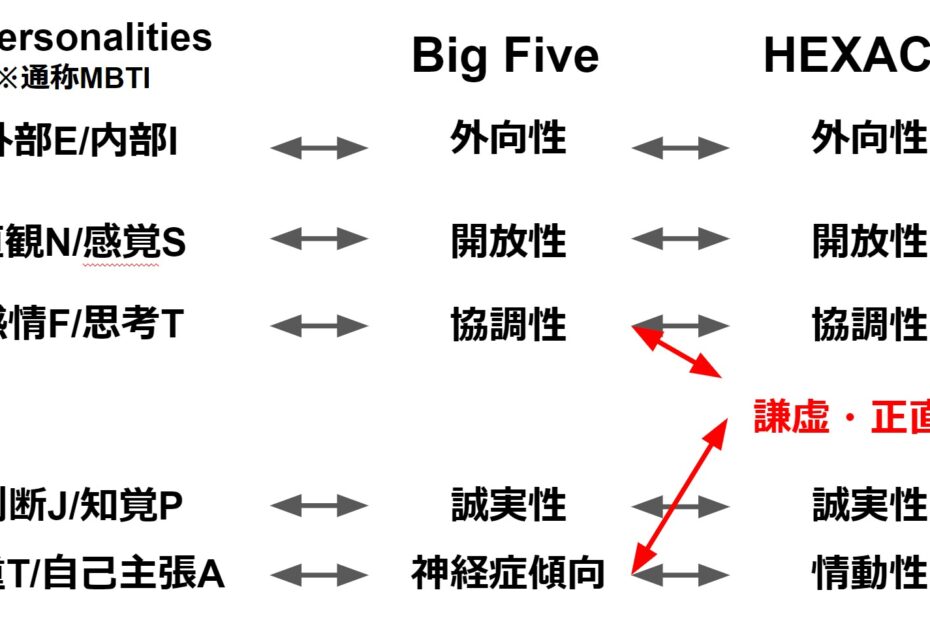
The 16Personalities test is one of the most widely used free personality tests online, but it is important to understand that it is not the same as the official MBTI assessment — even though it uses similar 4-letter type labels. 16Personalities blends MBTI-inspired theory with concepts from the Big Five personality model, producing a hybrid instrument that many users find insightful and engaging.
Here is how the two compare across several key dimensions:
- Theoretical foundation — The official MBTI is grounded purely in Carl Jung’s theory of psychological types, while 16Personalities incorporates Big Five traits such as neuroticism and assertiveness.
- Certification requirement — The official MBTI requires a certified practitioner; 16Personalities is self-administered by anyone.
- Type labels — Both use 4-letter codes (e.g., INFJ, ENTP), which can cause confusion, as the same label may not mean exactly the same thing across both systems.
- Depth of feedback — The official assessment includes a professional interpretation session; 16Personalities provides detailed automated descriptions.
- Cost — The official MBTI involves a fee; 16Personalities is free to use.
Despite these differences, the 16Personalities test is widely regarded as among the more thoughtfully constructed free personality tests available. It can be a genuinely useful starting point — particularly when users treat the results as a prompt for self-reflection rather than a final verdict on who they are.
How to Get the Most Accurate MBTI Results Possible
If maximizing mbti official test accuracy is your goal, the clearest path is working with a certified MBTI practitioner through an official assessment provider — but there are practical strategies for those who cannot access that route right away. Here are the most effective approaches, ranked from most to least rigorous:
- Find a certified MBTI practitioner through an official MBTI organization — Search the official provider’s directory to locate a credentialed specialist near you or available online. This is the most reliable route to an accurate result.
- Check whether your employer or university offers access — Many corporate HR training programs and university career centers administer the official MBTI assessment at no direct cost to participants.
- Inquire at counseling or psychological consultation centers — Some licensed counseling practices include official MBTI assessment as part of their services.
- Take multiple reputable free tests and look for consistent patterns — If you use 3 or more well-regarded platforms and consistently receive the same type or similar preferences, that consistency itself suggests a degree of reliability.
- Prioritize platforms that use a higher question count and validated methodology — More questions and transparent scoring logic generally correlate with more consistent results.
Before booking an official assessment, it is worth verifying the practitioner’s credentials and experience. A genuine MBTI certified practitioner will be able to show proof of their certification and explain the feedback process clearly. Whether you go the official route or begin with a free test, the key mindset shift is treating the result as a conversation starter about who you are — not a final answer.
How to Actually Use Your MBTI Results in Real Life
Regardless of whether you took the official MBTI assessment or a free personality test online, the results are only as valuable as what you choose to do with them. Personality type insights tend to produce the most meaningful outcomes when treated as a flexible framework for self-understanding rather than a rigid label.
Here are 5 practical ways to apply your results — and why each one tends to work:
- Career exploration and job transitions — Understanding your personality preferences can highlight work environments and roles where you are likely to feel energized rather than drained. This works because misalignment between personality and role tends to predict lower job satisfaction.
- Improving relationships and communication — Learning how different types process information and make decisions can reduce interpersonal friction and build empathy. Practice by reflecting on recent conflicts through the lens of type differences.
- Stress management and emotional regulation — Each MBTI type tends to respond to stress in characteristic ways. Identifying your patterns allows you to develop targeted coping strategies before pressure builds.
- Team building and leadership development — Awareness of personality diversity within a team helps leaders assign roles more effectively and create psychologically safe environments.
- Optimizing learning style and personal productivity — Different types tend to thrive under different study or work structures. Experiment with approaches that align with your natural preferences and track the results.
One critical caution: research suggests that personality traits do shift gradually over time in response to life experiences, relationships, and personal development. Treating your MBTI type as permanently fixed can actually limit growth. Revisiting your results every 5 to 10 years — particularly after major life changes — tends to yield fresh and valuable insights.
Frequently Asked Questions
How accurate is the official MBTI test compared to free online versions?
The official MBTI assessment is considered significantly more accurate than free alternatives, largely because it uses approximately 93 validated questions and is interpreted by a certified MBTI practitioner in a one-on-one feedback session. Free online personality tests tend to achieve an estimated accuracy of around 70 to 80%, and results can vary between sessions. For decisions involving career choices or clinical self-understanding, the official assessment is strongly recommended over free tools.
Where can I take the official MBTI assessment?
The official MBTI assessment is available through certified MBTI practitioners listed on the official assessment organization’s website. In addition, many corporate HR training programs, university career centers, and licensed counseling services offer access to the official instrument — sometimes at reduced or no cost to participants. Always verify a practitioner’s credentials before booking, as not everyone offering “MBTI” services is officially certified.
Is 16Personalities the same as the official MBTI test?
No — 16Personalities is not the same as the official MBTI assessment, despite using similar 4-letter personality type labels. The 16Personalities test blends MBTI-inspired theory with Big Five personality concepts, resulting in a hybrid instrument that is free, self-administered, and widely accessible. While it is generally considered one of the more thoughtfully designed free personality tests online, it does not carry the same scientific validation or professional interpretation framework as the official MBTI.
Can your MBTI type change over time?
Research suggests that core personality tendencies are relatively stable across adulthood, but meaningful shifts can and do occur — particularly following major life events, sustained personal development work, or significant environmental changes. Studies indicate that retesting every 5 to 10 years tends to capture genuine growth and evolution rather than just day-to-day mood fluctuations. If your results change dramatically after a short interval, it may reflect test inconsistency rather than a true personality shift.
What should I do if my free test result and my official MBTI result are different?
When discrepancies arise between a free personality test and the official MBTI assessment, it is generally advisable to prioritize the official result. The official assessment is more comprehensive, professionally interpreted, and less susceptible to situational bias. That said, rather than dismissing either result entirely, try comparing both against your real-life behavioral patterns — how you actually behave at work, in relationships, and under stress. That self-observation process is often where the deepest insights emerge.
What does it mean to be a certified MBTI practitioner?
A certified MBTI practitioner is a professional who has completed formal training accredited by an official MBTI organization, qualifying them to administer the official MBTI assessment and deliver individualized feedback sessions. Certification typically requires passing a formal qualification program and demonstrating understanding of psychological type theory. Working with a genuinely certified practitioner — rather than someone simply offering MBTI-themed content online — is one of the most important factors in getting accurate and meaningful results.
Is the official MBTI assessment worth the cost?
For most people, the official MBTI assessment tends to be worth the investment when the results will be used for significant decisions — such as career planning, leadership development, or deeper psychological self-understanding. At an approximate cost of $55 to $110 USD, the official assessment offers a level of depth, personalization, and professional guidance that free personality tests simply cannot replicate. For casual curiosity, a well-designed free test may be sufficient — but for meaningful insight, the official route delivers considerably more value.
Summary: Knowing the Difference Is the First Step Toward Genuine Self-Understanding
The gap between the official MBTI assessment and free online personality tests is wider than most people expect — not just in terms of cost or convenience, but in depth, reliability, and the quality of insight they can provide. Mbti official test accuracy depends fundamentally on who administers it, how many questions are included, and whether a certified professional helps you interpret the results. Free tools like 16Personalities can still be a valuable first step, but they work best when treated as an invitation to explore, not a definitive answer to who you are. Whether you decide to invest in the official assessment or begin with a free personality test online, use what you discover to observe your own patterns more closely — and let that honest self-reflection guide your next move. If you are serious about understanding what your personality type actually means for your career, relationships, and personal growth, consider verifying your type with a certified MBTI practitioner and seeing just how much more clarity the full picture can offer.

Writer & Supervisor: Eisuke Tokiwa
Personality Psychology Researcher / CEO, SUNBLAZE Inc.
As a child he experienced poverty, domestic abuse, bullying, truancy and dropping out of school — first-hand exposure to a range of social problems. He spent 10 years researching these issues and published Encyclopedia of Villains through Jiyukokuminsha. Since then he has independently researched the determinants of social problems and antisocial behavior (work, education, health, personality, genetics, region, etc.) and has published 2 peer-reviewed journal articles (Frontiers in Psychology, IEEE Access). His goal is to predict the occurrence of social problems. Spiky profile (WAIS-IV).
Expertise: Personality Psychology / Big Five / HEXACO / MBTI / Prediction of Social Problems
Researcher profiles: ORCID / Google Scholar / ResearchGate
Social & Books: X (@etokiwa999) / note / Amazon Author Page