Building a meaningful professional development plan starts with knowing yourself deeply — and that’s exactly where personality assessment tools like the MBTI can make a real difference. Whether you’re navigating a career change, improving team dynamics, or simply trying to understand why you work the way you do, a free personality assessment grounded in psychological science offers a powerful starting point. This article breaks down how the 16 personality types framework works, what the science says about personality and behavior, and — most importantly — how to turn your personality type results into concrete, actionable steps for growth.
Once again, personality researcher and author of Villain Encyclopedia, Tokiwa (@etokiwa999), will provide the explanation.
※We have developed the HEXACO-JP Personality Assessment! It has more scientific basis than MBTI. Tap below for details.

目次
- 1 What Is the MBTI Personality Test and How Does a Free Assessment Work?
- 2 The Science Behind Personality Type Results
- 3 How to Choose a Reliable Free Personality Assessment
- 4 How to Correctly Interpret Your 16 Personality Types Result
- 5 Applying Your Personality Type to a Real Professional Development Plan
- 6 Frequently Asked Questions
- 6.1 Is a free MBTI personality test accurate enough to be useful?
- 6.2 What are the 16 personality types in the MBTI framework?
- 6.3 Can my MBTI personality type change over time?
- 6.4 How should I use my personality type results in a professional development plan?
- 6.5 Are MBTI personality types scientifically validated?
- 6.6 Which personality types tend to be most suited to leadership roles?
- 6.7 How long does a reliable free personality assessment take to complete?
- 7 Summary: Turn Self-Knowledge Into Your Strongest Career Asset
What Is the MBTI Personality Test and How Does a Free Assessment Work?
The MBTI (Myers-Briggs Type Indicator) is one of the most widely used self-awareness tools in the world, with research suggesting approximately 80 million people have taken it globally. The assessment categorizes individuals into one of 16 personality types based on 4 psychological dimensions. Even a free personality assessment based on this framework can give you a meaningful window into your thinking and behavioral tendencies — as long as you choose a well-designed one.
The 4 core dimensions of the Myers-Briggs test are:
- Extraversion (E) vs. Introversion (I) — Where you tend to direct your energy: outward toward people and action, or inward toward reflection and ideas.
- Sensing (S) vs. Intuition (N) — Whether you prefer concrete, observable information or big-picture patterns and possibilities.
- Thinking (T) vs. Feeling (F) — Whether you lean toward logical analysis or value-based, empathy-driven decision-making.
- Judging (J) vs. Perceiving (P) — Whether you prefer structure and planning, or flexibility and spontaneity.
Each combination of these 4 axes produces one of the 16 personality types. For instance, the ENTJ is often called the “Commander” — a personality type associated with strategic leadership and decisive action. On the other end of the spectrum, the ISFP (sometimes called the “Adventurer”) tends to shine through creative expression and hands-on problem solving. A well-constructed free personality assessment typically takes around 20 minutes to complete, and the results tend to be most useful when treated as a starting point for self-reflection rather than a definitive label.
The Science Behind Personality Type Results
Research in personality psychology consistently indicates that stable personality traits can meaningfully predict behavioral patterns — including how people relate to others, manage stress, and make decisions at work. This is what separates a scientifically grounded personality test from a simple online quiz. Understanding these patterns isn’t just interesting — it’s practically valuable for anyone building a professional development plan or improving their relationships.
Several well-established frameworks in modern personality psychology are worth knowing:
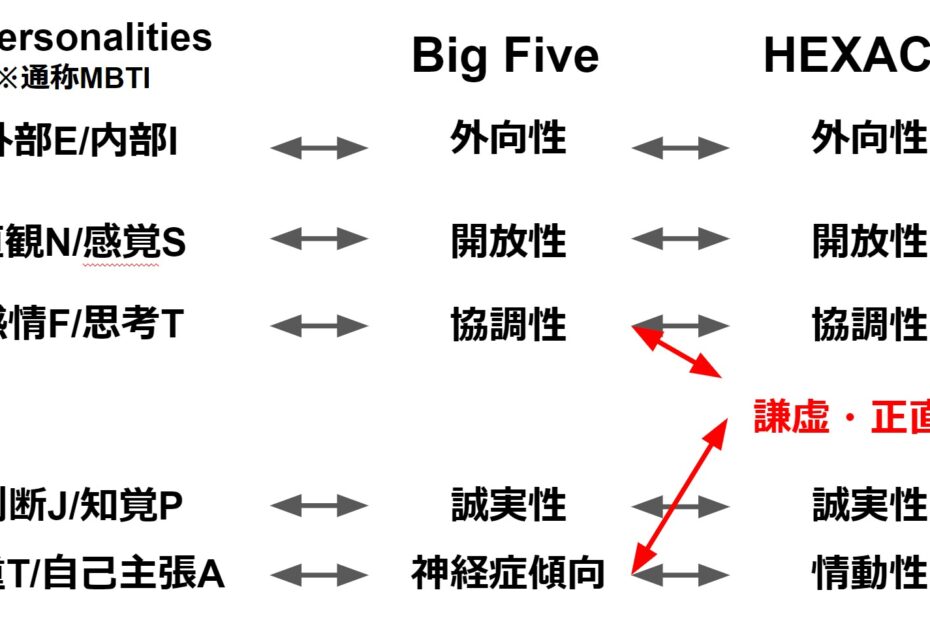
- The Big Five (Five-Factor Model) — Measures Openness, Conscientiousness, Extraversion, Agreeableness, and Neuroticism. Widely used in academic research and considered highly reliable.
- The HEXACO Model (Six Factors) — Extends the Big Five by adding an Honesty-Humility dimension, offering a richer picture of moral and interpersonal behavior.
- Attachment Theory and Personality — Research suggests early attachment patterns interact with personality traits to shape how individuals form and maintain relationships.
- Impulsivity and Behavioral Control Studies — Studies indicate that traits like impulsivity and emotional reactivity strongly influence relationship dynamics and career outcomes.
Practically speaking, research suggests that individuals with higher impulsivity scores tend to show more emotionally reactive responses in high-pressure situations. Similarly, those with stronger anxiety-related traits may develop dependency patterns in relationships. Understanding these tendencies through a reliable self-awareness tool — rather than guesswork — allows for far more targeted personal and professional growth. Personality science isn’t astrology; it’s a structured, evidence-informed lens for understanding human behavior.
How to Choose a Reliable Free Personality Assessment
Not all free personality assessments are created equal — and choosing a low-quality test can actually lead you in the wrong direction when building a professional development plan. The key differentiator is the depth and psychological rigor of the questions. As a general rule, tests with at least 80 to 90 questions tend to produce more reliable and nuanced results than shorter versions.
When evaluating any free Myers-Briggs test or similar personality assessment, look for these quality markers:
- Substantial question count (80+ items) — More questions mean more data points, which reduces the influence of a single “off” answer on your overall result.
- Questions grounded in psychological theory — The items should clearly relate to recognizable behavioral tendencies, not vague or leading statements.
- Detailed, nuanced result explanations — A quality free personality assessment goes beyond a simple label and explains the “why” behind each trait.
- Strengths and growth areas clearly outlined — Results should acknowledge both what you do well and where you might face challenges.
- Career and work-style insights — Many high-quality tools include information about how your personality type tends to perform in professional environments.
The ideal completion time for a quality free personality assessment is roughly 15 to 30 minutes. Tests that wrap up in under 5 minutes are unlikely to capture meaningful variation. One important note: answer honestly rather than choosing what you think sounds best. Socially desirable responses tend to skew results away from your genuine profile. Research suggests that if you take 2 to 3 different reputable assessments and find approximately 70% consistency in your results across them, those findings are generally considered reliable enough to act on.
How to Correctly Interpret Your 16 Personality Types Result
One of the most common mistakes people make is treating their personality type results as a fixed, unchangeable identity — and that mindset can actually limit personal growth rather than support it. Research suggests that MBTI-style assessments reflect tendencies and preferences, not absolute categories. A reasonable way to interpret these results is as approximately 60–70% accurate representations of your current behavioral patterns, not permanent definitions of who you are.
Here are 5 evidence-informed principles for interpreting your personality type results wisely:
- Distinguish strong tendencies from weak ones — If your Introversion score is only slightly higher than your Extraversion score, you likely display meaningful traits of both. Only strong scores reliably predict behavior.
- Account for situational variation — Even a strongly Introverted person can be outgoing and energetic in the right context. Personality describes patterns, not rigid rules.
- Acknowledge the possibility of change — Studies suggest personality traits can shift meaningfully, particularly during key developmental periods like one’s 20s and 30s.
- Avoid ranking or comparing types — No personality type is inherently superior. Each of the 16 types carries distinct strengths that are valuable in different contexts.
- Use results as a guide, not a cage — Saying “I can’t do that because I’m an INFP” shuts down growth. Instead, use your results to identify where to focus your development efforts.
The most productive use of any personality assessment is as a mirror, not a verdict. Use it to spark curiosity about your own patterns — then observe yourself in real situations to see where the description fits and where it doesn’t.
Applying Your Personality Type to a Real Professional Development Plan
Personality type results become truly valuable when you translate them into deliberate, practical action — and integrating them into a structured professional development plan is one of the most effective ways to do that. Rather than simply knowing your 4-letter type, the goal is to use those insights to make smarter decisions about how you work, communicate, and grow.
Here are 5 concrete ways to apply your personality assessment results to real life:
- Career exploration and job fit — Understanding whether you lean toward structure (Judging) or flexibility (Perceiving), or toward people (Feeling) or systems (Thinking), can help you identify roles where you’re likely to thrive and stay energized.
- Improving team communication — Recognizing that a Thinking-type colleague prefers data and logic while a Feeling-type colleague responds better to empathy and shared values helps reduce workplace friction significantly.
- Relationship compatibility awareness — While no type pairing is incompatible, understanding your own tendencies around communication and conflict can improve how you navigate close relationships.
- Personalized stress management — Different personality types tend to experience and recover from stress in distinct ways. Introverts often need quiet recovery time; Extraverts may recharge through social connection.
- Optimizing how you learn — Sensing types tend to prefer step-by-step, hands-on instruction; Intuitive types often learn better through concepts and big-picture frameworks first. Knowing this can dramatically improve how efficiently you acquire new skills.
In a workplace context specifically, think about how your personality type aligns with your current role. If you’re a Judging type in a highly unpredictable environment, building better systems for managing ambiguity becomes a high-priority item in your professional development plan. If you’re a Perceiving type in a deadline-driven field, developing more structured planning habits could be your most impactful area of growth. The point isn’t to fight your nature — it’s to understand it well enough to build around it strategically.

Writer & Supervisor: Eisuke Tokiwa
Personality Psychology Researcher / CEO, SUNBLAZE Inc.
As a child he experienced poverty, domestic abuse, bullying, truancy and dropping out of school — first-hand exposure to a range of social problems. He spent 10 years researching these issues and published Encyclopedia of Villains through Jiyukokuminsha. Since then he has independently researched the determinants of social problems and antisocial behavior (work, education, health, personality, genetics, region, etc.) and has published 2 peer-reviewed journal articles (Frontiers in Psychology, IEEE Access). His goal is to predict the occurrence of social problems. Spiky profile (WAIS-IV).
Expertise: Personality Psychology / Big Five / HEXACO / MBTI / Prediction of Social Problems
Researcher profiles: ORCID / Google Scholar / ResearchGate
Social & Books: X (@etokiwa999) / note / Amazon Author Page
Frequently Asked Questions
Is a free MBTI personality test accurate enough to be useful?
Research suggests that well-constructed free personality assessments — particularly those with 80 or more questions — can provide results that are roughly 60–70% accurate in reflecting your genuine behavioral tendencies. While they won’t match the precision of professionally administered tools, they are generally reliable enough to use as a starting point for self-reflection and professional development planning. If your results feel consistently accurate across 2 to 3 different reputable tests, that’s a good sign the findings are meaningful.
What are the 16 personality types in the MBTI framework?
The 16 personality types are generated by combining 4 pairs of psychological preferences: Extraversion/Introversion, Sensing/Intuition, Thinking/Feeling, and Judging/Perceiving. Each type is represented by a 4-letter code — for example, ENTJ (strategic leader), INFP (idealistic thinker), ISFJ (nurturing supporter), or ENTP (creative debater). Every type carries its own distinct strengths, communication style, and growth areas. No type is considered better or worse than any other.
Can my MBTI personality type change over time?
Studies indicate that personality traits are not entirely fixed and can shift, particularly during significant life transitions. Research suggests that the period between one’s 20s and 30s tends to involve the most notable personality changes, often reflecting increased life experience, maturity, and intentional self-development. If you took an MBTI test years ago and your results now feel less accurate, it may be worth retaking a quality free personality assessment to see whether your profile has evolved.
How should I use my personality type results in a professional development plan?
Start by identifying 2 to 3 specific behavioral tendencies your results highlight — for example, a preference for solitary deep work over group brainstorming, or a tendency to prioritize harmony over direct confrontation. Then, assess how those tendencies interact with your current job demands. Where there’s a natural fit, look for ways to leverage those strengths more intentionally. Where there’s friction, use your professional development plan to build targeted coping strategies or complementary skills.
Are MBTI personality types scientifically validated?
The MBTI framework is based on Carl Jung’s theory of psychological types and has been widely studied since its development in the mid-20th century. While some researchers argue that frameworks like the Big Five model are more statistically robust, the MBTI remains one of the most recognized self-awareness tools in professional and educational settings globally. Most psychologists recommend using it as a reflective framework rather than a definitive psychological diagnosis, which is consistent with how the tool itself is intended to be applied.
Which personality types tend to be most suited to leadership roles?
Research suggests that Extraverted, Thinking, and Judging traits are commonly associated with traditional leadership behaviors such as strategic planning, decisive action, and clear communication. Types like ENTJ and ESTJ are frequently mentioned in this context. However, studies also indicate that Introverted and Feeling-oriented leaders can be highly effective, particularly in environments that value empathy, deep listening, and collaborative decision-making. Effective leadership tends to depend on context as much as personality type.
How long does a reliable free personality assessment take to complete?
A high-quality free personality assessment typically takes between 15 and 30 minutes to complete. Tests that can be finished in under 5 minutes generally lack the depth needed to produce reliable results, as they have too few questions to capture meaningful variation across all 4 personality dimensions. If a free Myers-Briggs test feels unusually short or superficial, it’s worth seeking out a more comprehensive alternative before drawing conclusions about your personality type.
Summary: Turn Self-Knowledge Into Your Strongest Career Asset
Understanding your personality type is more than a fun exercise — it’s one of the most practical self-awareness tools available for anyone who wants to grow intentionally. The 16 personality types framework, when interpreted thoughtfully and applied strategically, can illuminate why you communicate the way you do, where you naturally excel, and which areas of your behavior are worth developing further. Crucially, your personality type is a starting point for your professional development plan, not a ceiling on what you can achieve. Personality traits tend to be relatively stable, but they are never fixed — people grow, adapt, and change, especially when they invest in deliberate self-improvement. If you’re ready to move from general self-awareness to specific, targeted growth, start by discovering which of the 16 types describes your natural patterns most closely — then use that knowledge to shape a development path that’s genuinely built around you.