
Scientific Personality Assessment
Premium HEXACO-JP
Type, non-cognitive abilities, values, health, love & marriage, work, and more
Assessment of approximately 200 items with explanatory research articles
Features of Premium HEXACO-JP

Scientific Diagnosis
Unlike MBTI/16personalities, all 200 behavioral tendencies are scientifically backed.
Understanding Strengths and Weaknesses
Assess strengths/potential like IQ/EQ, and weaknesses/risks like illness and divorce.

Improvement Recommendations
By changing your personality, you can increase the possibility of improving your weaknesses/risks.

01 We aim for trustworthy and responsible diagnosis based on scientific evidence
The recently popular MBTI/16personalities lacks scientific evidence from various perspectives, yet many people use it beyond the realm of “entertainment” as a major decision-making criterion in romance, work, and other areas.
All approximately 200 tendencies obtained from the paid version HEXACO-JP test results are based on peer-reviewed papers, with explanatory articles attached. The assessments are in three levels (high ~ medium ~ low), making them easier to accept calmly.
*Member registration is required first.
02 Understand your strengths and weaknesses, and apply them in daily life and work
The tendencies of approximately 200 items are diverse. For example, there are those that become strengths and potential, such as the possibility of having a high IQ, or being likely to have high income and academic ability. Or there are those that become weaknesses and risks, such as susceptibility to illness or the possibility of causing problems in communication.
By knowing these personal characteristics in advance, you can take advantage of environments with opportunities for your strengths, or be cautious in advance regarding your weaknesses.
※Member registration is required first.


03 Learn improvement methods for weaknesses and risks to make your life better
Unlike inherited physical abilities or family environment, personality and non-cognitive abilities can be changed. This is because while half of personality is influenced by genetics, the other half is influenced by environments other than the family environment. Moreover, even if you are relatively older, the possibility of change is surprisingly not low.
By increasing conscientiousness, you’ll become able to work steadily on tasks; by reducing neuroticism, you’ll feel less anxiety; and by increasing agreeableness, you’ll develop feelings of consideration for others.
*Membership registration is required first.
Comprehensive List of Approximately 260 Tendencies
- Types (22 items)
- Average personality traits of males and females, average personality traits of young and mature individuals
- Common among wealthy people, scientists, Mensa members, teachers who are likely to be liked by students, athletes
- Common in impoverished areas, ADHD, HSP, dark tendencies, narcissism, psychopathy, Machiavellianism
- Common in metropolitan areas, common in Japan’s Tohoku, Hokuriku, Chugoku, Kyushu, and Okinawa regions
- Non-cognitive abilities (28 items)
- Potential for high IQ/EQ, capable of critical thinking, common among hard workers, high motivation, tend to act proactively, tend to have confidence, tend to maintain good relationships with others, tend to feel happy, tend to feel lucky, high self-efficacy, strong positive emotions, resilience
- Stress coping (seeking problem solutions, seeking comfort and empathy from others, seeking distraction, reframing situations more positively, accepting situations, avoiding problems entirely, denying problems/hiding emotions, hoping for magical salvation, withdrawing, crying/throwing things/self-blame, relying on alcohol or nicotine, participating in religious activities)
- Humble and calm toward risks, unlikely to regret failures, willing to take on challenges despite risks, prone to bias
- Cognition & Values (17 items)
- Seeking meaning in life and transcendent matters, tendency to blame negative things on the environment
- Schwartz Theory of Values (managing people and resources while seeking money, seeking socially recognized success, seeking pleasure, seeking stimulating experiences, seeking independence of thought and action, seeking equality/social justice/environmental protection, seeking prosperity and happiness for surrounding people, controlling one’s impulses to meet others’ expectations, preserving traditions, seeking safety and security for self/family/nation)
- Politically prefer left-wing or right-wing parties, interested in environmental protection, right-wing authoritarianism (prone to attacking those who deviate from norms), social dominance orientation (prone to discrimination and prejudice)
- Lifestyle (Personal) (74 items)
- Dietary habits (high salt and oil content, low dairy products, tend to eat fast food/ice cream/chocolate, tend to avoid meat, tend to eat meat/sweets, tend to avoid fruit, don’t drink sweet beverages, eat vegetables/dairy/nuts, avoid sweets)
- Tend toward physical health, tend toward mental health, take actions for health
- Prone to obesity, tend to drink alcohol, common among smokers, tend to gamble, poor sleep quality, common among patients with mental illness, prone to early death, prone to dementia, prone to addiction to alcohol, nicotine, cannabis, gambling, and internet
- Sensitive to seasonal changes, engage in religious events and practices, move frequently, save money, tend to make impulse purchases, prone to regret after shopping (food, cars, appliances, relationships), prone to hoarding during emergencies, morning person/night person
- Room (bright, colorful, many photos and memos, space for people to gather, many books and magazines, music and artworks, travel memories, warm lighting, clean, plants and flowers, photos of family and friends, organized, prominent clocks, visible schedules, calm color scheme, comfortable bedding, privacy-focused, pleasant fragrance)
- SNS usage (many friends, post updates and photos, encourage with likes and comments, actively collect information), play social games
- Advertising (easily react to anything, easily react to information-rich ads, easily react to exaggerated ads comparing with other products, don’t compare with other products, easily react to information-rich ads)
- Common among animal lovers, prone to believing conspiracy theories, prone to fortune-telling dependency
- Preferred movie tendencies, preferred book tendencies, preferred music tendencies, preferred clothing tendencies
- Life (Social) (28 items)
- Relationships that value both self and others, relationships that avoid communication, relationships that benefit only oneself, high satisfaction with friendships
- High satisfaction with romantic/marital relationships, common among popular men, common among popular women, romantic disposition, likely to marry, good parenting quality, prone to divorce, prone to cheating, wives prone to being cheated on by husbands, husbands prone to being cheated on by wives, tend to believe in traditional gender roles, tend to think women should be protected by men
- Compatible people: xNxx-xL (high openness and honesty-humility), xNxx-xD (high openness, low honesty-humility), xSxx-xL (low openness, high honesty-humility), xSxx-xD (low openness and honesty-humility)
- Volunteer participation, good social capital, practice infection control measures, engage in social loafing, sensitive to peer pressure, prone to fraud victimization, positive about vaccination, likely to wear masks during infectious disease outbreaks
- Academic Performance・Work (41 items)
- Likely to achieve high academic performance, skilled at online learning, able to learn deeply and adapt, sometimes engage in superficial learning and perspectives/responses
- Likely to have high income, likely to have high job performance, likely to have successful careers, become good team members, prone to voluntary job turnover, prone to fatigue, prone to burnout, prone to work addiction
- Likely to produce results in remote work, likely to have high work engagement, have organizational commitment and attachment, actively perform work beyond job scope
- Voluntarily help colleagues and other individuals, voluntarily act for overall organizational benefit, aim to improve and transform organizations and work processes, work across group and job boundaries, skilled at interpersonal tasks, coaching tends to be effective
- Skilled at new business ventures and entrepreneurship, frequent flow experiences, likely to become good supervisors, transformational leadership, laissez-faire leadership, destructive leadership
- Like visionary leaders, like friendly leaders, like realistic leaders
- Career aptitude (high/low extraversion, high/low openness, high/low emotionality, high/low conscientiousness, high/low agreeableness)
- Improvement Methods (47 items)
- Effective ways to increase extraversion (9 items)
- Effective ways to increase conscientiousness (10 items)
- Effective ways to increase emotionality (10 items)
- Effective ways to increase agreeableness (10 items)
- Effective ways to increase honesty-humility (8 items)
Personality Tests and Aptitude Tests Based on HEXACO
- In personality psychology, a psychological scale called HEXACO has been attracting attention since the 2000s. While the Big Five, which other companies reference when developing their own systems, expresses personality through 5 factors, HEXACO uses 6 factors, enabling more detailed analysis. For details, see here.
- In particular, Honesty-Humility, one of HEXACO’s 6 factors, is related to ethics, and its low levels can determine the Dark Triad (Narcissism, Machiavellianism, Psychopathy). For details, see here.
- The Dark Triad has been actively researched in recent years, and it has been found to be related to not only harassment and workplace misconduct, but also bullying, academic dishonesty, criminal behavior, sexual harassment, and other unethical behaviors. International comparisons show that Japanese people have high levels of Machiavellianism and Psychopathy.
Pricing
500 yen per month (excluding tax)
※You can cancel at any time. During the subscription period, you can view results for approximately 200 items.
※You can also answer the more accurate 100-question version of HEXACO-JP.
※Member registration is required first.
代表の紹介
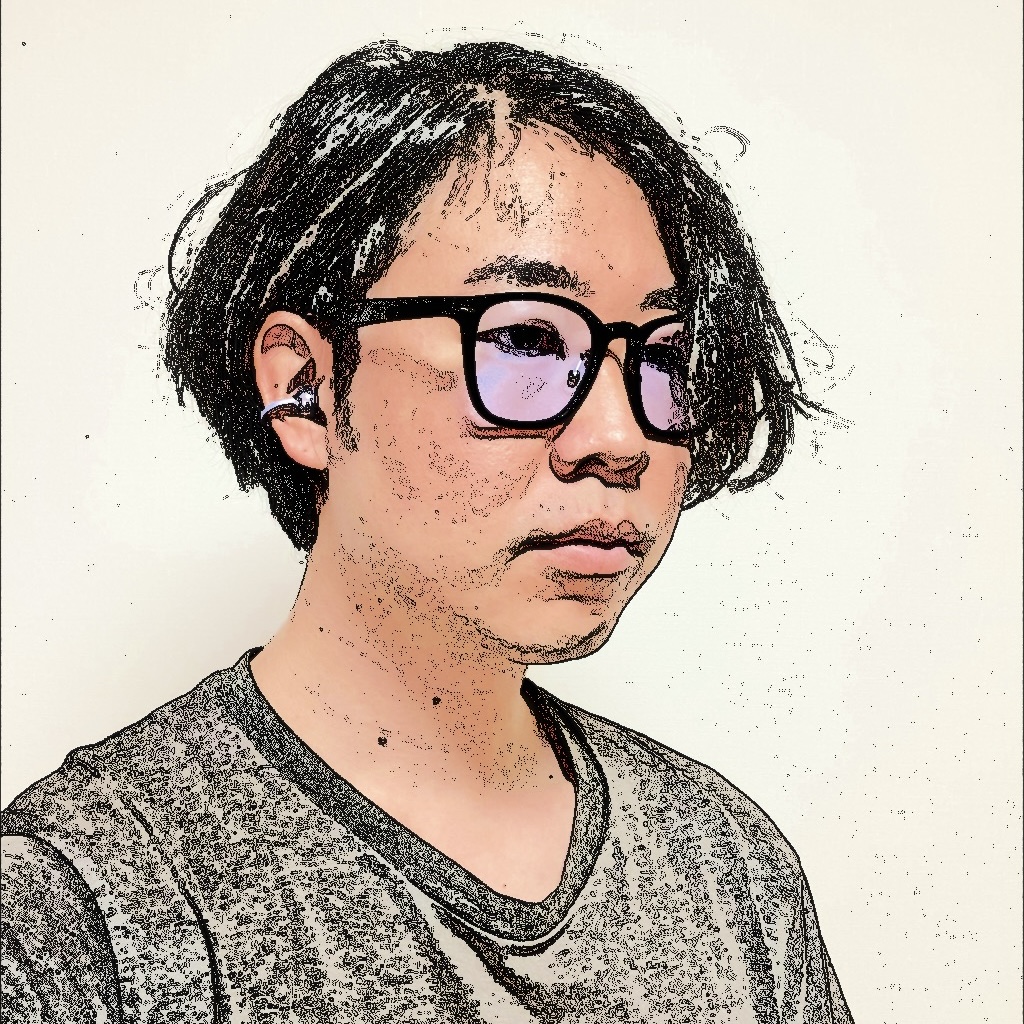
株式会社SUNBLAZE 代表取締役 常盤瑛祐(ときわえいすけ)。幼少期より家庭や学校にてダーク特性のある人たちから様々な被害に遭い、不登校・うつ・中退を経験。その原体験から、2010年から政策提言やアート活動、ソーシャルビジネスなど様々な社会活動を行い、2021年「悪者図鑑」を出版。さらに学術的な知見をためるため、2024-25年は論文5本を執筆し、うち3本は海外のジャーナルに掲載。HEXACOベースのサンブレイズテストの開発者。博士号取得を目指している。心の強さ、非認知能力、ソフトスキルに強い関心がある。
FAQ
- How long does HEXACO-JP take?
- The 24-question version takes 2-3 minutes, the 60-question version takes 5-6 minutes, and the 100-question version takes 10 minutes.
- 24 questions require no membership registration (here), 60 questions require membership registration (here). The most accurate 100 questions are only available to paid members (here).
- Do you provide HEXACO-JP for corporations?
- For corporations, we provide it under the name “Sunblaze Test“.
- The corporate version allows you to view other people’s responses in a CSV list format. However, it only provides results related to work such as non-cognitive abilities and job-related aspects. It does not provide results related to private matters such as health and romance.
- Do other companies’ aptitude tests and personality tests lack scientific evidence?
- Scientific evidence here refers to the personality tests (psychological scales) themselves having undergone correlation analysis with psychological scales from existing peer-reviewed papers, validity and reliability analysis of questionnaire items, and correlation analysis between test results and actual behavior.
- For example, even if results evaluate someone as work-focused or private life-focused, it cannot be trusted without evidence of what constitutes work-focused or private life-focused.
- Why do HEXACO results differ from MBTI/16personalities results?
- Since personality is influenced by genetics and environment, responses change when the environment changes (for example, emotionality changes when tired). For more details on genetics, see here.
- Personality changes with age and life events. Response variations occur depending on age. For details, see here.
- Type classification is based on whether each value is above or below 3, so values close to 3 are more likely to change depending on how questions are asked and the environment at the time. Please look at the numerical values rather than the types.
- MBTI (original) and 16personalities (commonly called MBTI test) are unclear about the extent of statistical processing in their question design stage as no relevant papers can be found. On the other hand, papers on Big Five and HEXACO can be easily found, and this HEXACO-JP test has gone through an academic development process and is published as a paper.
- While there are not many research papers comparing MBTI and 16personalities with everyday behavior (academic performance, income, etc.) or brain/genetic factors, numerous studies exist for Big Five and HEXACO.
- HEXACO is essentially a variation of Big Five elements, so they are similar but different. HEXACO’s Honesty-Humility is extracted from Big Five’s Agreeableness and Neuroticism. For details, see here.
- Are the test results absolutely correct?
- Personality is influenced by genetics and environment. Due to genetic influence, the variation range is constant, but answers vary to some extent depending on the environment.
- Also, while Big Five and HEXACO research papers conduct correlation analysis with academic performance and income, the correlation coefficients are not as large as in natural science experiments. Correlation coefficients range from -1 to 1, but are usually around -0.4 to 0.4. Of course, some are higher. They are not 0.8 or 0.9, so they are relatively low in comparison.
- However, various studies still exist, so please think of it as “above fortune-telling, below natural science.” This is not a 100% denial of psychology or fortune-telling.