Have you ever heard the word propaganda?
It refers to information designed to guide people’s thoughts and actions in a certain direction.
Even in news and social media, you might be influenced in similar ways without realizing it.
However, not everyone is swayed in the same way.
In fact, depending on “where you live” and “your original way of thinking,” the effects can be completely different.
The paper we’re introducing today, ‘Radio and the Rise of the Nazis in Prewar Germany,’ examines in detail what kinds of regions showed strong effects when the Nazis used radio to spread propaganda.
Based on this research, this article will answer the question: Does the power of propaganda really work the same way everywhere?
We’ll provide an easy-to-understand explanation of what we, living in today’s information society, can learn from real events in history.
Once again, personality researcher and author of Villain Encyclopedia, Tokiwa (@etokiwa999), will provide the explanation.
※We have developed the HEXACO-JP Personality Assessment! It has more scientific basis than MBTI. Tap below for details.

目次
The Impact of Propaganda Isn’t the Same Everywhere
The Power of Propaganda That the Nazis Believed In
The Nazis used propaganda as a political weapon.
The propaganda minister of that time stated that “without radio, we couldn’t have seized power.”
In other words, how information was presented to the people was crucial.
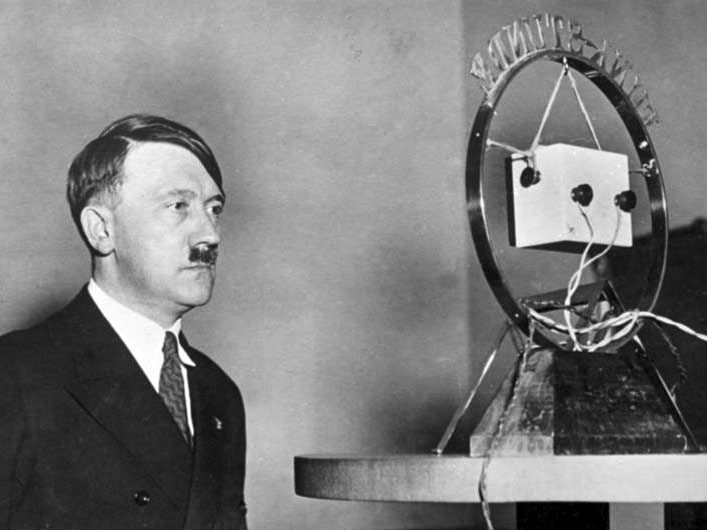
Radio in particular had a significant impact because it could be easily heard at home.
At the time, radio was faster and more widespread than newspapers.
For example, in the March 1933 election, just five weeks after broadcasting began, the Nazi vote share increased by 2.9 percentage points.
This demonstrates the great power of propaganda.
The Nazis denied opposing ideas and repeatedly conveyed their own righteousness.
As a result, they were able to embed their words into people’s hearts.
In summary, propaganda using radio as a medium had a major impact on people’s ways of thinking and behavior.
Propaganda Under Democracy Served as a Deterrent
Radio initially worked to reduce support for the Nazis.
From 1929 to 1932, the government used radio to convey democratic ideas.
During this period, radical parties like the Nazis and Communists were not allowed to broadcast.
Instead, stable, government-friendly opinions were broadcast on radio.
For example, in the 1930 election, areas where radio could be heard showed lower Nazi vote shares.
Conversely, in places where radio didn’t reach, the Nazis collected many votes.
In this way, media content prevented the spread of radical opinions.
The main content of broadcasts included the following:
- Easy-to-understand explanations of government policies
- Communicating the dangers of extreme opinions
- Calling for calm judgment in elections
As a result, propaganda temporarily served to protect democratic values.
Radio Content Changed Completely After Hitler Took Office
Immediately after Hitler became chancellor in January 1933, radio content changed dramatically.
Nazi politicians who had never appeared before began appearing on broadcasts.
Hitler himself spoke on radio 16 times in just five weeks.
During that time, other parties had almost no appearances.
In other words, only Nazi words reached the ears of the people.
This biased broadcasting guided public opinion in one direction.
Furthermore, the government took the following actions:
- Place all radio companies under state control
- Prohibit content inconvenient to the government
- Repeat only Nazi ideas
Thus, radio changed from a free source of information to a Nazi propaganda machine.
Why Election Results Changed in Just Five Weeks
Radio broadcasts after Hitler took office moved election results in a short period.
In the March 1933 election, the Nazis recorded 43.9% of the vote.
This was an increase of about 10 percentage points in about four months from the previous election.
This is thought to be largely due to the influence of propaganda, not just violence and oppression.
Through radio, the government repeated the following messages:
- Emphasizing the communist threat
- The nation’s future can only be entrusted to the Nazis
- Pretending to address people’s anxieties
These words particularly reached the hearts of poor people who were feeling anxious.
On the other hand, many people didn’t have radios, and information was limited, which is also true.
Nevertheless, behind changing the flow of elections in a short period was the power of radio propaganda.
There Were Regional Differences in the Effects of Political Messages
Radio’s influence was not the same in all regions.
In some regions, propaganda had strong effects, while in other regions it sometimes had the opposite effect.
These differences were related to original ways of thinking and history.
For example, the following points were important:
- Whether anti-Semitic incidents had occurred historically
- Whether far-right ideologies were already supported
- Whether there is a large gap between rich and poor, and strong social dissatisfaction
When these elements were present, propaganda worked strongly.
On the other hand, in regions where people coexisted with Jewish people, many held doubts about Nazi rhetoric.
In other words, depending on the listeners’ way of thinking, the same broadcast produced completely different reactions.
Therefore, the power of propaganda was not one-sided, but was deeply connected to region and history.
What Kind of Regions Were Affected by Propaganda?
Places Where Anti-Semitic Sentiment Was Historically Strong
In regions where discrimination against Jewish people was deeply rooted, propaganda was strongly effective.
This research examined regions where Jewish persecution occurred during the Black Death in the 14th century.
In such areas, people were more likely to respond to Nazi anti-Semitic broadcasts.
For example, more people reported Jewish people to the police or wrote hateful letters.
The broadcasts were merely a trigger; it was the pre-existing feelings that ignited the fire.
In such regions, the following characteristics were observed.
- Prejudice against Jewish people had continued for a long time
- Anti-Semitic ideas had spread through local culture and schools
- There were few opportunities to interact with Jewish people, and understanding had not progressed
As a result, Nazi propaganda worked not as “new opinions” but to strengthen “pre-existing ideas.”
Regions with High Support for Far-Right Parties
In regions where parties with similar ideas to the Nazis were strong, the effects of propaganda became greater.
In 1924, when the Nazis were temporarily banned, an alternative party called the “National Socialist Freedom Party” was active.
In regions where this party gathered many votes, the Nazis later gained support more easily.
In other words, in places where many people had similar ways of thinking, it was easier to empathize with propaganda.
Specifically, the following content resonated.
- The idea that national power should be strengthened
- Dissatisfaction with foreigners and minorities
- An atmosphere that valued following leaders
In regions where these were already widespread, Nazi broadcasts felt “correct.”
Therefore, propaganda became not just information, but a tool to reinforce pre-existing feelings.
Regions with Greater Economic Inequality Had Stronger Effects
In regions where the gap between rich and poor was severe, Nazi propaganda had more influence.
The research measured inequality using the distribution of landowners.
As a result, places with more dissatisfied people reacted more strongly to radio content.
Especially people without jobs or those struggling financially were more likely to accept stories that created enemies.
Nazi broadcasts exploited these feelings.
- Society’s problems are the fault of Jewish people
- Current politics won’t change your life
- Follow the Nazis and the future will improve
These messages captured the hearts of people in difficult situations.
Therefore, in regions with great inequality, propaganda was particularly effective.
Regions with Records of Past Jewish Persecution
In areas where attacks on Jewish people had occurred in the past, the same behavior was more likely to happen again.
The paper shows that records from hundreds of years ago influenced current behavior.
For example, in regions where Jewish people were attacked during the Black Death, discrimination became severe again during the Nazi era.
This was because the ways of thinking passed down through families and communities had not changed.
Propaganda played the role of awakening such “traditional ideas.”
The following words were repeated.
- Jewish people have been untrustworthy since long ago
- Germany’s problems are their fault
- We should act the same way as in the past
Therefore, a frightening phenomenon occurred where past history connected to current behavior.
Background to the Increase in Anti-Semitic Actions After 1933
When the Hitler regime used radio to spread anti-Semitic sentiment, actual actions visibly increased.
More people destroyed Jewish shops or reported them to the police.
Particularly from 1935 to 1938, these numbers grew significantly.
This was because broadcasts began to include content that encouraged specific actions.
For example, the following stories were broadcast on radio.
- If you see Jewish people, report them
- Don’t do business with them
- Keep your distance to protect your blood
Also, anti-Semitic letters sent to the newspaper “Der Stürmer” increased.
In other words, propaganda influenced not just emotions, but actions as well.
Some Regions Where Propaganda Had the Opposite Effect
Places with Low Anti-Semitic Sentiment Also Showed Backlash
There were also regions where Nazi propaganda backfired and created resentment.
Especially in places where there wasn’t much anti-Jewish sentiment, many people questioned the content.
In regions where people had daily contact with Jewish people, they couldn’t accept the extreme narratives.
For example, people who shopped at Jewish stores didn’t suddenly turn hostile.
The propaganda content didn’t match their lived experiences.
Such regions had the following characteristics.
- They had daily relationships with Jewish people
- There were Jewish people trusted locally
- Many people felt uncomfortable with Nazi rhetoric
As a result, rather than being effective, propaganda actually became a cause of losing credibility.
When residents’ values didn’t align with the message
When broadcast content didn’t align with local people’s thinking, propaganda had no effect.
Nazi broadcasts were very one-sided and didn’t allow for opposing views or differences of opinion.
However, different regions had diverse value systems.
For example, some places had strong opposition to discrimination due to religious or educational influences.
In such places, Nazi broadcasts felt like “forcing ideas on people.”
The propaganda content was received in the following ways.
- It sounded unnatural and forced
- There was strong discomfort with speaking ill of others
- There was a culture that valued coexistence over conflict
These differences became factors that hindered the success of propaganda.
Cases where radio broadcasts caused resentment
Sometimes the radio broadcasts themselves became disliked.
The content was too one-sided, making some people uncomfortable.
In some regions, it was recorded that many people turned off their radios during broadcasts.
Also, some people found it painful to listen to constant attacks on specific ethnic groups or religions.
Such situations occurred due to the following factors.
- The content was too extreme and radical
- Stories that didn’t match daily life continued
- There were no other information sources and no freedom of choice
As a result, in some regions radio lost credibility and suspicion of the Nazis actually deepened.
Background of movements that refused to cooperate with the Nazis
In some regions, there were people who weren’t swayed by broadcasts and refused to cooperate with the Nazis.
In such regions, the entire community wasn’t united under one set of values.
Various ideas coexisted, and people weren’t easily influenced.
Especially educated people and those who valued peace for religious reasons observed the situation calmly.
There were also people who tried to protect Jewish acquaintances and family members.
Reasons for not cooperating included the following.
- They questioned one-sided narratives
- They trusted longtime friends and companions
- They wanted to act according to their own will
Therefore, not everyone was swept away by propaganda.
The danger of propaganda losing credibility
When propaganda is used incorrectly, it loses credibility.
When broadcast content seems false or doesn’t match reality, people actually start to become suspicious.
Nazi broadcasts weren’t effective on everyone either.
Especially people who interacted with Jewish people in their daily lives didn’t believe the broadcast content.
Furthermore, some people became tired of the repetition of extreme language.
Such broadcasts produced the following reactions.
- Thinking “here we go again” and stopping listening
- Starting to question the content with friends and family
- Beginning to avoid information altogether
As a result, propaganda sometimes had the opposite effect.
What we can learn from the history of propaganda
Radio was a “tool” for spreading ideology
Radio had the power to spread information widely and quickly.
The Nazis noticed this power and used it to change citizens’ way of thinking.
Using radio, they could reach even people who had difficulty reading and writing.
Also, since people could listen to stories while at home, they became more susceptible to influence.
Therefore, the Nazis particularly valued radio.
By 1933, there were already over 5 million radios in households.
In 1934, all radio stations came under state control.
In this way, radio transformed from a “convenient tool” into a “weapon of ideology.”
Examples of broadcast content included the following.
- Introduction of Nazi ideology and policies
- Criticism of people considered enemies
- Repeatedly broadcasting Hitler’s speeches
Thus radio was used not just as a household appliance, but as a tool for spreading the state’s ideology.
Who the information sender is holds the key
How we receive information changes depending on who is sharing it.
The Nazis placed broadcasting stations under state control and only broadcast information that was convenient for them.
As a result, citizens could no longer hear other opinions.
For example, the voices of opposition political parties and civic groups were not introduced at all.
In other words, the flow of information had become one-way.
This is an extremely dangerous situation.
The following situations occurred.
- Citizens come to believe that “there is only one correct opinion”
- The ability to doubt weakens due to the absence of other opinions
- The atmosphere of opposing the information source strengthens
In this way, not only the “content” of information, but also “who is saying it” is very important.
What happens when media neutrality breaks down
When media only conveys one way of thinking, society becomes biased.
Originally, media is supposed to fairly introduce various opinions.
However, under the Nazi regime, that role was lost.
Only the government’s thinking was considered correct, and other opinions were ignored.
As a result, it became difficult for people to voice opposition.
Furthermore, many people were influenced without knowing it.
When neutrality is lost, the following problems occur.
- Biased thinking becomes the norm
- Minorities and different opinions are excluded
- Citizens’ judgment becomes weakened
In this way, when media becomes one-sided, free society collapses.
Reviewing the present based on past examples
By looking back at history, we can think about how we receive information today.
Like in the Nazi era, when information becomes biased, dangers arise in society.
Even now, we live surrounded by various information.
Among it, there are things that differ from facts and stories that were intentionally created.
That’s why when encountering information, it’s important to think “Is this really true?”
For example, it would be good to be conscious of things like this.
- Where did that information come from?
- Try researching if there are other opinions
- Check if it matches your own thinking
By learning history, we can change our current actions for the better.
How should we approach information
The history of propaganda teaches us the importance of how we receive information.
It’s important not to believe one-sided opinions too much.
Also, even if those around you have the same opinion, let’s maintain the power to think for ourselves.
Especially during anxious times, we become more easily swayed by biased stories.
Having a skeptical mind toward information is not a bad thing.
Rather, it’s a necessary power to protect ourselves.
The following actions are helpful.
- Stop once and think about it
- Try discussing with friends and family
- Try listening to people from different positions
In this way, if more people who can act based on their own judgment increase, society as a whole will become more free and safe.
Finally
In this article, we introduced that the propaganda used in Nazi-era Germany did not work the same way in all regions.
In reality, particularly large impacts were seen in places where anti-Semitic thinking was originally strong, regions familiar with the far-right, and areas where economic dissatisfaction had accumulated.
On the other hand, in regions that were not like this, there were times when it backfired.
In other words, while the power of information is strong, its effectiveness changes greatly depending on the feelings and background of the people receiving it.
This is a story that applies to modern times as well.
Through smartphones and social media, we encounter a lot of information every day.
Among it, there are things that move our emotions without us knowing it.
That’s why it’s important to pause and ask “Is this true?” and “Am I thinking for myself?”
Let’s learn from past events and develop the ability to skillfully deal with information.

Writer & Supervisor: Eisuke Tokiwa
Personality Psychology Researcher / CEO, SUNBLAZE Inc.
As a child he experienced poverty, domestic abuse, bullying, truancy and dropping out of school — first-hand exposure to a range of social problems. He spent 10 years researching these issues and published Encyclopedia of Villains through Jiyukokuminsha. Since then he has independently researched the determinants of social problems and antisocial behavior (work, education, health, personality, genetics, region, etc.) and has published 2 peer-reviewed journal articles (Frontiers in Psychology, IEEE Access). His goal is to predict the occurrence of social problems. Spiky profile (WAIS-IV).
Expertise: Personality Psychology / Big Five / HEXACO / MBTI / Prediction of Social Problems
Researcher profiles: ORCID / Google Scholar / ResearchGate
Social & Books: X (@etokiwa999) / note / Amazon Author Page