Understanding psychological testing types explained clearly can be genuinely life-changing — whether you want deeper self-awareness, guidance on a career path, or support for your mental health. Psychological assessments are far more varied and scientifically rigorous than most people realize, and knowing the differences between them helps you make smarter, more informed decisions about which tool is right for your situation.
In this article, we will walk you through everything you need to know: what psychological tests actually are, how they differ from casual quizzes and personality diagnostics, what specific tests can reveal about you, and how to approach taking one responsibly. By the end, you will have a clear, practical map of the psychometric evaluation landscape — from intelligence tests to stress inventories, from career aptitude tools to infant developmental assessments.
Once again, personality researcher and author of Villain Encyclopedia, Tokiwa (@etokiwa999), will provide the explanation.
※We have developed the HEXACO-JP Personality Assessment! It has more scientific basis than MBTI. Tap below for details.

目次
- 1 What Is a Psychological Test? A Clear Definition
- 2 Psychological Testing Types Explained: How Key Terms Differ
- 3 What Can a Psychological Assessment Actually Reveal?
- 4 Major Psychological Testing Types Explained: 12 Key Instruments
- 4.1 YG Personality Test (Yatabe-Guilford)
- 4.2 MMPI (Minnesota Multiphasic Personality Inventory)
- 4.3 Egogram (Transactional Analysis)
- 4.4 WISC (Wechsler Intelligence Scale for Children)
- 4.5 WAIS (Wechsler Adult Intelligence Scale)
- 4.6 Tanaka-Binet Intelligence Test
- 4.7 New Kyoto Scale of Psychological Development (K-式 / Shinban K-shiki)
- 4.8 Enjoji Infant Analytical Developmental Test
- 4.9 GATB (General Aptitude Test Battery)
- 4.10 VPI Vocational Preference Inventory
- 4.11 Stress and Mental Health Inventories
- 4.12 Parent-Child Relationship Assessments
- 5 How to Get the Most Out of Psychological Testing: Practical Advice
- 6 Frequently Asked Questions
- 6.1 What is the difference between a psychological test and a personality quiz?
- 6.2 How accurate are psychological tests?
- 6.3 Who can administer psychological tests?
- 6.4 Can psychological test results change over time?
- 6.5 Where can I take a legitimate psychological test?
- 6.6 What is the difference between a psychological test and a psychological scale?
- 6.7 Are psychological tests used in hiring and recruitment?
- 7 Summary: Your Roadmap Through the World of Psychological Assessment
What Is a Psychological Test? A Clear Definition
A psychological test is a standardized method for measuring an individual’s mental and behavioral characteristics in an objective, quantifiable way. Unlike casual online quizzes, properly developed psychological tests are built on large datasets, refined through statistical analysis, and administered under consistent, controlled conditions. The results are expressed numerically and interpreted by comparing an individual’s score against a reference group — often called a normative or standardization sample.
Psychological assessment of this kind sits at the heart of clinical psychology, educational psychology, and organizational psychology. Research in these fields consistently shows that standardized measurement is far more reliable than subjective impressions alone, which is why clinicians, educators, and HR professionals rely on these tools when making high-stakes decisions. The formal definition can be stated simply: a psychological test is any standardized procedure used to measure a sample of behavior or mental characteristics, from personality traits to cognitive ability, emotional functioning, vocational interests, and developmental milestones.
There are 4 core characteristics that distinguish a genuine psychological test from informal assessments:
- Standardization — Every test-taker receives identical instructions, time limits, and scoring rules, ensuring results are comparable across individuals.
- Objectivity — Scores are calculated using fixed rules, minimizing the influence of the examiner’s personal bias.
- Quantification — Results are expressed as numbers (e.g., IQ scores, percentile ranks, T-scores), allowing precise comparison.
- Norming — Scores are interpreted relative to a reference group, so a result only becomes meaningful when placed in context.
In short, a psychological test is much more than a fun quiz. It is a carefully engineered measurement instrument designed to reveal meaningful, reproducible information about the human mind — and it is only as useful as the context in which it is interpreted.
Psychological Testing Types Explained: How Key Terms Differ
One of the most common sources of confusion is the overlap between terms like “personality quiz,” “psychological test,” “psychological scale,” and “psychological assessment” — but these concepts are meaningfully different. Understanding these distinctions helps you choose the right tool and set appropriate expectations for what the results can tell you.
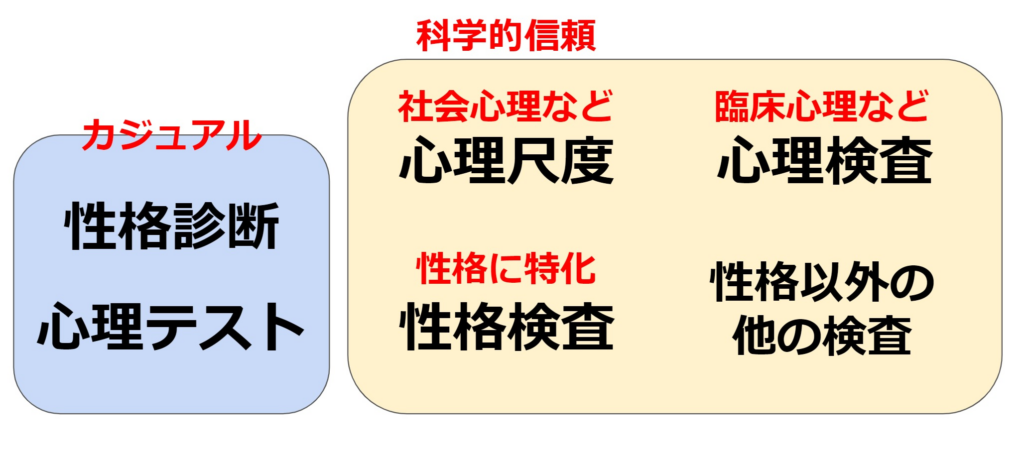
Personality Diagnosis vs. Personality Test
A “personality diagnosis” (such as popular tools like 16Personalities) refers to casual, accessible tools designed for general self-exploration, while a “personality test” in the academic sense refers to scientifically validated instruments developed and administered by professionals. Casual diagnostics can be a useful first step toward self-understanding, but they typically lack the statistical rigor — reliability studies, validity evidence, normative samples — that formal personality tests possess. Tools like the Big Five (Five-Factor Model) personality assessments, for example, have been studied extensively across dozens of cultures and hundreds of thousands of participants. If you need accurate, actionable information about your personality for clinical or professional purposes, a properly validated personality test is the appropriate choice.
Personality Diagnosis vs. Psychological Test
In everyday conversation, “personality diagnosis” and “psychological test” are often used interchangeably, and for casual tools this is largely acceptable — both tend to refer to accessible, user-friendly instruments. However, the term “psychological test” is technically broader: it can encompass not just personality but also cognitive ability, developmental functioning, emotional health, vocational aptitude, and more. Think of personality diagnosis as a subset of the wider psychological testing universe.
Psychological Test vs. Psychological Scale
A psychological scale is a scientifically validated measurement tool used primarily in academic research, whereas a psychological test is the broader term that includes practical, clinically applied tools. Psychological scales — used in fields like personality psychology and social psychology — undergo rigorous statistical verification of their reliability (consistency of results) and validity (accuracy of what they measure). Because they require specialist knowledge to interpret, they are rarely used independently by non-experts. By contrast, some psychological tests are designed to be administered and interpreted by trained clinicians in real-world settings, making them more directly applicable to individual care.
Psychological Test vs. Psychological Scale (Clinical Context)
In clinical psychology and psychological support settings, the term “psychological test” (心理検査) is used specifically for assessment tools employed as part of a formal evaluation process, while “psychological scale” (心理尺度) is more common in foundational research disciplines like personality psychology and social psychology. Put simply: psychological tests are the practical tools clinicians reach for when assessing a client; psychological scales are the measurement instruments researchers use to generate and test theories. Both rely on the same underlying psychometric principles, but their contexts and audiences differ significantly.
Personality Test vs. Psychological Scale
A personality test is a specific type of psychological scale focused exclusively on measuring personality traits, whereas psychological scales can measure a far wider range of constructs — intelligence, vocational interests, values, emotional states, and more. The personality test vs. psychological test distinction matters most when you are deciding what kind of information you need: if you want to understand your character tendencies, a personality test is relevant; if you need a broader psychometric evaluation of your cognitive profile or emotional wellbeing, a wider range of psychological scales and tests becomes relevant.
What Can a Psychological Assessment Actually Reveal?
One of the most powerful aspects of a formal psychological assessment is the breadth of information it can provide — from your personality style and intellectual strengths to your mental health status and interpersonal tendencies. Research suggests that when used appropriately, these tools can reveal patterns that individuals themselves may not consciously recognize, offering a more objective mirror than memory or self-impression alone. Below are the 5 major domains that psychological tests tend to illuminate.
1. Personality and Behavioral Tendencies
Personality tests reveal stable, recurring patterns in how a person thinks, feels, and behaves across different situations. Through structured questionnaires and behavioral observation, assessments can clarify traits such as:
- Extraversion vs. introversion — how you gain and spend social energy
- Emotional stability — how well you regulate emotional responses under pressure
- Agreeableness and cooperativeness — your natural tendency toward harmony or competition
- Conscientiousness — your levels of self-discipline, planning, and reliability
- Stress coping style — whether you tend to approach problems directly, seek social support, or withdraw
This kind of profile can be invaluable for choosing a compatible work environment, improving relationships, and understanding why you respond the way you do in challenging situations.
2. Intelligence and Cognitive Ability
Cognitive ability testing — the domain of intelligence tests — measures how efficiently a person processes information, reasons through problems, and applies knowledge. Results are typically expressed as an Intelligence Quotient (IQ), which reflects relative standing within an age-matched reference group. Cognitive ability testing can reveal:
- Verbal ability — comprehension, vocabulary, and reasoning with language
- Numerical reasoning — arithmetic, pattern detection, and quantitative logic
- Spatial reasoning — mentally manipulating shapes and understanding visual-spatial relationships
- Processing speed — how quickly and accurately routine cognitive tasks are completed
- Working memory — the capacity to hold and manipulate information in the short term
Understanding your cognitive profile — not just a single IQ number, but the shape of your strengths and relative weaknesses — tends to be far more useful for educational planning and career selection than a single composite score.
3. Vocational Aptitude and Interests
Aptitude and interest tests examine what you are naturally capable of and what genuinely motivates you — two questions that are critically important for career satisfaction. Interest assessments often draw on Holland’s RIASEC model, which classifies vocational interests into 6 categories:
- Realistic (R) — hands-on, mechanical, or outdoor work
- Investigative (I) — analytical, research-oriented, or scientific pursuits
- Artistic (A) — creative, expressive, or design-focused activities
- Social (S) — teaching, counseling, or helping others
- Enterprising (E) — leadership, sales, or entrepreneurial endeavors
- Conventional (C) — organized, detail-oriented, or administrative work
Research suggests that individuals whose job type closely matches their interest profile tend to report higher job satisfaction and longer tenure. Aptitude tests add another layer by identifying whether you have the specific skills — spatial reasoning, clerical speed, verbal fluency — that particular careers demand.
4. Interpersonal Patterns and Relationship Tendencies
Some psychological tests specifically examine how a person relates to others — a domain that has enormous implications for both personal happiness and professional success. These tools can reveal tendencies such as:
- Whether you tend to seek closeness or maintain distance in relationships
- How assertively you communicate your needs
- Your level of empathy and sensitivity to others’ emotional states
- Unconscious relational patterns that may be driving conflict or misunderstanding
Projective techniques — where a person responds to ambiguous images or incomplete sentences — are sometimes used to explore deeper, less consciously accessible relational dynamics, though these tend to require skilled professional interpretation.
5. Mental Health and Emotional Wellbeing
Mental health screening tools are among the most widely used psychological assessments in clinical settings. They can quantify the severity of conditions such as anxiety, depression, and burnout, helping clinicians determine whether and what kind of support is needed. Common domains assessed include:
- Anxiety and worry
- Depressive symptoms
- Stress responses and coping capacity
- Burnout indicators (emotional exhaustion, depersonalization, reduced personal accomplishment)
- Post-traumatic stress symptoms
These tools are not diagnostic in isolation — a clinician will always integrate test results with clinical interviews and broader context — but they provide an invaluable, objective starting point for understanding mental health status.
Major Psychological Testing Types Explained: 12 Key Instruments
The following section introduces 12 of the most widely used and scientifically recognized psychological tests across personality, intelligence, development, aptitude, and mental health domains. Each description includes what the test measures, who it is designed for, and how results are typically used — giving you a comprehensive reference for understanding the most important tools in the field of psychometric evaluation.
YG Personality Test (Yatabe-Guilford)
The YG Personality Test is one of the most widely used personality assessments in Japanese clinical and occupational contexts. Named after its co-developers Yatabe and Guilford, this questionnaire-based test measures 12 personality traits, providing a comprehensive view of a person’s emotional tendencies, social orientation, and behavioral style. The 12 traits measured include:
- Depressive tendency
- Cyclic mood changes (reclining)
- Inferiority feelings
- Nervousness
- Subjectivity
- Lack of cooperativeness
- Aggressiveness
- Activity level
- Carefree disposition
- Reflective (thinking-oriented) extraversion
- Dominance
- Social extraversion
Results are presented on a 5-point scale for each trait, and combinations of traits can be used to identify broader personality types. The YG tends to be used for self-understanding, career counseling, and organizational personnel decisions.
MMPI (Minnesota Multiphasic Personality Inventory)
The MMPI is one of the most extensively researched clinical personality tests in the world, widely used in psychological assessment settings to identify patterns associated with mental health conditions. The full version contains 566 true/false items and measures 10 clinical scales and 4 validity scales. The clinical scales cover areas including:
- Hypochondriasis and somatic concerns
- Depression
- Hysteria
- Psychopathic deviance
- Masculinity-femininity
- Paranoia
- Psychasthenia (anxiety and obsessive features)
- Schizophrenia-spectrum thinking
- Hypomania
- Social introversion
The 4 validity scales assess whether the respondent answered honestly and consistently. Importantly, MMPI results suggest possibilities rather than provide definitive diagnoses — a trained clinician must integrate the scores with interview data and other clinical information before drawing conclusions.
Egogram (Transactional Analysis)
The Egogram is a personality assessment rooted in Transactional Analysis (TA) theory, which analyzes human behavior and communication through the lens of ego states. It measures the relative strength of 5 ego states that shape how we think, feel, and interact:
- CP (Critical Parent) — the disciplining, rule-setting aspect of personality
- NP (Nurturing Parent) — the caring, supportive aspect
- A (Adult) — the rational, data-processing aspect
- FC (Free Child) — the spontaneous, creative aspect
- AC (Adapted Child) — the compliant, people-pleasing aspect
Results are displayed as a bar chart, allowing a person to visualize which ego states dominate their personality. The Egogram tends to be used in self-development, communication skills training, and stress management contexts.
WISC (Wechsler Intelligence Scale for Children)
The WISC is one of the most trusted intelligence tests for children aged 6 to 16, measuring both verbal and non-verbal cognitive abilities through a battery of subtests. Verbal subtests typically include vocabulary, similarities, arithmetic, and comprehension tasks. Performance (non-verbal) subtests include picture completion, coding, block design, and object assembly tasks. Results are reported as 3 composite scores:
- Verbal IQ
- Performance IQ
- Full Scale IQ
The WISC is extensively used to evaluate intellectual development, identify learning disabilities, diagnose conditions such as ADHD or giftedness, and guide the creation of individualized education plans (IEPs). Its subtest profile — not just the overall IQ — tends to be the most clinically informative part of the results.
WAIS (Wechsler Adult Intelligence Scale)
The WAIS is the adult counterpart to the WISC, designed for individuals aged 16 and above, and is one of the most widely used intelligence assessments globally. Like the WISC, it measures verbal and performance IQ across a comprehensive set of subtests, with the adult version including 6 verbal subtests (vocabulary, similarities, arithmetic, comprehension, digit span, and information) and 5 performance subtests (picture completion, coding, block design, matrix reasoning, and picture arrangement). WAIS results are used in:
- Cognitive assessment for neurological or psychiatric conditions
- Evaluation for dementia or cognitive decline
- Vocational and occupational suitability decisions
- Academic accommodation planning
Tanaka-Binet Intelligence Test
The Tanaka-Binet is a Japanese adaptation of the classical Binet intelligence test, applicable from age 2 through adulthood and emphasizing verbal cognitive ability. It is an individual test administered one-on-one by a trained examiner, typically taking 30 to 60 minutes depending on age. The test calculates an IQ from the ratio of mental age to chronological age. Its 6 core subtests cover picture vocabulary, digit span, word knowledge, comprehension, sentence construction, and numerical reasoning. The Tanaka-Binet is primarily used in educational settings and early childhood support programs to identify intellectual developmental levels and plan appropriate learning support.
New Kyoto Scale of Psychological Development (K-式 / Shinban K-shiki)
The New Kyoto Scale of Psychological Development is one of Japan’s most widely used developmental assessment tools for infants and young children from 1 month old through preschool age. It evaluates 3 broad developmental domains:
- Cognitive-Adaptive — fine motor skills, object permanence, and visual-motor coordination
- Language-Social — verbal expression, language comprehension, and social interaction
- Gross Motor (Overall) — posture and physical movement milestones
Results are expressed as a Developmental Quotient (DQ), calculated from the ratio of developmental age to chronological age. The test is administered individually and typically takes 20 to 40 minutes. It is primarily used for early detection of developmental delays, differential diagnosis, and planning early intervention or therapy programs.
Enjoji Infant Analytical Developmental Test
The Enjoji Infant Analytical Developmental Test is a Japanese developmental assessment covering children from 1 month to 6 years of age, notable for its detailed breakdown of development into 5 distinct areas. These areas are:
- Locomotor movement
- Hand and fine motor movement
- Basic daily living habits
- Interpersonal relationships
- Verbal expression and language
Each domain is scored separately, yielding both a developmental age and a developmental index. This granular structure makes the Enjoji particularly useful for identifying the specific areas where a child may need early therapeutic support, rather than simply flagging an overall developmental delay.
GATB (General Aptitude Test Battery)
The GATB is a comprehensive vocational aptitude battery widely used in career counseling and employment contexts, measuring 9 distinct aptitudes relevant to a broad range of occupations. These aptitudes are:
- General intelligence
- Verbal aptitude
- Numerical aptitude
- Spatial aptitude
- Form perception
- Clerical perception
- Motor coordination
- Finger dexterity
- Manual dexterity
Results are reported as individual aptitude scores and visualized in a profile chart showing relative strengths. The GATB has been used extensively in public employment services in the United States and in career guidance programs in Japan. It is important to note that aptitude test results should be one input among several in career decision-making, not the sole determinant.
VPI Vocational Preference Inventory
The VPI measures vocational interests rather than aptitude, and is grounded in Holland’s influential theory that career satisfaction depends significantly on the fit between a person’s interest type and their occupational environment. The VPI assesses 11 interest domains, including the 6 core RIASEC categories (Realistic, Investigative, Artistic, Social, Enterprising, Conventional) plus supplementary scales such as self-control, status orientation, and conformity. Results help users identify which vocational environments are likely to feel most natural and motivating, making the VPI a valuable tool for career exploration, academic major selection, and long-term career development planning. As with all interest inventories, results are most useful when combined with information about aptitude, values, and practical circumstances.
Stress and Mental Health Inventories
Several validated questionnaire-based tools have been developed specifically to measure stress levels, mood states, and general mental health, and these are among the most commonly used instruments in occupational health and clinical psychology. Key examples include:
- SRS (Stress Response Scale) — assesses the type and severity of stress reactions
- POMS (Profile of Mood States) — measures 6 distinct mood dimensions including tension, depression, anger, fatigue, confusion, and vigor
- MBI (Maslach Burnout Inventory) — evaluates burnout across 3 dimensions: emotional exhaustion, depersonalization, and reduced personal accomplishment
- GHQ (General Health Questionnaire) — screens for general psychological distress and mental health status
Higher scores on these tools generally indicate greater distress. They can be used individually to guide personal stress management strategies or collectively to assess the mental health climate of an organization.
Parent-Child Relationship Assessments
Parent-child relationship assessments are specialized tools that examine the quality, dynamics, and potential problem areas in the relationship between a caregiver and a child — information that is often critical in family therapy and child development support. Representative instruments include:
- FACES (Family Adaptability and Cohesion Evaluation Scales) — measures family cohesion and flexibility
- PBI (Parental Bonding Instrument) — assesses two dimensions of parenting: care and overprotection
- IPA (Interaction Pattern Analysis) — examines behavioral patterns in parent-child interactions
Results from these tools guide choices about therapeutic intervention, parenting skills training, and child support programs. Research suggests that identifying and addressing problematic relational patterns early tends to have significant positive effects on children’s psychological adjustment and development.
How to Get the Most Out of Psychological Testing: Practical Advice
Knowing that a wide range of psychological tests exists is only useful if you understand how to approach them thoughtfully — both as someone taking a test and as someone interpreting the results. Here are the most important practical guidelines, each grounded in why it matters and how to put it into action.
Before the Test: Understand Your Purpose
The single most important step before any psychological assessment is clarifying why you are taking it. Are you seeking self-understanding? Exploring career options? Being evaluated for a clinical concern? The purpose determines which test is appropriate, how results should be interpreted, and who should be involved in that interpretation. Approach the test with openness rather than a desired outcome — trying to “pass” or present a certain image tends to compromise the accuracy of results and, ultimately, their usefulness to you.
Practical steps to prepare:
- Get adequate sleep the night before any formal assessment
- Avoid alcohol or substances that might affect concentration
- Ask the examiner or administrator to explain the purpose and process before you begin
- Confirm how your results will be stored, who will see them, and whether feedback will be provided
During the Test: Answer Honestly and Consistently
The accuracy of psychological test results depends almost entirely on honest, consistent responding — and many well-designed tests include validity scales specifically designed to detect inconsistent or socially desirable responding. Answering as you think you “should” rather than as you actually are tends to produce results that are both misleading and less useful. Research consistently shows that people who respond authentically gain the most actionable insights from psychological assessments. If you are unsure how to interpret a question, answer based on your most typical behavior rather than an idealized version of yourself.
After the Test: Treat Results as a Starting Point, Not a Verdict
Perhaps the most important principle when receiving psychological test results is to treat them as one valuable data point rather than a fixed, definitive judgment about who you are. Test results reflect tendencies measured at a particular moment in time, under particular conditions — they are not permanent labels. Use them to open conversations with yourself or a professional, to explore areas for growth, and to make more informed decisions. Avoid both over-interpreting a result (e.g., “The test says I’m depressed, so I must be”) and dismissing it entirely. A trained professional’s guidance is invaluable for placing scores in their proper context.
Key points to remember when receiving feedback:
- Ask the examiner to explain what your scores mean in plain language
- Request information about the test’s accuracy — no test is perfect, and understanding its limitations is part of responsible use
- Note which results surprise you and which confirm what you already knew — both can be informative
- Follow up with additional support (counseling, coaching, educational planning) where relevant
For Test Administrators: Ethical and Professional Responsibilities
Professionals who administer psychological tests carry significant ethical responsibilities, including obtaining informed consent, protecting test-taker privacy, and providing clear, honest feedback. Informed consent means ensuring the person understands the test’s purpose, how results will be used, and who will have access to them before they begin. Privacy protection means treating all test results as sensitive personal information and storing them securely. Feedback means not simply handing over a numerical report, but actively explaining what the results indicate, what they do not indicate, and what actionable steps might follow. Responsible administration of psychological tests is not just good ethics — it is essential for making the assessments genuinely useful to the people being tested.
Frequently Asked Questions
What is the difference between a psychological test and a personality quiz?
A psychological test is a standardized, scientifically validated instrument with established reliability and validity, administered under controlled conditions and interpreted relative to a normative sample. A personality quiz — such as those found on popular websites — is typically created without rigorous statistical validation and is designed for entertainment or casual self-reflection. While personality quizzes can be a fun introduction to self-exploration, they should not be used for clinical decisions, educational placement, or career guidance. For those purposes, a properly validated psychological assessment administered by a trained professional is strongly recommended.
How accurate are psychological tests?
The accuracy of a psychological test depends on 2 key properties: reliability (whether the test produces consistent results) and validity (whether it measures what it claims to measure). Well-developed tests like the WISC, WAIS, and Big Five personality inventories have been extensively tested and tend to demonstrate strong reliability and validity across diverse populations. However, no test is 100% accurate. Results can be influenced by a person’s emotional state, response style, cultural background, and the specific conditions of the testing session. This is why professional interpretation — which considers these factors alongside the scores — is always recommended for high-stakes decisions.
Who can administer psychological tests?
The qualifications required to administer psychological tests vary depending on the type and complexity of the test. Many clinical psychology tests — such as the MMPI, WISC, and WAIS — should only be administered and interpreted by licensed or certified mental health professionals (such as clinical psychologists or certified psychological examiners) who have received specific training in psychometric assessment. Simpler questionnaire-based tools may be used more broadly in educational or organizational settings, though professional oversight is still advisable. Using a complex clinical test without proper training risks misinterpretation, which can cause harm rather than help.
Can psychological test results change over time?
Yes — psychological test results are not fixed permanently and can change as a person grows, has new experiences, or makes deliberate efforts at self-development. Personality traits tend to be relatively stable in adulthood, but research suggests they can shift meaningfully over years or decades, particularly in response to major life events. Cognitive ability scores can be influenced by education, health, age-related changes, and practice effects. Mental health screening scores are specifically designed to capture current state, not fixed traits, so they naturally fluctuate as circumstances change. This is why retesting over time can be informative, particularly in clinical or developmental monitoring contexts.
Where can I take a legitimate psychological test?
Legitimate psychological assessments are typically available through several pathways: mental health clinics and hospitals (for clinical assessments), school psychological services (for children’s educational assessments), licensed career counselors or vocational guidance centers (for aptitude and interest testing), and university psychology departments (sometimes for research purposes). Some validated self-report measures are also accessible through reputable psychology websites or apps, though these tend to be simpler screening tools rather than full clinical batteries. If you are seeking assessment for mental health, learning needs, or a significant life decision, consulting a licensed clinical psychologist is the most reliable route.
What is the difference between a psychological test and a psychological scale?
A psychological scale is a measurement tool developed and used primarily in academic research to quantify specific psychological constructs — such as self-esteem, anxiety, or social support — with statistical precision. A psychological test is a broader term that includes clinically applied tools used in real-world assessment settings, such as hospitals, schools, and counseling centers. In practice, there is overlap: many clinical tests are based on or include psychological scales. The key distinction tends to be context and purpose: scales are built for research rigor, while clinical tests are built for practical applicability to individuals seeking assessment or support.
Are psychological tests used in hiring and recruitment?
Yes, certain types of psychological tests are used in organizational and recruitment contexts, most commonly cognitive ability tests, personality assessments, and vocational aptitude batteries such as the GATB. Research suggests that cognitive ability tests in particular tend to be among the stronger predictors of job performance across many occupations. However, the ethical and legal use of psychological testing in hiring requires careful attention: tests must be relevant to job requirements, free from unjustified bias, and administered consistently. Candidates generally have the right to know what is being assessed and how results will be used. Interest and values inventories like the VPI are more commonly used in career counseling than in selection.
Summary: Your Roadmap Through the World of Psychological Assessment
The world of psychological testing is both broader and more nuanced than most people expect. From personality assessments like the YG and Egogram, to intelligence tests like the WISC and WAIS, to career aptitude tools like the GATB and VPI, to developmental evaluations and mental health screening inventories — each instrument has a specific purpose, a specific audience, and a specific set of strengths and limitations. Understanding psychological testing types explained in this comprehensive way empowers you to engage with these tools as an informed participant rather than a passive subject.
The most important takeaways are these: psychological tests are valuable when they are standardized, validated, and interpreted by qualified professionals; they reveal tendencies and patterns rather than fixed truths; and they are most powerful when used as part of a broader conversation about who you are and where you want to go — not as final verdicts. Whether you are a student exploring career paths, a professional seeking self-development, a parent concerned about a child’s development, or someone checking in on your own mental health, there is a psychological assessment designed to help.
If reading this has sparked curiosity about where you personally stand — whether in personality, cognitive strengths, vocational fit, or emotional wellbeing — explore the assessments available through sunblaze.jp to find the tool that best matches what you want to learn about yourself.

Writer & Supervisor: Eisuke Tokiwa
Personality Psychology Researcher / CEO, SUNBLAZE Inc.
As a child he experienced poverty, domestic abuse, bullying, truancy and dropping out of school — first-hand exposure to a range of social problems. He spent 10 years researching these issues and published Encyclopedia of Villains through Jiyukokuminsha. Since then he has independently researched the determinants of social problems and antisocial behavior (work, education, health, personality, genetics, region, etc.) and has published 2 peer-reviewed journal articles (Frontiers in Psychology, IEEE Access). His goal is to predict the occurrence of social problems. Spiky profile (WAIS-IV).
Expertise: Personality Psychology / Big Five / HEXACO / MBTI / Prediction of Social Problems
Researcher profiles: ORCID / Google Scholar / ResearchGate
Social & Books: X (@etokiwa999) / note / Amazon Author Page