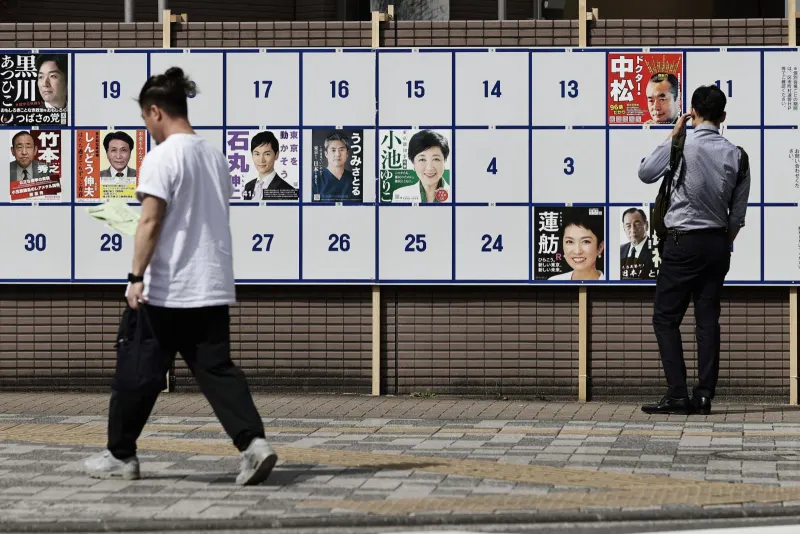
Face competence voting research reveals one of the most unsettling findings in modern psychology: a glance at a candidate’s photo — lasting as little as 1 second — may be enough to predict who wins an election. Studies suggest that the impression of competence gleaned from a facial photo correlates with actual election outcomes at a surprisingly high rate, raising serious questions about how rationally we really vote.
Most of us like to believe we evaluate candidates on policy, track record, and values. Yet a landmark study published in peer-reviewed research (Inferences of Competence from Faces Predict Election Outcomes) found that first impressions of a candidate’s face — formed almost instantly and largely unconsciously — are strongly linked to how votes are actually cast. In this article, we’ll break down what the science says, what it means for voters, and how you can make more informed decisions at the ballot box.
Once again, personality researcher and author of Villain Encyclopedia, Tokiwa (@etokiwa999), will provide the explanation.
※We have developed the HEXACO-JP Personality Assessment! It has more scientific basis than MBTI. Tap below for details.

目次
- 1 What Is Face Competence Voting Research and Why Does It Matter?
- 2 The Surprising Numbers: How Well Do Facial Competence Judgments Predict Election Outcomes?
- 3 Thin-Slice Judgment Research: How Our Brains Decide in Under One Second
- 4 Why Competence — and Not Likability or Trustworthiness — Drives Votes
- 5 What Nonverbal Cues in Elections Actually Signal Competence?
- 6 What Should Voters Do With This Information? Practical Guidance
- 7 Frequently Asked Questions
- 7.1 Can a candidate really win an election based on their photo alone?
- 7.2 How accurate are 1-second facial competence judgments at predicting election winners?
- 7.3 Why does perceived competence predict votes better than perceived trustworthiness or likability?
- 7.4 What specific facial features make a candidate look more competent?
- 7.5 Does this research apply to elections outside the United States?
- 7.6 Does knowing about this bias actually help voters make better decisions?
- 7.7 Is a competent-looking face the same as an actually competent politician?
- 8 Summary: What Face Competence Voting Research Tells Us About Democracy
What Is Face Competence Voting Research and Why Does It Matter?
Face competence voting research is the scientific study of how quickly and accurately people judge a political candidate’s competence from their facial appearance alone — and whether those snap judgments predict real election results. The concept sits at the intersection of social psychology, political science, and cognitive neuroscience, making it one of the most compelling areas of behavioral research today.
The core finding is striking: participants shown a pair of candidate photos for just 1 second and asked “who looks more competent?” tend to pick the person who actually won the election — at rates far above random chance. This suggests our brains are performing rapid, automatic evaluations the moment we see a face, and those evaluations tend to be broadly shared across many different people.
Research indicates that the impression of “competence” perceived from a face is not a single, simple trait. It tends to be a composite judgment that blends at least 2 major qualities:
- Perceived intelligence — Does this person look sharp, analytical, and quick-witted?
- Perceived leadership ability — Does this person project authority and the capacity to guide others?
Together, these 2 qualities form what researchers call the “facial competence” impression. What makes this especially fascinating is that observers form this impression in under 1 second — before any conscious reasoning can take place. In other words, the judgment happens automatically, driven by nonverbal cues in elections such as a candidate’s gaze intensity, facial symmetry, jaw structure, and expression.
Understanding this phenomenon matters enormously for democratic societies. If voters are — even partially — basing their choices on visual snap judgments rather than policy content, then elections may not be as rationally driven as we assume. This doesn’t mean voters are foolish; it means the human brain uses shortcuts (known in psychology as “thin-slice judgments”) to process social information rapidly. But it does raise important questions about fairness and what kind of information voters should prioritize.
The Surprising Numbers: How Well Do Facial Competence Judgments Predict Election Outcomes?
The accuracy with which facial competence judgments predict election outcomes is remarkably high — higher than most people would expect by chance. Research examining U.S. Senate and House races produced some of the most specific and memorable statistics in the entire field of political psychology.
In the key study, participants were shown pairs of faces belonging to real candidates who had competed against each other in past elections. Participants had no prior knowledge of who these candidates were, and they were not told anything about policies or party affiliation. They were simply asked: “Which person looks more competent?” The results were then compared against the actual election outcomes. Here is what the data showed:
- U.S. Senate races: The candidate judged as more facially competent won approximately 71.6% of the time.
- U.S. House races: The candidate judged as more facially competent won approximately 66.8% of the time.
- 1-second exposure condition: Even when photos were shown for just 1 second, participants predicted the correct winner approximately 67.6% of the time in Senate contests.
These numbers are not just statistically significant — they are practically significant. Getting 2 out of every 3 elections correct using only a face photo, without any policy information, is a remarkable result. For reference, random guessing between 2 candidates would produce a 50% accuracy rate, so these results consistently run 17 to 22 percentage points above chance.
Equally compelling is the relationship between facial competence ratings and actual vote share. Research suggests that candidates rated as more facially competent do not just tend to win — they tend to win by larger margins. The correlation between perceived facial competence and actual vote percentage is statistically robust, suggesting this is not a random fluke but a consistent, measurable pattern.
It is important to note, as researchers themselves emphasize, that this is a correlation, not proof of direct causation. The higher the facial competence rating, the better the electoral performance tends to be — but we cannot say with certainty that one directly causes the other. Multiple explanations are possible: perhaps people who genuinely have strong leadership ability also happen to project it visually; perhaps candidates with better campaign resources also invest more in professional photography; or perhaps voters and research participants simply share similar aesthetic preferences. Further investigation is needed to untangle these possibilities.
Thin-Slice Judgment Research: How Our Brains Decide in Under One Second
The ability to form accurate social judgments from very brief exposure to information is known in psychology as “thin-slice judgment,” and it helps explain why a 1-second glance at a candidate’s face can carry so much predictive power.
Thin-slice judgment research is a well-established area of social psychology. Studies in this field consistently show that people can make surprisingly accurate assessments of others — including personality traits, teaching effectiveness, and social status — from just a few seconds of observation, or even from a single still photo. The face, in particular, is a rich source of social signals that the human brain has evolved to process rapidly.
When it comes to candidate appearance and elections, the thin-slice process seems to work roughly like this:
- Visual scanning (under 100 milliseconds): The brain registers basic facial features — symmetry, structure, skin texture, and expression — almost instantaneously.
- Pattern matching (within 500 milliseconds): These features are compared against stored mental templates associated with competent, authoritative, or trustworthy individuals.
- Impression formation (within 1 second): A holistic judgment — “this person seems capable” or “this person seems weak” — crystallizes before conscious deliberation begins.
What is particularly thought-provoking about this process is that it is both automatic and broadly consistent across different observers. When many different people independently look at the same pair of candidate photos and the majority of them reach the same competence judgment, that consensus tends to match the election result. This suggests that what these observers are picking up on may reflect real, shared social signals — even if those signals are not perfectly linked to actual governing ability.
Neuroscientific research supports the idea that face evaluation involves rapid, automatic processing in brain regions such as the amygdala — an area associated with threat detection and social assessment. This means the judgment happens largely below the level of conscious awareness, making it very difficult to “override” simply by trying to think more carefully. The implication for first impression voting behavior is significant: even well-informed voters may be influenced by facial cues without realizing it.
Why Competence — and Not Likability or Trustworthiness — Drives Votes
One of the most counterintuitive findings in face competence voting research is that perceived competence — not perceived likability, warmth, or trustworthiness — is the facial impression that most strongly predicts election outcomes.
The researchers in the landmark study tested multiple different facial impressions, including:
- Trustworthiness — Does this person look honest and reliable?
- Likability — Is this person someone you would enjoy spending time with?
- Honesty — Does this person appear sincere and straightforward?
- Charisma — Does this person seem energetic and engaging?
Remarkably, none of these other dimensions showed a statistically strong relationship with actual election results. Only the competence impression consistently and significantly predicted who won. This is a finding that surprises many people, because common intuition suggests voters would be swayed by candidates who seem warm, approachable, or trustworthy.
One possible explanation is that voters — at some deep, automatic level — are evaluating candidates specifically for their fitness to govern. Governing requires decisiveness, analytical ability, and the capacity to manage complex systems and lead large organizations. These are “competence” functions rather than “warmth” functions. Research suggests that when people assess whether someone is suited for a powerful leadership role, they tend to focus more on dominance and capability cues than on friendliness cues.
It is also worth noting that “competence” as measured in this research represents a composite score blending perceived intelligence and perceived leadership ability. Candidates who score high on both dimensions — who look both smart and authoritative — appear to receive a stronger electoral boost than those who score high on only one. This finding aligns with what many voters say they value most in political candidates when directly asked: effective problem-solving combined with the ability to unite and direct people.
That said, researchers are careful to note that a “competent-looking” face does not necessarily belong to a competent person. The face provides cues, but cues can be misleading. Physical features like a strong jawline, a steady gaze, or a composed expression may trigger competence perceptions even in the absence of actual ability — and vice versa.
What Nonverbal Cues in Elections Actually Signal Competence?
While researchers have not pinpointed a single definitive list of features that create a “competent” facial impression, studies suggest several consistent nonverbal cues in elections that tend to increase perceived competence. Understanding these cues is valuable both for candidates who want to present themselves effectively and for voters who want to be aware of how their judgments may be influenced.
Based on findings from political face perception and related research areas, the following facial and presentational factors tend to be associated with higher competence ratings:
- Gaze intensity and directness: Candidates who appear to make direct, steady eye contact in photos tend to be rated as more confident and capable. A fixed, clear gaze signals attentiveness and self-assurance.
- Facial muscle tone and composure: A firm, composed expression — without appearing cold or aggressive — tends to suggest self-control and seriousness of purpose.
- Facial structure: Research suggests that faces with relatively mature structural features (more angular jawlines, prominent brow lines) are sometimes associated with perceived dominance and authority, though this effect interacts with other variables.
- Grooming and professional presentation: Clean, professional styling in a photo enhances the overall impression of competence, likely because it signals effort, self-discipline, and social awareness.
- Asymmetry and naturalness: Extremely forced or artificial smiles can actually reduce perceived competence, as they signal inauthenticity. A neutral or mildly confident expression often scores higher than an exaggerated smile in formal candidate photos.
It is important to emphasize that these are tendencies observed at the group level, not universal rules. Individual voters vary in what they perceive as competent, and cultural background, personal experience, and media exposure all shape these perceptions. Still, the consistency with which certain cues appear across large samples of participants and multiple election cycles suggests they reflect broadly shared cognitive templates for what “capable leadership” looks like.
For political candidates, this research suggests that professional photo selection deserves serious attention. A photo that conveys alertness, composure, and authority may genuinely influence how voters respond. For voters, awareness of these cues can serve as a useful reminder to consciously supplement your intuitive reactions with substantive information about a candidate’s policy positions and track record.
What Should Voters Do With This Information? Practical Guidance
Knowing that facial competence judgments influence voting behavior does not mean you are helpless against these biases — it means you are now better equipped to make more balanced, deliberate choices. Here is how voters and citizens can use this knowledge constructively.
1. Acknowledge That the Bias Exists
Research consistently shows that simply being aware of a cognitive bias reduces — though does not eliminate — its influence on decision-making. By knowing that your brain automatically assesses a candidate’s face for competence cues, you can consciously remind yourself to pause before finalizing a judgment. This metacognitive step — thinking about how you are thinking — is one of the most effective tools in critical reasoning. It doesn’t require you to distrust your instincts entirely; it simply invites you to verify them with additional evidence.
2. Actively Seek Out Policy and Track Record Information
First impression voting behavior tends to dominate when voters have little other information about a candidate. The antidote is straightforward: gather more substantive information. Read a candidate’s published policy positions. Look at their voting history if they have previously held office. Research their professional background and qualifications. The more concrete information you have, the less weight a single facial impression will carry in your overall evaluation. Think of facial competence as one weak signal among many stronger ones — not a verdict in itself.
3. Watch Candidates in Motion, Not Just in Photos
A still photo captures only a single frozen moment of a person’s presentation. Watching a candidate speak — in debates, interviews, or town halls — provides far richer information about their actual communication style, depth of knowledge, ability to handle pressure, and responsiveness to questions they haven’t prepared for. Moving beyond the static photo to dynamic observation is one of the best ways to test whether a “competent-looking” face corresponds to genuinely competent behavior.
4. Discuss Your Impressions With Others
Social deliberation — talking through your candidate impressions with friends, family, or peers who have different perspectives — is a well-documented way to correct for individual biases. When you articulate why a candidate “seems capable,” you are forced to examine whether your reasoning is based on appearance or substance. Others may challenge your assumptions in ways that sharpen your thinking and lead to a more well-rounded evaluation.
Frequently Asked Questions
Can a candidate really win an election based on their photo alone?
Research suggests that facial appearance is a meaningful — and surprisingly strong — predictor of election outcomes, but it is not the only factor. Party affiliation, incumbency advantage, campaign funding, media coverage, and actual policy positions all play important roles. What the research shows is that facial competence judgments add predictive power above and beyond chance, which indicates appearance matters more than most people assume, even though it does not single-handedly determine results.
How accurate are 1-second facial competence judgments at predicting election winners?
Studies indicate that participants shown candidate photos for just 1 second correctly identified the eventual winner approximately 67.6% of the time in U.S. Senate races. Since random guessing between 2 candidates would yield 50% accuracy, this represents a meaningful predictive advantage of about 17 to 18 percentage points above chance. Longer viewing times did not dramatically improve accuracy, suggesting the key judgment is formed very early in the viewing process.
Why does perceived competence predict votes better than perceived trustworthiness or likability?
Researchers propose that voters — even unconsciously — evaluate candidates for their fitness to govern complex systems. Governing requires decisiveness and problem-solving ability, which maps more closely onto “competence” than onto “warmth” or “friendliness.” This does not mean voters consciously dismiss likability; rather, it suggests that when the brain rapidly scans a face for political leadership potential, competence-related cues appear to carry the strongest automatic signal in shaping the final impression.
What specific facial features make a candidate look more competent?
Research suggests several tendencies: direct and steady eye contact in photos, a composed and firm facial expression, a mature facial structure (such as a defined jawline), professional grooming, and an authentic rather than exaggerated expression. These features are thought to signal self-confidence, self-control, and seriousness. However, these are statistical tendencies at the group level — no single feature guarantees a “competent” impression for every observer or in every cultural context.
Does this research apply to elections outside the United States?
The landmark study was conducted using U.S. election data, but subsequent research from multiple countries — including European nations and parts of Asia — suggests that facial competence judgments predict election outcomes in other democracies as well. The tendency to evaluate faces rapidly for leadership potential appears to be a broadly human cognitive process. That said, the strength of the effect may vary depending on cultural norms, media environments, and how much voters know about individual candidates beforehand.
Does knowing about this bias actually help voters make better decisions?
Research in cognitive bias and debiasing suggests that awareness is a necessary — though not always sufficient — step toward reducing a bias’s influence. Simply knowing that facial appearance affects your judgment can prompt you to seek out more substantive information before deciding. Combining that awareness with deliberate habits — reading policy platforms, watching debates, discussing candidates with others — appears to be the most effective strategy for making more well-rounded voting decisions.
Is a competent-looking face the same as an actually competent politician?
Not necessarily. Research distinguishes clearly between the perception of competence from a face and actual governing competence. A candidate can appear highly capable in a photograph but perform poorly in office — and vice versa. The research demonstrates that voters tend to respond to visual competence cues in ways that predict electoral outcomes, but this does not validate the underlying assumption that those cues accurately measure real-world leadership ability. This gap between appearance and reality is one of the core concerns raised by political face perception research.
Summary: What Face Competence Voting Research Tells Us About Democracy
Face competence voting research delivers a fascinating and somewhat humbling message: our brains make rapid, automatic assessments of political candidates’ faces, and those assessments are powerfully linked to who actually wins elections. Studies show that the candidate judged as more facially competent wins roughly 71.6% of Senate races and 66.8% of House races — far above what chance alone would predict. Even a single second of exposure is enough to generate a judgment that tracks with real electoral outcomes at a rate of approximately 67.6%.
The most important nuance to carry away is this: the impression of competence is not the same as actual competence. Our brains are using visual shortcuts — nonverbal cues shaped by evolutionary history and cultural conditioning — to evaluate political fitness. Those shortcuts are surprisingly consistent across observers, which is why they predict outcomes with such regularity. But consistency is not the same as accuracy.
This does not mean elections are meaningless or that voters are irrational. It means elections happen within a complex interplay of intuitive and deliberate judgment, and that understanding the intuitive layer is essential for improving the deliberate one. The research challenges us to be more thoughtful consumers of political information — to treat that immediate “competent or not” reaction as a starting point for inquiry rather than a conclusion.
As you head into your next election cycle, take a moment to examine what your gut reactions to candidate photos are actually based on. Then go deeper: check their policy positions, review their record, and watch them speak under pressure. The best use of face competence voting research is not to predict who will win — it is to make sure your vote reflects what you actually believe, not just what a photo made you feel.