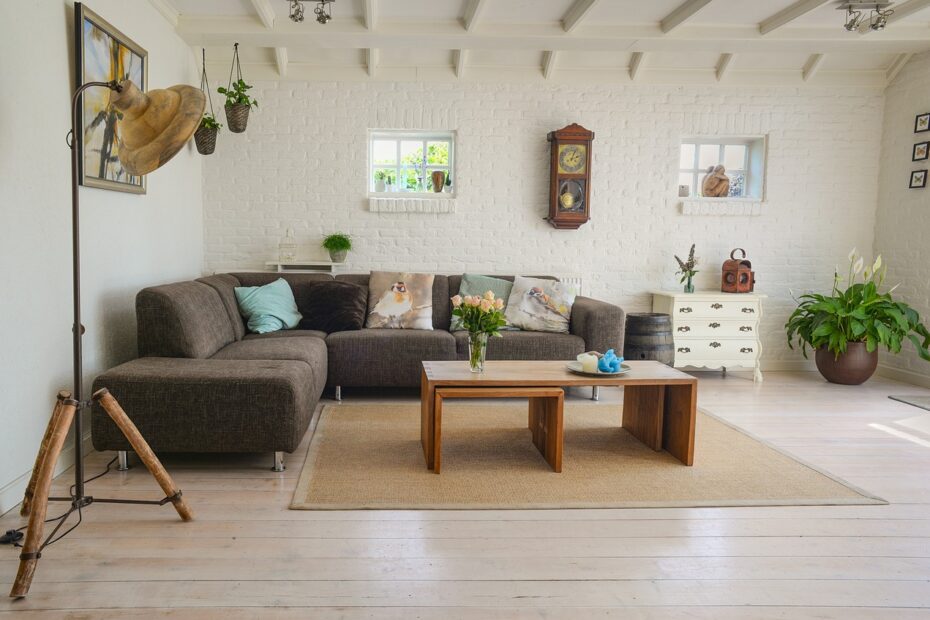
Room personality traits psychology reveals something remarkable: the space you live in is one of the most honest portraits of who you are. Scientific research in environmental psychology suggests that observers can predict a person’s character with surprising accuracy simply by spending a few minutes in their bedroom or office — often more accurately than a casual acquaintance could. Whether your shelves overflow with dog-eared novels or your desk is spotlessly clear, every choice you make about your personal space leaves a psychological fingerprint behind.
This article breaks down the key findings from a landmark study on personality judgments based on offices and bedrooms, translating the science into practical, everyday insights. You’ll learn exactly which room features signal which personality traits, how accurate those judgments really are, and how you can use this knowledge — whether you’re decorating your own space, getting to know a new partner, or simply trying to understand yourself a little better.
Once again, personality researcher and author of Villain Encyclopedia, Tokiwa (@etokiwa999), will provide the explanation.
※We have developed the HEXACO-JP Personality Assessment! It has more scientific basis than MBTI. Tap below for details.

目次
- 1 What Is the Psychology Behind Room Personality Traits?
- 2 How the Research Was Conducted: Bedrooms, Offices, and the Big Five
- 3 Room Personality Traits Psychology: What Each Feature Reveals
- 4 How Accurate Are These Personality Judgments — and What Limits Them?
- 5 Practical Applications: Using This Knowledge in Real Life
- 6 Frequently Asked Questions
- 6.1 Does a messy room mean someone has a bad personality?
- 6.2 How accurate are personality judgments made from someone’s room?
- 6.3 Can checking a partner’s room help predict cohabitation compatibility?
- 6.4 Can redesigning your room actually change your personality or behavior?
- 6.5 What do color choices in a room reveal about personality?
- 6.6 Do houseplants in a room reveal anything about the occupant’s character?
- 6.7 Does living alone versus with family change what your room reveals?
- 7 Summary: Your Room Knows You Better Than You Think
What Is the Psychology Behind Room Personality Traits?
Environmental psychology is the scientific field that studies how our physical surroundings and our inner selves influence each other — and the connection between living space and character is one of its most compelling findings. For decades, researchers suspected that people’s homes were more than just shelter; they were a form of self-expression. But hard evidence was scarce until a series of controlled studies put the idea to a rigorous test.
The core idea rests on what researchers call behavioral residue — the visible traces left behind by our daily habits and choices. Every time you toss a book on the nightstand instead of shelving it, hang a painting you love, or arrange your desk supplies in a specific way, you are, without thinking about it, writing a kind of autobiography in your room. Over time, these small decisions accumulate into a reliable record of who you are.
Research suggests there are 3 main channels through which a room communicates personality:
- Behavioral residue — the unintentional clues left by routine habits (e.g., a stack of half-finished projects signals an active, curious mind)
- Identity claims — deliberate displays meant to communicate who you are to visitors (e.g., framed certificates, a curated vinyl collection)
- Thought and feeling regulators — objects placed to manage your own mood or focus (e.g., calming plants, a motivational quote on the wall)
Understanding these 3 channels is the foundation for reading any room. Once you know what to look for, even a brief glance at a space can tell you a great deal about the person who inhabits it.
How the Research Was Conducted: Bedrooms, Offices, and the Big Five
The study examined 2 distinct environments — offices and bedrooms — because each setting reveals a different dimension of personality, and together they paint a much fuller picture than either could alone. The office reflects how a person presents themselves in a professional or achievement-oriented context, while the bedroom is a more private, unguarded space where authentic self-expression tends to be stronger.
Here is a summary of the research design:
- Office study: 94 working adults participated. Independent observers visited each person’s office and recorded detailed notes about the physical environment.
- Bedroom study: 83 university students participated. Observers spent time in each student’s bedroom, again cataloguing the space systematically.
- Personality measurement: All participants completed a standardized Big Five personality inventory (measuring 5 core traits). Their close acquaintances also rated them independently, providing a cross-check on self-reports.
- Observer judgments: Observers rated each room occupant’s personality based solely on what they saw in the space — no face-to-face interaction was allowed.
The Big Five personality model — also called the Five-Factor Model — is the most widely accepted framework in modern personality psychology. It measures 5 traits: Openness to Experience, Conscientiousness, Extraversion, Agreeableness, and Neuroticism. Each trait exists on a spectrum, and most people fall somewhere in the middle rather than at the extremes. By using this well-validated model, the researchers could compare observer judgments against reliable, standardized personality scores.
Room Personality Traits Psychology: What Each Feature Reveals
Research indicates that specific, observable features of a room correspond reliably to specific personality traits — and knowing which features to look at makes the process surprisingly systematic. Below are the 4 most telling categories of room features, along with the personality traits each tends to signal.
1. Tidiness and Organization → Conscientiousness
Conscientiousness is the personality trait most strongly linked to how tidy a room is. People who score high in conscientiousness tend to be organized, reliable, goal-oriented, and disciplined — and their rooms typically look the part. Studies indicate that observers can detect this trait with above-average accuracy just by noting how items are arranged.
- Highly organized rooms (items in designated places, clear surfaces, labeled storage) tend to belong to people who are planners, keep commitments, and follow through on tasks
- Moderately cluttered rooms may reflect a busy, active lifestyle rather than a careless personality — context matters
- Extremely messy rooms can sometimes signal high levels of stress, difficulty with executive functioning, or — interestingly — elevated creative output, since research on messy room personality research suggests a link between disorder and divergent thinking
Importantly, tidiness is one of the easiest traits for observers to judge accurately, likely because the visual cues are so concrete and unambiguous. It is also worth noting that tidiness judgments in offices tended to be slightly more accurate than those made in bedrooms, possibly because professional spaces are more deliberately curated.
2. Decorations and Aesthetic Variety → Openness to Experience
Openness to Experience — which captures intellectual curiosity, imagination, and appreciation for art and novelty — is powerfully reflected in the kinds of decorations a person chooses and how many they display. Research suggests this is one of the traits observers judge most consistently across different rooms.
- Eclectic, varied décor (mix of cultural items, artwork, unusual objects) tends to correlate with high openness — curiosity, creativity, and a love of new ideas
- Abstract or unconventional art on the walls is associated with comfort with ambiguity and complex thinking
- Sparse, minimalist decoration is more common among people who are practical, conventional, and prefer stability over novelty — though minimalism can also be a deliberate aesthetic choice by highly open individuals
- The arrangement of decorations matters too: symmetrically placed items suggest a preference for order, while loosely scattered displays suggest spontaneity
The bedroom tends to be a richer source of openness cues than the office, since people generally have more creative freedom in their private spaces. Posters, travel souvenirs, musical instruments, and handmade items are among the strongest signals observers pick up on.
3. Social Cues and Warmth Signals → Extraversion and Agreeableness
Extraversion and Agreeableness both have social dimensions, and they tend to show up in rooms through signs of social connection and emotional warmth. Research indicates that bedrooms are particularly revealing for these traits, since they often contain personal mementos and relationship markers that offices do not.
- Many photos of friends and family displayed prominently suggest high extraversion and/or agreeableness — the person values social bonds and wants to be reminded of them
- Inviting furniture arrangement (chairs facing each other, comfortable seating for guests) signals someone who enjoys and anticipates social interaction
- Cheerful colors, plants, and “warm” textures (soft blankets, rugs) tend to correlate with agreeableness — a friendly, nurturing orientation toward others
- Absence of personal photos or social artifacts may indicate introversion, though it can also reflect privacy preferences rather than social indifference
It is worth noting that extraversion was somewhat harder for observers to judge accurately from rooms alone compared to conscientiousness or openness. This makes sense: extraverts perform their social nature in interactions, not necessarily in decoration.
4. Books, Media, and Intellectual Artifacts → Openness and Conscientiousness
The books, magazines, films, and other media present in a room offer a dual window into both Openness and Conscientiousness. The quantity, variety, and organization of reading material are among the most information-rich cues available to an observer.
- Large, diverse book collections spanning multiple genres and subjects strongly predict high openness — intellectual breadth, love of learning, and abstract thinking
- Neatly alphabetized or categorized shelves suggest conscientiousness layered on top of intellectual curiosity — the person is both curious and disciplined
- Haphazard piles of books may signal voracious curiosity without strong organizational habits — high openness, lower conscientiousness
- Specialized collections (only one genre, one topic) suggest deep but narrower intellectual focus, and may indicate introversion or a highly goal-directed personality
How Accurate Are These Personality Judgments — and What Limits Them?
Observer accuracy varied meaningfully depending on which personality trait was being judged and which room was being observed — but overall, the results were well above what you would expect from random guessing. This is one of the most practically important takeaways from the research.
Key findings on accuracy include:
- Conscientiousness was judged most accurately in both offices and bedrooms — the visual cues (tidiness, organization) are simply too clear to miss
- Openness to Experience was also judged with good accuracy, particularly in bedrooms where personal expression is less filtered
- Extraversion was harder to judge from rooms alone, though social artifacts (photos, seating) helped somewhat
- Neuroticism (emotional instability) was the hardest trait to detect reliably from a room — it tends to manifest in behaviors and emotional reactions rather than in stable environmental features
- Agreeableness fell in the middle — detectable but less reliably than conscientiousness or openness
There are also important limitations to keep in mind. Rooms shared with roommates or family members introduce confounding signals. Cultural norms around home decoration vary widely, meaning the same object can carry different meaning in different contexts. And some people deliberately stage their space to project a particular image — what researchers call impression management — which can create a gap between the room’s apparent message and the occupant’s true character.
Despite these caveats, the research consistently shows that a room is not a neutral backdrop — it is an active communication of personality, even when the occupant has no conscious intention of sending any message at all.
Practical Applications: Using This Knowledge in Real Life
Understanding the link between personal space behavior and personality traits is not just intellectually interesting — it has genuine, actionable value in several everyday situations. Here are 4 areas where this knowledge tends to be most useful, along with specific guidance for each.
1. Cohabitation Compatibility: Read the Room Before Moving In Together
One of the most common sources of conflict in shared living situations — whether with a romantic partner, a roommate, or a family member — is a mismatch in cleanliness standards, social habits, and personal space norms. Research on cohabitation compatibility suggests that many of these conflicts could be anticipated (and managed proactively) simply by paying close attention to how each person keeps their current living space.
- Before moving in with someone, visit their space multiple times and at different times of day — a pre-visit tidy-up is common, but repeated visits reveal the baseline
- Look for alignment in cleanliness thresholds: a significant mismatch in conscientiousness scores is one of the strongest predictors of cohabitation friction
- Notice the social layout: does the space feel designed for one person’s comfort or for shared activity? This reflects how the person thinks about shared space
- Discuss rather than assume: use what you observe as a starting point for honest conversation, not as a final verdict on someone’s character
2. Self-Awareness: Let Your Room Reflect Who You Want to Be
Environmental psychology traits research suggests that the relationship between room and personality is bidirectional — your room reflects your personality, but it also influences it. Deliberately shaping your environment can reinforce positive habits and mental states.
- If you want to build stronger habits, start by organizing one small area of your living space — research on behavior change suggests that environmental cues are among the most powerful triggers for routine formation
- If you want to feel more creative, introduce more varied stimuli: a new piece of art, a book from an unfamiliar genre, or a plant you’ve never grown before
- If you feel anxious or overwhelmed, decluttering your immediate environment can have a measurable calming effect, since visual disorder competes for cognitive resources
3. First Impressions: What Your Space Says Before You Speak
Whether you’re hosting a first date, a job interview over video call, or a new friend, your room is making an impression the moment it comes into view. Research on bedroom personality psychology shows that observers form fairly stable judgments within just a few minutes of exposure to a space.
- For professional video calls, ensure the visible background is tidy and contains a few deliberate identity claims (a bookshelf, a meaningful piece of art) — this signals competence and depth
- For personal visits, authenticity tends to be more appealing than perfection — a few personal touches that genuinely reflect your interests are more memorable than a staged, impersonal space
- Be aware that what you don’t show also sends a message: an entirely bare room can read as guarded or transitional rather than minimalist
4. Understanding Others More Fairly and Accurately
Knowing the science of room-based personality judgment should also make us more careful and fair in how we evaluate others’ spaces. Research shows that observer accuracy is real but imperfect — and cultural, situational, and contextual factors can all distort what a room seems to say.
- Avoid snap judgments: a messy room may reflect a hectic week, a chronic illness, neurodivergence (such as ADHD), or a cultural norm around informal living — not a character flaw
- Look for patterns, not single data points: one piece of evidence (a cluttered desk) is weak; multiple converging cues (cluttered desk + unwashed dishes + piles everywhere) is more meaningful
- Ask rather than infer: the most respectful and accurate way to understand someone’s relationship to their space is simply to talk to them about it — “I noticed you have a lot of art books — are you into visual art?” opens a far richer conversation than silent judgment
Frequently Asked Questions
Does a messy room mean someone has a bad personality?
Not at all. Messy room personality research consistently shows that a cluttered space can reflect high creativity, a busy schedule, or a neurodivergent thinking style rather than a moral failing. Studies indicate that moderate disorder is sometimes associated with more divergent, innovative thinking. Only extreme, persistent disorder — especially when it causes distress or impairs daily functioning — may warrant a closer look at underlying stress or mental health factors.
How accurate are personality judgments made from someone’s room?
Research suggests accuracy varies by trait. Conscientiousness and Openness to Experience tend to be judged most accurately from rooms, often rivaling or exceeding the accuracy of brief face-to-face acquaintance. Neuroticism and Extraversion are harder to detect reliably from environmental cues alone. Overall, room-based judgments perform significantly better than chance, but they are not infallible — context, culture, and shared living arrangements can all introduce noise.
Can checking a partner’s room help predict cohabitation compatibility?
Research on cohabitation compatibility suggests yes — with important caveats. A significant mismatch in cleanliness standards (linked to conscientiousness) is one of the most commonly reported sources of conflict among cohabiting couples and roommates. Visiting a potential partner’s or roommate’s space before committing to living together can surface these differences early. However, the room visit should be a starting point for open conversation, not a replacement for it.
Can redesigning your room actually change your personality or behavior?
Environmental psychology traits research indicates that the relationship runs in both directions: while your personality shapes your room, your room also influences your thoughts, feelings, and behaviors. Introducing more organization can reinforce disciplined habits; adding stimulating or aesthetically varied elements can boost creative thinking. These effects may not change deep personality traits overnight, but they can meaningfully shift day-to-day behavior patterns — which, over time, can compound into lasting change.
What do color choices in a room reveal about personality?
Color preference is linked to personality through both research and cultural convention. Warm tones (reds, oranges, yellows) tend to appear in the rooms of more socially energetic, expressive individuals. Cool tones (blues, greens) are more common among those who value calm and reflection. Neutral or monochromatic palettes often appear in rooms belonging to conscientious, detail-oriented people who prefer a clean visual environment. However, color availability, rental restrictions, and cultural background can all limit individual choice, so color alone is a weak signal.
Do houseplants in a room reveal anything about the occupant’s character?
Research suggests that keeping live plants tends to correlate with higher levels of agreeableness — a nurturing, other-oriented disposition — as well as openness to experience and a general appreciation for the natural world. Successfully maintaining plants also requires consistency and attention, which may reflect conscientiousness. That said, houseplant ownership is also influenced by practical factors like light availability and lifestyle, so it should be read as one cue among many rather than a definitive personality marker.
Does living alone versus with family change what your room reveals?
Yes, significantly. Living alone allows the fullest expression of personal space behavior, because every decision in the room is entirely the occupant’s own. When living with family, roommates, or a partner, shared spaces reflect compromise and negotiation rather than any one person’s pure personality. Even in shared living, however, a person’s individual corner, desk, or bedroom tends to retain meaningful personal signals — the key is to focus on the spaces they have autonomous control over.
Summary: Your Room Knows You Better Than You Think
The science of room personality traits psychology makes one thing unmistakably clear: our living spaces are far more than functional containers for our belongings. They are dynamic, layered self-portraits — built up over time through thousands of small, often unconscious decisions about what to keep, display, organize, and cherish. Research in environmental psychology has shown that trained observers — and even untrained ones — can read these portraits with meaningful accuracy, particularly when it comes to conscientiousness and openness to experience.
Whether you use this knowledge to understand a potential roommate, strengthen a romantic relationship, design a more intentional living environment for yourself, or simply gain a little more self-awareness, the takeaway is the same: pay attention to spaces. They speak, quietly but clearly. The next time you walk into someone’s room — or step back and really look at your own — consider what story the space is telling, and whether it’s the story you want the world to hear.
Curious about where your own personality falls on the Big Five dimensions that shape your living space? Explore your personal trait profile and see which room features match your character.