Understanding the MBTI 16 personality types can be one of the most practical tools for self-discovery, career planning, and improving relationships. Whether you’re new to personality psychology or looking to deepen your knowledge of the Myers-Briggs framework, this guide breaks down all 16 types — their traits, strengths, blind spots, and real-life applications — in a clear, science-backed way.
The MBTI personality test has been taken by an estimated 2 million people every year worldwide, making it one of the most widely used psychological frameworks in existence. By understanding where you fall among the 16 personalities, you can gain meaningful insights into how you think, make decisions, form relationships, and grow as a person.
Once again, personality researcher and author of Villain Encyclopedia, Tokiwa (@etokiwa999), will provide the explanation.
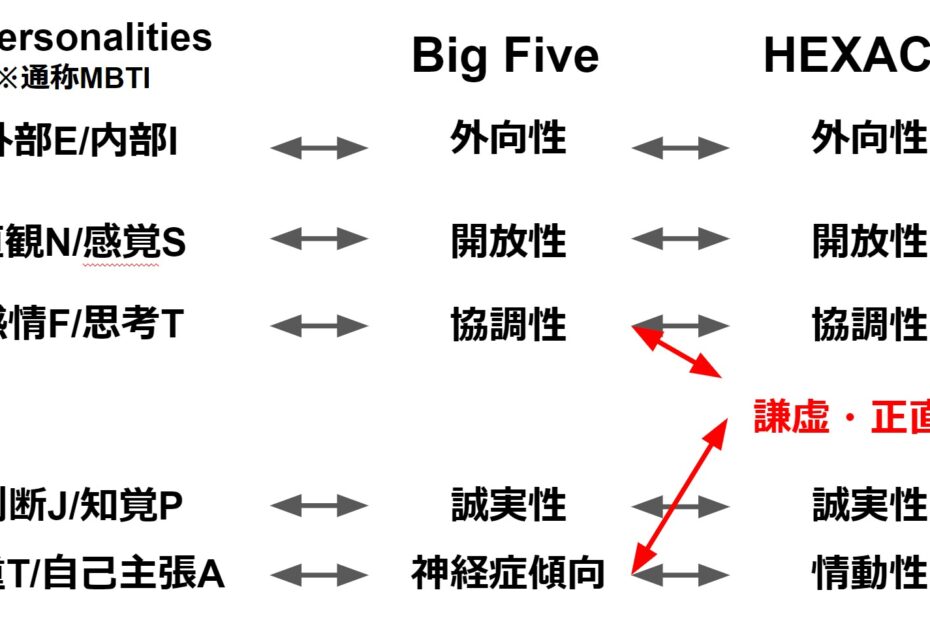
※We have developed the HEXACO-JP Personality Assessment! It has more scientific basis than MBTI. Tap below for details.

目次
- 1 What Is the MBTI? Understanding the 4 Core Dimensions
- 2 The Scientific Foundation Behind Personality Type Research
- 3 Analyst Types (NT): The Visionary Thinkers Among the MBTI 16 Personality Types
- 4 Diplomat Types (NF): The Empathetic Idealists
- 5 Sentinel and Explorer Types: Grounded Realists and Spontaneous Doers
- 6 Actionable Advice: How to Use Your MBTI Type in Real Life
- 7 Frequently Asked Questions
- 7.1 What are the MBTI 16 personality types based on?
- 7.2 Which MBTI personality type is the rarest?
- 7.3 Can your MBTI personality type change over time?
- 7.4 What is MBTI compatibility, and does it predict relationship success?
- 7.5 What is the most common MBTI type?
- 7.6 How are introvert and extrovert types different in the MBTI?
- 7.7 Is the MBTI personality test scientifically valid?
- 8 Summary: What the MBTI 16 Personality Types Can Do for You
What Is the MBTI? Understanding the 4 Core Dimensions
The MBTI (Myers-Briggs Type Indicator) is a personality classification system that uses 4 psychological dimensions to generate 16 distinct personality types. Developed approximately 80 years ago, the framework draws from Carl Jung’s theory of psychological types and has since been refined and applied across education, business, counseling, and personal development around the world.
The 4 core dimensions of the MBTI are:
- Extraversion (E) vs. Introversion (I) — Where you direct your energy: outward toward people and activity, or inward toward thoughts and reflection
- Sensing (S) vs. Intuition (N) — How you take in information: through concrete, observable facts or through patterns and possibilities
- Thinking (T) vs. Feeling (F) — How you make decisions: through logic and objectivity or through personal values and empathy
- Judging (J) vs. Perceiving (P) — How you engage with the outside world: in a structured, planned way or in a flexible, spontaneous way
Each person receives one letter from each pair, producing a 4-letter code such as ENTJ or INFP. These combinations yield 16 unique Myers-Briggs types, each with its own characteristic strengths, tendencies, and growth areas. For example, an ENTJ tends to be outwardly focused, future-oriented, analytically decisive, and highly organized — a profile that often correlates with leadership roles. Importantly, no type is considered superior to another; each has genuine value depending on context.
The Scientific Foundation Behind Personality Type Research
Personality psychology research suggests that consistent behavioral and cognitive patterns can be identified, measured, and applied to improve real-life outcomes. The MBTI draws on decades of scientific inquiry into how personality traits shape everything from decision-making to relationship dynamics. These findings provide an important theoretical backbone for understanding what the 16 personality types actually mean in practice.
Research in personality science has highlighted several key patterns relevant to MBTI type traits:
- Impulsivity tendencies — People with higher impulsivity traits tend to make more emotionally driven decisions, which may align with certain Perceiving (P) types
- Anxiety and dependency — Those with stronger anxiety traits are more likely to exhibit reliance on others in relationships, a pattern seen across several Feeling (F) types
- Self-esteem and interpersonal conflict — Research suggests that lower self-evaluation can contribute to recurring relationship difficulties, irrespective of personality type
- Attachment styles — Early childhood attachment patterns tend to shape adult relationship behavior, influencing how different personality types approach intimacy
- Environment-personality interaction — Personality traits do not operate in isolation; they interact dynamically with environmental context to influence behavior
Studies also indicate that people express different “love styles” depending on their personality profile. For instance, some types show patterns consistent with passionate, obsessive attachment (sometimes called “Mania” style), while others demonstrate selfless, giving forms of love (“Agape” style). Furthermore, research consistently shows that early relational experiences in childhood can shape the romantic and social patterns that emerge in adulthood — a finding that adds meaningful depth to how we interpret the introvert extrovert types and other MBTI dimensions.
Analyst Types (NT): The Visionary Thinkers Among the MBTI 16 Personality Types
The 4 Analyst types — grouped under the NT (Intuitive-Thinking) combination — are characterized by strategic thinking, intellectual curiosity, and a strong drive toward innovation and mastery. Research suggests that NT types make up approximately 10–15% of the general population, making them one of the rarer personality type groups. Despite their smaller numbers, they tend to leave a disproportionate impact in fields requiring complex problem-solving and visionary leadership.
Here are the 4 Analyst types and their defining personality type traits:
- INTJ (The Architect) — Highly strategic, fiercely independent, and future-focused; tends to develop long-term plans with precision
- INTP (The Logician) — Deeply analytical and intellectually curious; thrives on exploring abstract theories and systems
- ENTJ (The Commander) — Natural leader with strong goal-orientation and organizational drive; tends to excel in executive and managerial roles
- ENTP (The Debater) — Creative, quick-thinking, and energized by intellectual debate; enjoys challenging assumptions and exploring novel ideas
Analyst types share a preference for logic over emotion and efficiency over tradition. However, this strength can become a blind spot: they may at times overlook the emotional needs of others or come across as overly critical. Perfectionist tendencies are also common across NT types, which can lead to unnecessary stress when results don’t meet their own high standards. Career paths in research, consulting, engineering, and senior management tend to align well with this group’s natural strengths.
Diplomat Types (NF): The Empathetic Idealists
The 4 Diplomat types — grouped under the NF (Intuitive-Feeling) combination — are defined by deep empathy, idealism, and a genuine desire to help others grow and thrive. They make up roughly 15–20% of the population and are often drawn to roles centered around human connection, creativity, and social impact. MBTI compatibility research suggests that NF types tend to form especially deep, meaningful bonds — sometimes to the point of sacrificing their own needs.
The 4 Diplomat types and their core personality type traits include:
- INFJ (The Advocate) — Insightful, principled, and quietly determined; tends to pursue a meaningful mission with rare depth of conviction
- INFP (The Mediator) — Values-driven and deeply creative; often expresses themselves through art, writing, or personal causes
- ENFJ (The Protagonist) — Charismatic, encouraging, and naturally attuned to others; tends to take on a mentor or coach-like role
- ENFP (The Campaigner) — Enthusiastic, imaginative, and skilled at recognizing potential in others; thrives in dynamic, people-centered environments
Diplomat types bring warmth and vision to nearly any environment they enter. Their high emotional intelligence makes them natural counselors, educators, and community leaders. However, they may struggle when their ideals clash with harsh realities, and their tendency to prioritize others can sometimes come at the cost of their own well-being. Learning to maintain healthy boundaries is an important area of development for most NF types. Careers in teaching, psychology, social work, and human resources frequently suit this group well.
Sentinel and Explorer Types: Grounded Realists and Spontaneous Doers
The Sentinel types (SJ) and Explorer types (SP) together make up the majority of the population — approximately 70–80% combined — and both groups are defined by practical, real-world thinking, though with very different approaches to time and structure. Understanding these two groups is essential for a complete picture of the MBTI 16 personality types.
The 4 Sentinel types (SJ — Sensing-Judging) tend to value stability, responsibility, and tradition:
- ISTJ (The Logistician) — Reliable, detail-oriented, and highly dependable; a pillar of consistency in any organization
- ISFJ (The Defender) — Warm-hearted, conscientious, and deeply loyal; often puts others’ needs before their own
- ESTJ (The Executive) — Decisive, organized, and effective at managing systems and people
- ESFJ (The Consul) — Sociable, caring, and highly attuned to the needs and feelings of those around them
The 4 Explorer types (SP — Sensing-Perceiving) tend to embrace flexibility, spontaneity, and hands-on engagement:
- ISTP (The Virtuoso) — Practical, observant, and exceptionally skilled at troubleshooting and mechanical problem-solving
- ISFP (The Adventurer) — Gentle, artistic, and fiercely individual; tends to express identity through aesthetics and personal values
- ESTP (The Entrepreneur) — Bold, perceptive, and action-oriented; thrives in high-energy, fast-moving environments
- ESFP (The Entertainer) — Energetic, generous, and naturally gifted at bringing joy and engagement to social situations
While Sentinel types typically focus on long-term stability and proven methods, Explorer types are more energized by immediate experience and adaptability. Both groups are highly capable in practical domains, but they differ significantly in how they relate to rules, routines, and change. Sentinel types tend to thrive in roles requiring consistency and institutional knowledge, while Explorer types often excel in environments demanding quick thinking and creative improvisation.

Writer & Supervisor: Eisuke Tokiwa
Personality Psychology Researcher / CEO, SUNBLAZE Inc.
As a child he experienced poverty, domestic abuse, bullying, truancy and dropping out of school — first-hand exposure to a range of social problems. He spent 10 years researching these issues and published Encyclopedia of Villains through Jiyukokuminsha. Since then he has independently researched the determinants of social problems and antisocial behavior (work, education, health, personality, genetics, region, etc.) and has published 2 peer-reviewed journal articles (Frontiers in Psychology, IEEE Access). His goal is to predict the occurrence of social problems. Spiky profile (WAIS-IV).
Expertise: Personality Psychology / Big Five / HEXACO / MBTI / Prediction of Social Problems
Researcher profiles: ORCID / Google Scholar / ResearchGate
Social & Books: X (@etokiwa999) / note / Amazon Author Page
Actionable Advice: How to Use Your MBTI Type in Real Life
Knowing your MBTI personality type is only valuable if you translate that knowledge into meaningful action. Here are practical strategies for each of the 4 main type groups, along with the reasoning behind why they work:
For Analyst Types (NT)
Lean into your natural capacity for systems thinking and long-range planning — these are genuine strengths that organizations and teams rarely have in abundance. However, make a deliberate effort to check in emotionally with colleagues and loved ones. Why it works: Research suggests that even modest improvements in emotional attunement can dramatically improve the perceived trustworthiness and approachability of NT types, which in turn enhances leadership effectiveness. Practice asking “How does this affect you?” before jumping to solutions.
For Diplomat Types (NF)
Your empathy and idealism are powerful — use them to inspire, mentor, and advocate. At the same time, build the habit of setting and communicating personal limits. Why it works: Studies in burnout psychology consistently show that caregiving personalities who neglect their own needs experience faster depletion of emotional resources. Schedule regular time for self-reflection and activities that restore your energy, rather than waiting until you feel overwhelmed.
For Sentinel Types (SJ)
Your reliability and attention to detail are invaluable in any team. Challenge yourself to periodically question established routines — not to abandon them, but to ensure they still serve their purpose. Why it works: Adaptability research suggests that individuals who proactively update their mental models tend to experience less distress during periods of change, which is increasingly important in fast-shifting work environments.
For Explorer Types (SP)
Your ability to respond quickly and creatively in the moment is a genuine competitive advantage. Build basic planning habits — even a simple weekly review — to ensure your short-term wins connect to longer-term goals. Why it works: Behavioral studies suggest that people with high spontaneity can significantly amplify their impact when they pair their action-orientation with even minimal structure, without losing the flexibility that makes them effective.
Frequently Asked Questions
What are the MBTI 16 personality types based on?
The MBTI 16 personality types are based on 4 psychological dimensions: Extraversion vs. Introversion, Sensing vs. Intuition, Thinking vs. Feeling, and Judging vs. Perceiving. Each person is assigned one preference from each pair, producing a 4-letter code. The framework draws from the theories of Swiss psychologist Carl Jung and was developed into its current form by Isabel Briggs Myers and her mother Katharine Cook Briggs approximately 80 years ago.
Which MBTI personality type is the rarest?
Research suggests that INFJ (The Advocate) is among the rarest of all 16 personalities, estimated to make up roughly 1–2% of the general population. INFJ types are known for their unusual combination of deep empathy and strategic thinking, which sets them apart from other Diplomat types. INTJ and ENTJ are also relatively rare, particularly among women and men respectively, based on population distribution data commonly cited in personality research.
Can your MBTI personality type change over time?
Research on personality stability suggests that while core type preferences tend to remain relatively consistent, the way those preferences are expressed can shift with age, experience, and personal growth. For example, a person may develop greater comfort with their less-dominant functions over time. Retaking the MBTI personality test after several years may produce slightly different results, particularly if someone has undergone significant life changes or intentional self-development work.
What is MBTI compatibility, and does it predict relationship success?
MBTI compatibility refers to how different personality type combinations tend to interact in romantic, professional, or social relationships. Some type pairings are thought to complement each other well — for instance, Intuitive types often bond strongly over shared abstract thinking. However, research suggests that compatibility is not determined by type alone; communication skills, shared values, and emotional maturity play equally important roles. MBTI is best used as a tool for understanding, not as a predictor of relationship outcomes.
What is the most common MBTI type?
ISTJ (The Logistician) and ESFJ (The Consul) are frequently cited as among the most common MBTI types, with Sentinel types (SJ) as a whole making up an estimated 45–50% of the population. This high prevalence may reflect the widespread social value placed on reliability, practicality, and rule-following in many cultures. In contrast, Analyst types (NT) tend to be the least common group, comprising approximately 10–15% of people.
How are introvert and extrovert types different in the MBTI?
In the MBTI framework, the introvert vs. extrovert distinction is not about shyness or social skill, but about where a person directs their energy. Extrovert types (E) tend to feel energized by social interaction and external stimulation, while introvert types (I) tend to recharge through solitude and internal reflection. Both orientations are equally valid and valuable. Research suggests that roughly 50–60% of people identify with Introversion in MBTI assessments, slightly more than commonly assumed.
Is the MBTI personality test scientifically valid?
The scientific status of the MBTI is a topic of ongoing discussion among researchers. Some studies question its test-retest reliability, noting that individuals sometimes receive different results upon retaking the test. However, many psychologists acknowledge that MBTI dimensions like introversion-extraversion and thinking-feeling do align meaningfully with broader personality science. Most experts recommend using the MBTI as a reflective self-awareness tool rather than a definitive psychological diagnosis.
Summary: What the MBTI 16 Personality Types Can Do for You
The MBTI 16 personality types offer a remarkably accessible framework for understanding yourself and the people around you. From the strategic Analyst types and empathetic Diplomat types, to the grounded Sentinel types and spontaneous Explorer types, each of the 16 personalities brings genuine strengths — and equally genuine areas for growth. Research suggests that using personality type awareness as a starting point for self-reflection, rather than a fixed label, tends to produce the most meaningful and lasting benefits.
Whether you want to communicate more effectively with a partner, find a career that plays to your natural strengths, or simply understand why you and a colleague keep butting heads, the Myers-Briggs framework provides a shared language that makes those conversations easier. Now that you have a clearer picture of all 16 types and their real-world implications, take the next step: explore which of the 4 type groups resonates most with your own lived experience, and consider what one small adjustment in your daily behavior — informed by your type — could look like starting this week.